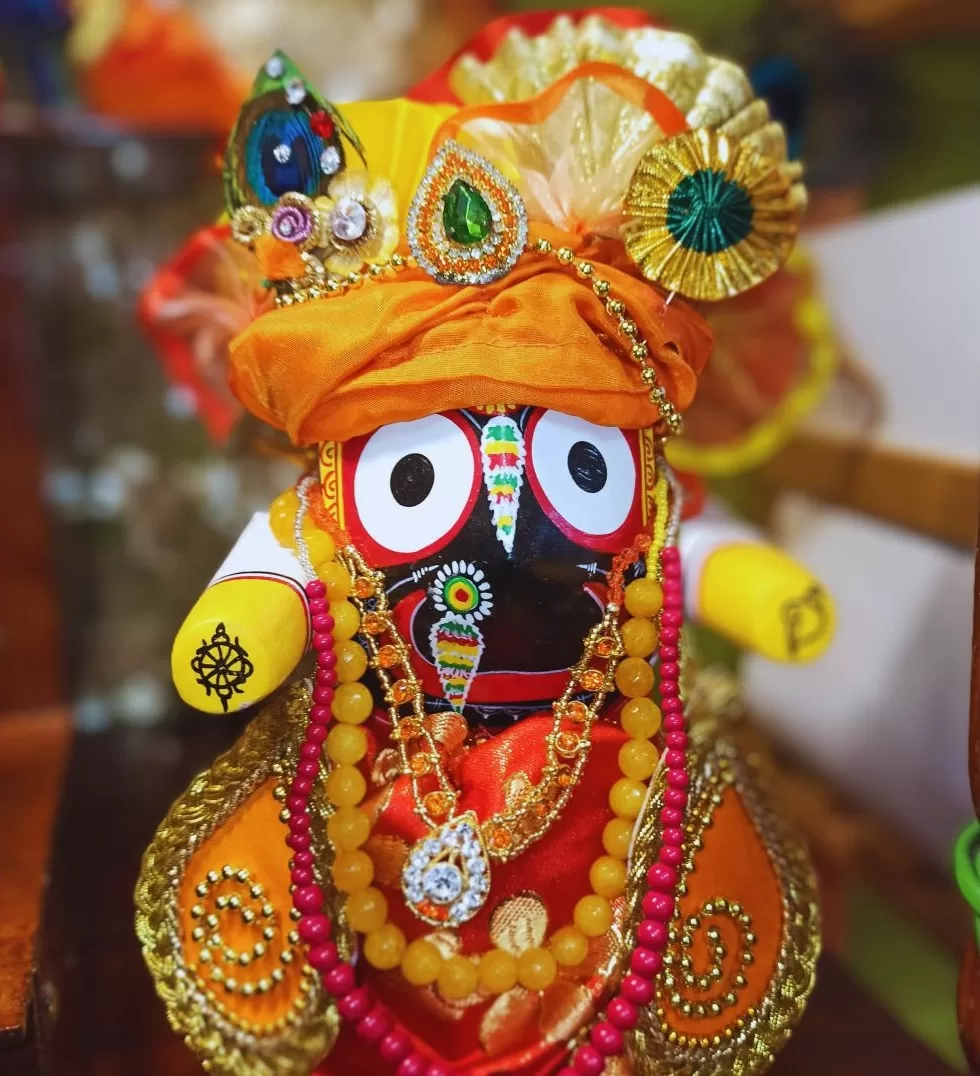
Hare Krishna, tomorrow is appearance of Lord Baladeva (9.8). Here is article: On the Occasion of Baladeva Purnima from Bhakti Ballabh Tirtha Gosvami
Prayers
Śrī Guru-Praṇāma:
oṁ ajñāna-timirāndhasya
jñānāñjana-śalākayā
caksur unmīlitaṁ yena
tasmai śrī-guruve namaḥ
“I offer my respectful obeisances unto my spiritual master, who with the torchlight of knowledge has opened my eyes, which were blinded by the darkness of ignorance.”
Two important verses:
suna suna nityananda, suna haridasa
sarvatra amara ajna karaha prakasa
prati ghare ghare giya kara ei bhiksa
‘bala krsna, bhaja krsna, kara krsna-siksa’
“Listen, listen, Nityananda! Listen, Haridasa! Make My command known everywhere! Go from house to house and beg from all the residents, ‘Please chant Krishna’s name, worship Krishna, and practise what Krishna teaches.’” (Sri Chaitanya-bhagavat, 2.13.8-9)
harer nāma harer nāma
harer nāmaiva kevalam
kalau nāsty eva nāsty eva
nāsty eva gatir anyathā
“In this age of quarrel and hypocrisy, the only means of deliverence is the chanting of the holy names of the Lord. There is no other way. There is no other way. There is no other way.”
Mahā-mantra Hare Kṛṣṇa:
Hare Kṛṣṇa Hare Kṛṣṇa
Kṛṣṇa Kṛṣṇa Hare Hare
Hare Rāma Hare Rāma
Rāma Rāma Hare Hare
On the Occasion of Baladeva Purnima
Śrīla Bhakti Ballabh Tirtha Goswami Maharaj
In this harikathā, Śrīla Gurudeva narrates the glories of Lord Baladeva, who is non-different from Krishna. He explains the ontological aspect of Baladeva along with various pastimes He performed for the welfare of conditioned souls. He explains the deep significance of all His pastimes and imparts us the valuable teachings.
At this time we usually stay in Vrindavan. Those who have gone to Vrindavan will arrive here before Janmāṣṭamī. I had been told to stay in Vrindavan where many devotees will come but due to the condition of my health I couldn’t go there as the doctor has advised me not to move too much. Everything happens by divine will. So, it is Krishna’s desire that I stay in Kolkata Maṭha during the Jhulan festival and the day of appearance of Śrī Baladeva after a long time.
Where devotees stay together is also Dhāma (abode of the Lord). In fact actual Dhāma is where Vaiṣṇavas stay together. You go for pilgrimage there also you need the association of devotees. Otherwise you cannot understand the significance of the various pilgrimage sites and will see them as ordinary villages and towns.
This place (Kolkata Maṭha) is also Vrindavan Dhāma since here resides the worshipable object of our most revered Gurudeva, Śrī Śrī Guru Gaurāṅga Rādhā Nayanāthajiu. Śrī Caitanya Gauḍīya Maṭha is not a place within Kolkata, or India or within the world. It is the transcendental abode of the Lord which has descended in this place. Since the Lord Śrī Hari is nirguṇa (transcendental), His Dhāma (abode) is also nirguṇa. Our Paramgurudeva, who stayed at the Baghbazar Gauḍīya Maṭha in Kolkata (then called Kalikata) used to say, “I do not reside in the abode of Kālī, called Kalikata.”
All the listeners were astonished to hear this since the Maṭha is located at Kolkata. His view was, since his worshipable object Śrī Śrī Guru Gaurāṅga Rādhā Govindajiu is present there, the Maṭha is non-different from Vrindavan Dhāma and Navadvīpa Dhāma. So, Śrī Caitanya Gauḍīya Maṭha is not a place of this world. Here the worshipable object is Krishna and wherever there is the target to please the senses of Krishna, that place is Vrindavan. Wherever there is the target to please my own senses, that place is the material place.
Krishna has said in the Gītā, “I am the only enjoyer”. All others are to be enjoyed by Him and serve Him as man-servants (sevakas) or maid-servants (sevikas). That place is Vrindavan or Vaikuṇṭha Dhāma. In this material world everybody has forgotten the Lord and is trying to become small Krishna and take the mood of an enjoyer like Him. They try to enjoy each other and this result in troubles and disturbances.
Taking the mood of an enjoyer they fall into the whirlpool of birth, death and threefold afflictions. Actually I am an eternal servant of the Lord but leaving aside my real nature I am trying to enjoy worldly pleasures. But I can only enjoy material objects and not the Supreme Lord who is transcendental and beyond all material qualities. So one can only enjoy inferior things which are perishable, devoid of any knowledge and devoid of any bliss.
In this human birth, the Lord has given us intelligence so that we can leave inferior objects (devoid of eternity, knowledge and bliss) and accept the superior object, the Lord. Other living entities doesn’t have this discriminating power. One cannot suddenly obtain this human birth. After passing through the births of eighty lacs species one rarely obtains this human birth. The Lord becomes satisfied after creating human beings because they can worship Him. Only human beings can enquire about eternity etc. and have discriminating sense between good and bad, eternal and non-eternal etc.
Even taking birth as a demigod is not congenial for performing worship since in that birth there is too much sense enjoyment. When there is much sense-enjoyment one forgets the Lord. What to speak of inferior beings who don’t have the sense of discriminating power between good and bad. How can they perform bhajan? So, only human birth is congenial for performing worship of the Supreme Lord.
The four traits, namely eating, sleeping, defending and mating, are performed by both beasts, birds and human beings. So what is the difference? Beasts and birds cannot perform worship of the Supreme Lord which human beings can. This is the only difference. So, this place which is established by Gurudeva is also Dhāma (abode of the Lord). Even if I go to Dhāma, I may stay at home. I may think of my homely affairs, assets etc. even while staying in Dhāma.
Wherever my mind is, I am actually staying there. So, I am staying by my body in Dhāma, but mentally I am staying at home. Even while staying here, if I am thinking of Vrindavana, then I am actually staying there. Similarly the reverse is also true. Wherever my mind is, I am staying there actually. So, the place which is giving me remembrances of the Lord is also Dhāma.
Today is the holy appearance day of Baladeva Prabhu who is the eighth one among the ten avatāras of the Supreme Lord. After Him, comes two other avatāras, namely Buddha and Kalki. Śrī Baladeva Prabhu is non-different from Krishna. Parameśvara or the Supreme Lord can never be more than one. Obviously, He can have many potencies but He, Himself cannot be more than one.
But as per His different pastimes, He can appear in many forms (līlā-avatāras). As per one scripture in South India, Lakṣmī-pati (the husband of the Goddess of fortune) and Rādhā-pati (The husband of Śrīmatī Rādhikā) are one and the same person, but as per pastimes and mellows there is difference between them.
Desiring to take part in the Rāsa-līlā pastimes of Rādhā Krishna, Śrī or Lakṣmī devī performed penances in Bilvavana (one of the forests among the twelve forests of Vrindavana) but still she couldn’t enter those pastimes. The only reason behind this was she tried to perform penances in the mood of opulence. But wherever there is mood of opulence or aiśvarya, Nārāyaṇa becomes prominent, not Krishna.
On the other hand, the sages of Daṇḍakāraṇya got attracted to the form of Lord Rāmachandra and desired to have Him as their husband. But Lord Rāma denied by telling them that in this avatāra He is playing the pastime of Maryādā Puruṣottama (the Lord upholding ethical principles) and can only have one wife (Sītā Devī). But He blessed them by telling that He will fulfil their desire when He will appear as Krishna in Vrindavan and they will also appear as gopīs (milk-maids). So by the grace of Lord Rāmachandra all these sages appeared as milk-maids during the avatāra of Krishna and served Him.
The Lord’s pastimes as Krishna are the topmost where all sorts of divine mellows are present. So as per tattva, there are no differences in the avatāras of the Lord, the only difference lies in the mellows. An example can be cited of a king who, despite being the same person, behaves differently in his court and in his palace with his associates. In his court he behaves officially and formally but in his palace inner-chambers he behaves informally with his family members and relatives with love and affection.
Likewise there are not many Īśvaras (Lords). Krishna is the Supreme Person and Baladeva is non-different from Him. Krishna is serving Himself in His form as Baladeva. So, despite being Vastu Tattva (the enjoyer Lord) Baladeva is also Guru Tattva. But, unlike our Gurudeva, He is not Śakti Tattva. So the Lord Himself has appeared as Guru and is both serving Himself and bestowing service to others.
Without Lord Baladeva’s grace one cannot get Krishna since without the grace of Guru one can never get the Lord. The Lord has taken the form of servitor Himself and teaching others how to serve Him. In the Muṇḍaka Upaniṣad it is stated that the meaning of the term ‘Bala’ is strength. Here strength doesn’t mean physical strength it means grace. Without the grace of Baladeva one cannot obtain either Him or Krishna whom Baladeva serves in five forms.
In Vaikuṇṭha, Baladeva exists as Mahā-Śaṅkarṣaṇa. In the Kāraṇa ocean, He exists as Kāraṇodakaśāyī Mahāviṣṇu. Next, innumerable universes were created and there He created a place (Garbha) for Himself and came to be known as Garbhodakaśāyī Viṣṇu. After that He entered into each and every universe and resided in the milk ocean as Kṣīrodakaśāyī Viṣṇu who is also the Super-soul in the hearts of all the living entities whom the yogīs meditate upon. His last expansion is called ‘Śeṣa’.
In this way He serves in five forms. All the servitors of the Lord belong to Baladeva Tattva. Baladeva is the deity of the Sandhinī potency of the Lord. He is the extension of existence and maintainer of existence. Baladeva is Guru Tattva Himself but still worshipped with Tulasī leaves. He has got direct contact with the living entities.
The main Śaṅkarṣaṇa in Vrindavana appears in the form of a cowherd boy. His expansion resides in Dvārakā in the form of a Kṣatriya (warrior class). The Śaṅkarṣaṇa within the first quadruple (Vāsudeva, Śaṅkarṣaṇa, Pradyumna and Aniruddha) is also called as the Primary Śaṅkarṣaṇa (Mūla-Śaṅkarṣaṇa). In Vaikuṇṭha, Nārāyaṇa extends Himself as quadruple (Vāsudeva, Śaṅkarṣaṇa, Pradyumna and Aniruddha) and there the Śaṅkarṣaṇa is called Mahā-Śaṅkarṣaṇa, who is the expansion of Baladeva.
This Mahā-Śaṅkarṣaṇa appears as Kāraṇodakaśāyī Mahāviṣṇu, Garbhodakaśāyī Viṣṇu, Kṣīrodakaśāyī Viṣṇu and Śeṣa. And all the ingredients meant for the service of Krishna like His throne etc are all Baladeva Tattva. The deity of Śrī Krishna is also Baladeva Tattva, the Sandhinī potency. Krishna, Himself is Samvit potency and Rādhārāṇī is Hlādinī potency (pleasure-giving potency).
So there are three potencies of the Lord – Samvit Śakti, Sandhinī Śakti and Hlādinī Śakti. The Supreme Lord is sad-cid-ānanda (full eternity, full knowledge and full bliss) and the living entity is aṇu-sad-cid-ānanda, meaning the three above mentioned properties are present in minute amount.
So, today Śrī Baladeva has appeared and His appearance can be understood by only those whose hearts are purified. His appearance pastime is eternal. There are infinite universes. He had appeared in this universe, played His pastimes of appearance, activities and disappearance and after that those pastimes will start manifesting in another universe.
After completion of the pastimes in that universe it will manifest in another universe and this will go on continuously without any breaks. He is appearing and disappearing continuously in one universe or the other. In this world those pastimes are not occurring directly but those who are fortunate can see them.
adyāpi sei līlā kare Kṛṣṇa rāi, kono kono bhāgyavāne dekhibāre pāi
If the Lord graces someone, then he can still see His pastimes. But at that time when He directly appeared in this material world, He was visible to all, even to the conditioned souls. Even some were hostile to Him and quarreled and fought with Him, like Kaṁsa, Jarāsandha etc. It is a great fortune if someone is killed personally by the Lord. Those persons, like demons etc. who were killed by the Lord are actually benefitted. It is not something ordinary to be killed by the Lord Himself.
Like Hiraṇyakaśipu was very fortunate to be killed by the hands of Lord Nṛsiṁha Deva. Such fortune never arises without any reason. In previous life he was Vijaya, a devotee and a door keeper of Vaikuṇṭha Dhāma and was cursed by Catuḥsana (the four sons of Brahmā) to be born as demon on the earth. Despite being a devotee, he played the pastime of a demon and was killed by Nṛsiṁha Deva who ripped apart his abdomen and wore his intestines around His neck like a garland.
The two devotees (door–keepers of Vaikuṇṭha) namely Jaya and Vijaya appeared with three avatāras as Hiraṇyākṣa and Hiraṇyakaśipu, then Rāvaṇa and Kumbhakarṇa, and lastly Śiśupāla and Dantavakra.
In order to show the glories of the devotees of the Lord, and the Lord Himself, to the general mass of people they took the mood of demons with malicious feelings towards the Lord and His devotees. When Rāvaṇa was on his deathbed and Rāma was to return back to His kingdom along with His associates, then Rāma advised His younger brother Lakṣmaṇa to go to Rāvaṇa and learn politics from him by telling him that they do not have knowledge on politics.
So Lakṣmaṇa approached Rāvaṇa and told him, “You will not stay much longer and we two will also return back now. We do not have any knowledge on politics. So, My brother has sent Me to you to learn politics from you.” In reply Rāvaṇa said, “Your brother is all-knower, since He is Parabrahma Himself. But still I will tell you since He has asked You to come to me, śubhasya śīghram, aśubhasya kālaharaṇam.
One must do any sort of good work immediately and keep on postponing any bad work so that ultimately it will remain undone. Rāvaṇa continued, “I had the desire to construct a series of staircases that will lead to Svarga (heaven), but I kept on postponing it. On the other hand, due to the impetus given by Śūrpaṇakhā, I at once kidnapped Sītā which lead to my destruction. Had I postponed the latter act repeatedly then maybe I would never of got the chance to do it and maybe I wouldn’t have faced destruction like this.”
If I have the desire to perform Haribhajan, I should not delay, since the person under whose guidance I will perform bhajan may not remain and also I myself may not remain. There is no guarantee. That is why it is said, “śubhasya śīghram, aśubhasya kālaharaṇam.” So Lakṣmaṇa took advice from Rāvaṇa who was a devotee but played the part of a demon in the Lord’s pastimes only to enrich those pastimes. They have all come to teach the world through their examples.
We have to understand from Vedic perspective that every object whether animate or inanimate has got consciousness behind it. This earth has got a consciousness behind it called ‘Pṛthvī Devī’. If there is no consciousness behind any object then it cannot survive. If the consciousness present in my body leaves then my body will perish. If there is no living being staying in a building then it will be destroyed in due course of time, maybe after one thousand or two thousand years.
The sun, the moon and all other planets and nakṣatras have got consciousness behind them. There are demigods controlling them. The ten directions have also got controllers, each of whom controls one direction. There is a demigod who controls the ocean. Also the river Gaṅgā has got consciousness, called Gaṅgā Devī, who is the demigoddess controlling river Gaṅgā and who rides on an aquatic animal called makara.
All these are not fantasy or mythology as they are commonly believed to be. Before the appearance of Baladeva, Pṛthvī Devī, or the demigoddess of the earth planet, came to Brahmā and said, “Due to the burden of the sins caused by the demons, I cannot stay here any longer.” Sins are followed by destruction. We commit sins, but that leads to a reaction. To every action there is an equal and opposite reaction. We may not see it, but Pṛthvī Devī can understand it.
The entire earth was covered by all sorts of grievous sins and tremendous oppressions from the demons. After hearing this Brahmā went to Kṣīra-sāgara (the ocean of milk) being accompanied by other demigods. There he meditated upon Kṣīrodakaśāyī Viṣṇu and told Him about the critical condition of the earth and prayed to Him to appear on the earth personally to rectify the situation.
After submitting his prayers he heard a divine voice telling him, “I am coming”. The voice also told him that all these demigods along with their wives should accompany him on the earth by taking birth in the family of the Yādavas and the Pāṇḍavas. The voice further said, “They should start taking birth in the two dynasty from now on and I will come shortly in the Yādava dynasty.” Meanwhile Devakī got married to Vasudeva, and Kaṁsa, who was Devakī’s brother, was personally driving their chariot due to affection for his younger sister.
Suddenly a divine voice echoed, “Kaṁsa, you are riding the chariot of your younger sister and carrying her to her new house so blissfully. But listen, the eight child of your sister will kill you.” On hearing this voice Kaṁsa became very afraid. All his happiness disappeared immediately and he became gloomy. He immediately took up his weapon and became ready to kill his sister immediately.
Vasudeva, Devakī’s husband tried to convince him in many ways to not kill his sister. He said, “You are a brave man. Is it proper for a brave man like you to kill a woman and that too who is your own sister? If you kill your sister you will be defamed all over and even death is preferable than being defamed.” But still Kaṁsa was stubborn. Then Vasudeva told him, “As per the prophecy, you have no harm from Devakī, you have danger from her eighth child. First there will be seven births and then the eight one. So why are you thinking from now on?
I am telling you that whenever a child will be born I will hand him over to you. You can do whatever you please to do with that child.” Kaṁsa agreed to his proposal knowing Vasudeva was a saintly person. In order to get killed, irreligiosity should arise in one’s heart. Also sage Nārada roams around everywhere and is loved by both the demons and the demigods because he acts as messenger for both the groups.
Nārada arrived at Kaṁsa’s place and the latter told him all about the previous events. He also told him that he did not have any fear from Devakī but only from her eighth child. Nārada told him, “From which direction will the eight pregnancy be counted?” So, he created a doubt in the mind of King Kaṁsa.
But before this above incident happened, another event took place. After the first child of Vasudeva and Devakī was born, Vasudeva as per his words, took the baby and handed him over to King Kaṁsa who refused to take him saying that since this is the first child he did not have any fear from this child. He only fears the eighth one and returned the first child back to Vasudeva. But Vasudeva couldn’t trust his words since there is no guarantee in the mind-set of a malicious person. It comes in the scripture,
dhūrtasya vacane kāsthā kvacit satyaṁ kvacid mṛṣā kvacid raudraṁ kvacid vṛṣṭiḥ śrāvaṇasya ghano yathā
“The mind and the words of a cunning person are exactly like the occasional changes that take place in the month of Śrāvaṇa. Sometimes there is sunshine and sometimes rain in this month. Likewise a cunning person will speak something at some time and something else at some other time. One cannot trust him.” But on the insistence of Kaṁsa, Vasudeva took back the first child. Later Kaṁsa told Nārada that he returned the first child to Vasudeva to which Nārada said, “From which direction did the prophecy mention the eighth pregnancy?
Whether it is from the beginning or whether it is from the end.” After Nārada left, Kaṁsa became suspicious and called again for the child. In front of the crying Devakī, Kaṁsa killed the child. In this manner he killed six sons of Vasudeva and Devakī. Śrī Baladeva appeared in the womb of Devakī during her seventh pregnancy. The Supreme Lord ordered Yogamāyā to attract the child from the womb of Devakī and put Him into the womb of Rohinī who is another wife of Vasudeva.
This was done in such a manner that nobody will be able to know about it. Everyone thought that Devakī had a miscarriage. So Baladeva has names like–Garbhakarṣaṇa, Śaṅkarṣaṇa, Rohiṇī Nandana etc. So Lord Baladeva appeared like this and His appearance is followed by the appearance of Krishna. Śrī Baladeva was Lakṣmaṇa in Rāma-līlā.
Lakṣmaṇa is non-different from Baladeva as per tattva, there are differences between the two as per pastimes. During the pastimes of Lord Rāma, Lakṣmaṇa had grief inside Him that He was not able to serve Rāma properly since Rāma was His elder brother. So He always had to abide by the orders of Rāma. He thought that it would have been better if He would have been elder to Rāma. So, as per His desire in Krishna-līlā, He appeared as Baladeva who was older than Krishna. So now Krishna has to listen to His orders and thus He can serve Krishna freely.
He controlled Krishna. In the Maṭha of our Gokula Mahāvana there are two Gopāla deities of Krishna and Baladeva. There are also deities of Nanda Mahārāja and Yaśodā Devī. It was not possible to keep the deity of mother Rohinī. If the deity of Rohinī Devī is kept then the deity of Vasudeva should also be kept but there is no sufficient space to keep all of them. The childhood pastimes of the Supreme Lord occurred in Gokula Mahāvana. Nanda Mahārāja and Yaśodā Devī had pointed out Krishna to Baladeva and told Him, “Here is your younger brother.
He is little restless and there is no guarantee what He will do. You should always protect Him.” So, Krishna’s parents were thinking Him to be a restless child who can do anything at any time. This is the mood of Vraja. We cannot comprehend such mood. There is no mood of opulence or Aiśvarya in Vraja-bhāva. They are seeing Krishna not as God but as their little child.
In that mood they are having love and affection for Him, and Krishna is also very restless. He plays pastimes of restlessness also with devotees serving Him in Dāsya-bhāva (mood of a servitor). Those servitors who would otherwise serve Him in Gaurava-bhāva (with awe and respect) if He doesn’t do so. In Krishna-līlā even the devotees in Dāsya mood don’t serve Him with awe and reverence but with intimacy.
They massage the body of Krishna with oil and when Krishna throws about His arms and legs due to His mischievous nature, they may even slap Him to quiet Him down. But the devotees of Dāsya-bhāva cannot do so while serving Nārāyaṇa or Lord Rāmachandra. Only with Krishna such intimacy is possible even for the devotees in Dāsya-bhāva. Krishna enjoys such moods since they do so out of affection for Him.
If there is any fear or awe and reverence then such intimacy will never be possible. So reverence is not there in Krishna-līlā. In Sakhya-rasa (mood of friendship) the degree of intimacy becomes even more. The devotees serving Krishna in Sakhya-rasa, don’t see Him as the Lord at all. This was seen when Krishna told the Vraja-vāsīs that He would lift Girirāja Govardhana to counter the torrential rain.
Paitha Dhāma is the place where Krishna lifted the Girirāja Govardhana. There during the Rāsa-līlā pastimes Krishna suddenly disappeared and the Gopīs started crying in His separation. Krishna came in front of them in His form of Nārāyaṇa with four arms–and the Gopīs thought, “What have we got to do with Nārāyaṇa?” Until one gets the audience of Krishna he can be attracted by Nārāyaṇa.
But once one gets the darśan of Krishna he can no more be attracted by Nārāyaṇa. So, they paid their obeisances to Nārāyaṇa “Namaḥ Nārāyaṇāya” and left. But when Rādhārāṇī came there Krishna withdrew His two among His four arms within His body being subdued by Her love which is more than the love of crores of Gopīs.
King Indra became very angry on the residents of Vrindavan when they stopped his worship on the advice of Krishna and they had started worshipping Govardhana hill. Indra became determined to flood and inundate Vrindavan completely and started rain and thunder on Vrindavan. Rain drops as thick as the trunk of elephants were pouring on Vrindavan. The Vrajavāsīs understood their danger and approached Krishna for help. Krishna told them to leave their homes and keep their belongings in bullock–carts and come to Him near the Govardhana hill.
So they did as Krishna said. Next, Krishna told His cowherd friends, “I will lift the Govardhana hill”. The friends replied, “Your hands are so soft. If you lift up the hill Your hands will get hurt. We cannot tell You to do so.” Krishna said, “How can I lift up the hill then? If I don’t lift up the Govardhana, then how can I save the you all? You should test Me”. The friends said, “Here is a huge Kadamba tree. Can you twist it?” They were astonished to see Krishna twist it in no time. Though the Lord appeared to be finite but in fact He is infinite and all-powerful.
We do not have the fortune to visualize these pastimes. The friends prepared Krishna in proper way. They used to wrestle with each other so they knew how to prepare Krishna. Then Krishna lifted up Girirāja Govardhana which was huge at that time. Presently it is only seven miles in dimension but at that time it was huge. The friends worried that Govardhana may fall down from the hands of Krishna and so they supported the hill along with Krishna with the help of sticks.
All the residents of Vrindavan had a long cherished desire to see Krishna continuously. In normal days they couldn’t see Krishna always. He goes for herding cows in morning and remains busy full day. He stays at night somewhere when He cannot be seen. He attends His father in the morning. So He cannot be seen at all times. So to fulfil their desire, Krishna had to play the pastimes of lifting the Govardhana hill for seven days and nights. All the residents of Vrindavan were viewing Krishna continuously for those seven days forgetting hunger, sleep etc.
So just imagine what sort of attraction is there in Krishna that made them forget their bodily need for continuous seven days. When Indra saw that nothing is happening to the village even after such a heavy downpour for continuous seven days, which is enough to drown the entire world, he became perturbed. He wondered where all the water was going from the heavy rain. He approached Brahmā and asked him, how can the son of a cow-herder have the power to resist him?
Brahmā said, “Even you too have made the mistake. I made the same mistake myself by thinking Him to be the son of a cow-herder. But He is not so, He is the Supreme Lord Himself.” Indra said, “What? I didn’t understood Him to be so.” This is the speciality of the ‘mādhurya-prīti’ (sweet affection). Without the grace of the Lord and His devotees nobody can understand this.
Indra became scared on learning that His contender was the Supreme Lord Himself. Viṣṇu can be understood to be the Supreme Lord but Krishna cannot be understood to be the Supreme Lord from outside. So, he approached Krishna with a transcendental cow called ‘Surabhi-gābhi’ since Krishna gets pleased on seeing cows. There he performed ‘abhiṣeka’ of the Lord and offered Him prayers.
A Kuṇḍa (water body) was formed at that place where Indra offered his prayers to the Lord and it was called Govinda Kuṇḍa. Mādhavendra Purīpāda performed abhiṣeka of the deity of Govardhanadhārī Gopāla (deity of Gopāla who lifted the Govardhan hill) with the waters of Govinda Kuṇḍa. After that he gave Annakūṭa-utsava in honor of his Gopāla deity. There are many things to learn about the pastimes of Baladeva. Śrī Baladeva is experienced in all matters.
When Brahmā stole the cowherd boyfriends of Krishna along with their cows and calves, then Krishna took the form of those boys, cows and calves and returned back home. The Vrajavāsīs didn’t understand that their sons and cows were lost. Though the Vrajavāsīs were householders, still they didn’t had attachment for their household or relatives etc. When they saw that Yaśodā Devī and Nanda Mahārāja served Krishna so much by taking Him on their lap and caressing Him, kissing Him, suckling Him etc. they too had the desire to serve Him in the same manner.
But what can they do? If they want to feed Him then His parents say that they have much food, milk etc. in their home. They normally wouldn’t allow Gopāla to take food from others. But the Lord being Bhakta-vatsala (one who has affection for His devotees) understood the pain of his devotees and thus took the role of a thief to steal eatables from the houses of others to fulfil their desires to serve Him. Brahmā didn’t have any power to steal the personal associates of the Lord. This is the speciality of the Lord that He serves many purposes in a single pastime.
So, when Brahmā stole away His associates, then Krishna took the form of His associates and went back. By looking from outside the Vrajavāsīs didn’t understand that Krishna Himself has come as their son. But as soon as they touched Him, they experienced transcendental symptoms like horripilation, crying, shivering etc. Tears flowed incessantly from their eyes. Due to direct contact with the Lord, they were immersed in an ocean of bliss and after taking Him on their laps they couldn’t let Him down.
They were having transcendental ecstatic symptoms and joyfully the mothers suckled Him in the form of their sons. Thus the desires of the Gopīs to suckle Krishna were fulfilled. In this manner the Lord accepted their service for one year. The original boys, cows etc. were deluded and were sleeping during this time. They did not knew anything that was happening.
Later when Brahmā understood the reality, he returned back His personal associates. All the expansions of the Lord disappeared before the associates returned and on returning they said, “Krishna killed Aghāsura just today.” They said so, because they were not aware of what transpired for one long year since they were sleeping. The cows of Vrindavana also had the desire to suckle Krishna themselves. So for that one year Krishna suckled the cows in the form of their calves and thus fulfilled their desires. This entire incident was only understood by Balarāma.
Baladeva always used to keep a guard on Krishna and Krishna also had to listen to Baladeva since He was His elder brother. Once, all the cowherd boys along with Krishna and Balarāma went to Tālavana forest in Vrindavan where there was Gardabhāsura or Dhenukāsura (the ass demon) who was very dangerous. There were so many Tāla trees present there.
Now, there are no more Tāla trees since all the trees had fallen after this incident which will be narrated. Now people have planted new Tāla trees there. The sweet aroma of the Tāla fruits made the boys desire to eat those fruits. They called out to Krishna – “Kanhaiyā, the aroma of the Tāla fruits is so nice, we want to have them.” Actually Krishna’s friends desired to feed those sweets fruits to Krishna.
Krishna agreed to their proposal. But Baladeva said, “You will not go, I will go myself to bring those fruits.” In that forest the ass-demon called Gardabhāsura lived with his associates. They were very dangerous. Whenever they found any animals or human beings they would kill him. So Baladeva went there first and started shaking the Tāla trees. Big Tāla fruits started falling from the trees on the ground with huge sounds. On hearing the noise, Gardabhāsura came there angrily by running and making horrible noises and kicked on the chest of Balarāma with his legs.
But Baladeva was not an ordinary boy. He is non-different from Krishna. Dhenukāsura kicked Him but saw that He was still standing. Wondering that He is still alive he went to kick Him again when Baladeva caught hold of his legs and started whirling him round and round with such a force that the demon lost his life. After that He threw the huge body of the demon on the Tāla trees which fell on another one which again fell on another one and so on.
In this way the Tāla trees were destroyed due to the heavy weight of the demon’s body. Though Baladeva externally appeared as a little boy, He is all-powerful. When the relatives of the demon saw this they all came charging at Balarāma who killed many of them in the same way and the remaining ones fled. In this way Gardabhāsura was killed.
What is ‘Gardabhāsura’ actually? This demon actually resides within us. It means donkey or ass. Those who are possessing only material knowledge and are depriving themselves of the knowledge of the Holy Name, their real selves and transcendental knowledge their condition is exactly like a donkey which carries heavy burden on its back. The votary has to kill this demon residing in his heart by his own efforts and this is shown by Baladeva. Unless this ass-demon is removed from the heart of a practitioner, he cannot make any progress.
jaḍa-vidyā jata, māyāra vaibhava tomāra bhajane bādhā moha janamiyā, anitya saḿsāre, jīvake koraye gādhā
“All sorts of material knowledge are variegated forms of Your illusory energy which creates impediments on the path of your worship. Such knowledge creates attachment for this perishable worldly relations and makes an ass out of the living entity”.
There is another incident of Baladeva killing a demon called Pralambāsura in the forest called Bhaṇḍīravana. He was passing through the age of Pauganda (five to ten years of age) at that time. At this age He was given the duty for tending cows in the forest. In Vrindavana the summer season is exactly like Spring. When we used to visit Vrindavana in summer season, we used to face many hardships. Many of us could hardly sleep at night. The water of Yamunā was much purer at that time. Due to the curse of Pulastya Ṛṣi, the Govardhana hill is reducing each day and someday it will fully disappear.
When full disappearance of Govardhan will take place, then the condition of the world will become even more dangerous than you can see now. So Krishna and Balarāma went to Bhaṇḍīravana and started playing with Their friends. In that game it is decided that there will be two parties (groups). Baladeva will lead one party and Krishna will lead the other one. It is further decided that the losers of the game will carry the winners on their shoulders. At that time a demon called Pralambāsura took the form a cowherd boy by his illusory energy and entered their midst without being suspected by the other boys.
Krishna understood his real identity and took him to His own group with the motive to kill him. When they played, Śrīdāmā and Vṛṣabha of Balarāma’s party became victorious. Consequently, Krishna carried Śrīdāmā and Bhadrasena carried Vṛṣabha. So, Śrīdāmā climbed up the shoulders of Krishna. Can we ever do it? We will be afraid of committing offence if we ever think of this. But the boyfriends of Krishna never think these things. When their feet touches the body of Krishna, they feel happiness.
On the other side, Balarāma defeated Pralambāsura. Avoiding Krishna, Pralambāsura ran away carrying Balarāma stealthily on his shoulders. Balarāma began wondering why is this boy running away? Balarāma, understanding the ill motives of the demon, became so heavy on the shoulders of Pralambāsura that he was unable to bear His weight. The Lord can increase or decrease His weight as per His will. When Tṛṇāvarta (the whirl-wind demon), sent by Kaṁsa, came to kill Krishna, He climbed up on His mother’s lap and suddenly became very heavy.
His mother wondered how could the child suddenly become so heavy. Then the demon created a storm and covered every direction with darkness and carried away Krishna. When the darkness was gone and mother Yaśodā could see her child Gopāla in the grips of the demon she cried out loudly, calling, “Gopāla!” and fainted. All others were also grief-stricken and were crying. Up in the sky Krishna suffocated Tṛṇāvarta by pressing his neck and then became so much heavy that Tṛṇāvarta fell straight from the sky to the ground with a huge noise. The child was saved but the demon died.
Baladeva struck the demon a ferocious blow on the head with His fist. This blow shattered Pralambāsura’s head and he began to vomit blood. When Baladeva was about to strike the demon he then assumed his real form which was horrible. Upon killing the demon, drums were resounded in the sky and flowers rained down upon Balarāma and voices sounded, “We are saved! We are saved!” Pralambāsura is a symbol of illicit sexual connection (strī-lampaṭya), aspiration for gain, adoration (lābha-pūjā) and name and fame (pratiṣṭhā).
Unless and until these traits which are signified by Pralambāsura are not destroyed, one cannot perform Krishna-bhajan. Since Balarāma has direct contact with the jīvas, He loves them and, as well, equally disciplines them. He carries the plough weapon and even chastised Yamunā Devī (the demigoddess of river Yamunā) with the weapon.
Since He has got direct connection with the jīvas He loves them very much and when times comes, also chastises them. If someone is personally killed by His hands then it is the great fortune of that person. There was an ape called Dvivida who was personally slayed by His hands. He chastises those who are arrogant.
Duryodhana learned the art of fighting with club (gadā) from Balarāma. He had a daughter named Lakṣmaṇā who was kidnapped by Sāmba, the son of Krishna and Jāmbavatī during her svayaṁvara ceremony. As a result, a war ensued between the Kurus and Sāmba and they all attacked him simultaneously and arrested him, which is unfair as per the codes of war which states only one capable warrior should fight with a warrior of same capacity at a time. On hearing this Krishna wanted to go and release His son.
Then Baladeva thought that if Krishna goes there, then all the enemies will be killed. But since Duryodhana was His disciple He didn’t wanted him to be killed due to affection for him. So He reassured the others by saying, “Do not worry. I shall go. Everything will be fine if I talk with them. There is no need to fight.” So, He went to Hastināpura accompanied by Brāhmaṇas.
Duryodhana came out to meet his Guru, Balarāma, when the latter told him, “See, I have something to tell you all. You have fought an unfair war with Sāmba and arrested him and Lakṣmaṇā. So it is the order of King Ugrasena to release both of them. I am speaking this for your own good.”
In reply they said, “Those who are like shoes made of leather, they are trying to climb up on our heads? By our mercy they have seen opulence and now we have to follow their orders?” After hearing these words Baladeva became angry. He thought, “My worshipable object Krishna has been compared to a shoe made of leather? They have become so much puffed up with pride and arrogance!! I will destroy them right now”. After saying so He started dragging the city towards Yamunā with His plough keeping the position of Sāmba intact.
The entire city began to tilt in a direction. All the people and the warriors turned upside down. Then all cried “Trāhi Baladeva! Trāhi Baladeva!” They prayed to Baladeva to rescue them and then Baladeva stopped it. Then all the Kurus arranged the marriage of Sāmba and Lakṣmaṇā. Baladeva subdues the demonic people just like one subdues an untamed animal by means of a rope. Until the demonic people are not subdued like this, they will never be rectified.
So Baladeva has got two sides—He gives affection to the people as well as chastises them when necessary. Krishna doesn’t do so, He only chastises the demonic. Baladeva has got direct connection with the living entities and so for their welfare, He chastises them when necessary. He also killed Lomaharṣaṇa Sūta who was sitting on an elevated seat in the midst of sages.
Later the sages told Him that they had themselves offered him such a seat for hearing Purāṇas from him. Baladeva told them that a son is non-different from his father. So he granted the same seat to Lomaharṣaṇa’s son Ugraśravā. Though Baladeva is above all injunctions, He played the pastimes of performing some atonement for his killing. In the pastimes of Baladeva chastising Yamunā Devī for her obstinacy to come to Him, she came and offered Him blue garments.
30 Aug 2004 @Kolkata