Hare Krishna, in saturday (9.8) is Lord Balarama’s Appearance Day. Today article is from Gour Govinda Swami
Prayers
Śrī Guru-Praṇāma:
oṁ ajñāna-timirāndhasya
jñānāñjana-śalākayā
caksur unmīlitaṁ yena
tasmai śrī-guruve namaḥ
“I offer my respectful obeisances unto my spiritual master, who with the torchlight of knowledge has opened my eyes, which were blinded by the darkness of ignorance.”
Two important verses:
suna suna nityananda, suna haridasa
sarvatra amara ajna karaha prakasa
prati ghare ghare giya kara ei bhiksa
‘bala krsna, bhaja krsna, kara krsna-siksa’
“Listen, listen, Nityananda! Listen, Haridasa! Make My command known everywhere! Go from house to house and beg from all the residents, ‘Please chant Krishna’s name, worship Krishna, and practise what Krishna teaches.’” (Sri Chaitanya-bhagavat, 2.13.8-9)
harer nāma harer nāma
harer nāmaiva kevalam
kalau nāsty eva nāsty eva
nāsty eva gatir anyathā
“In this age of quarrel and hypocrisy, the only means of deliverence is the chanting of the holy names of the Lord. There is no other way. There is no other way. There is no other way.”
Mahā-mantra Hare Kṛṣṇa:
Hare Kṛṣṇa Hare Kṛṣṇa
Kṛṣṇa Kṛṣṇa Hare Hare
Hare Rāma Hare Rāma
Rāma Rāma Hare Hare
Lord Balarama’s Appearance Day
Gour Govinda Swami – Bhaktivedanta Manor, London Date: 1991-08-25 Location: Bhaktivedanta Manor, UK
jaya śrī-kṛṣṇa-caitanya prabhu-nityānanda śrī-advaita gadādhara śrīvāsādi-gaura-bhakta-vṛnda
Hare Kṛṣṇa Hare Kṛṣṇa Kṛṣṇa kṛṣṇa hare hare Hare Rāma Hare Rāma Rāma Rāma Hare Hare
ānanda-līlā-maya-vigrahāya hemābha-divyac-chavi-sundarāya tasmai mahā-prema-rasa-pradāya caitanya-candrāya namo namas te
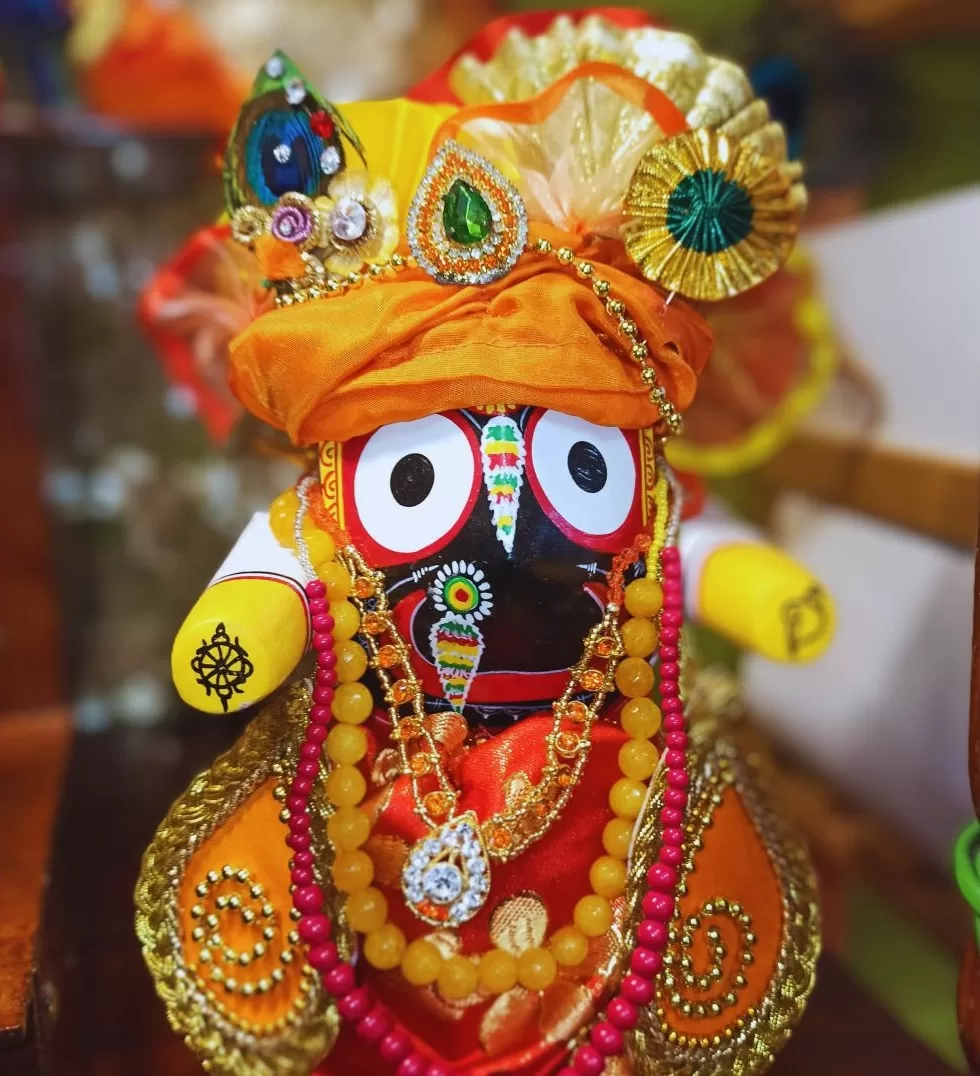
Today is the holy appearance day of Śrī Śrī Baladevajīu, Balarāmajiu so we should offer some prayer unto Lord Balarāma. Will you please follow me?
namas te haladhṛg-rāma namas te muṣalāyudha namas te revatī-kānta namas te bhakta-vatsala
namas te balināṁ śreṣṭha namas te dharaṇī-dhara pralambāre namas te ‘stu trāhi māṁ kṛṣṇa-pūrvaja
Śrī Baladevajīu kī jaya! The holy appearance day kī jaya! Samaveta bhakta-vṛnda kī jaya!
In Śrīmad-Bhāgavatam, 10th canto you will find Śukadeva Gosvāmī says,
eke tam anurundhānā jñātayaḥ paryupāsate hateṣu ṣaṭsu bāleṣu devakyā augraseninā saptamo vaiṣṇavaṁ dhāma yam anantaṁ pracakṣate garbho babhūva devakyā harṣa-śoka-vivardhanaḥ (Śrīmad-Bhāgavatam 10.2.4-5)
Tenth canto, 10-2, second chapter says. Śukadeva Gosvāmī says to Parīkṣit Mahārāja, “When there was a severe persecution of Kaṁsa so all the wives of Vasudeva and his friends, his relatives, all fled to Kuru, Pañcāla, Kaikeya, Śālva, Vidharbha, all these countries. Some stayed with Kaṁsa, just outwardly, posing as if they were very much devoted to Kaṁsa, waiting for that favorable time. This is on one hand. On the other hand, Kaṁsa killed six sons of Devakī, the first six sons of Devakī. Then there was the 7th womb came.
This saptamo garbha, the seventh womb is Vaiṣṇava dhāma. Vaiṣṇava dhāma means… the whole base of Vaiṣṇavas, the abode of Vaiṣṇavas. From this Vaiṣṇava dhāma, Anantadeva is coming. When this seventh womb of Devakī was there, at the same time, Vasudeva’s second wife, Rohiṇī, was also pregnant. When Vasudeva saw the pregnancy of Rohiṇī, he sent her to Nanda-gokula to save her pregnancy because Kaṁsa was killing everything, all the sons.
In the 10th canto Śrīmad-Bhāgavatam, 2nd chapter, you will find the Supreme Lord says to Yogamāyā, “You please go, O Devī, O Bhadre, you immediately go to Nanda-gokula. There is Vasudeva’s second wife, Rohiṇī and, in the womb of Devakī, there comes My dhāma, Śeṣa, Ananta Śeṣa. And you take away that womb and attract Garbha-Saṅkarṣaṇa, attract that womb and place it in the womb of Rohiṇī.”
In that womb of Devakī comes Baladeva whose one portion is Anantadeva, one of the portions of Anantadeva who carries the whole universe in one of his hoods like a mustard seed. All the universes, such gigantic universes, he carries within one of his hoods like a mustard seed. And also that Anantadeva, has innumerable mouths, and with His innumerable mouths, he is always, incessantly engaged in the glorification of Kṛṣṇa, but cannot finish.
This Balarāma, Lord Balarāma is the son of Rohiṇī. He is Rohiṇī-nandana. But why He came first in the womb of Devakī? That is the question. And why that womb was transferred again to Rohiṇī? That is other question. Because Lord Balarāma always serves Kṛṣṇa. He is a servant of Kṛṣṇa. Caitanya-caritāmṛta says, “What to speak of others, even Baladeva, Who is the first expansion of Kṛṣṇa, Who is always with Kṛṣṇa.” When Kṛṣṇa came as Caitanya Mahāprabhu, Balarāma came as Nitāi. Even Baladeva thinks Himself ‘I am the servant of Kṛṣṇa.’
Is there anybody who is not servant of Kṛṣṇa? All are servants of Kṛṣṇa. Even Baladeva thinks so. In Caitanya-caritāmṛta also you will find Kavirāja Gosvāmī has written, Balarāma, Lakṣmaṇa, Advaita, Nityānanda, Śeṣa, Saṅkarṣaṇa… they all came accepting bhakta-bhāva to serve Kṛṣṇa. Only a bhakta, only a devotee relishes that beauty, extraordinary beauty, kandarpa-koṭi-kamanīya-viśeṣa-śobham—Whose beauty far excels that of the crores of Cupids. Mādhuryaka nilaya kṛṣṇa, He is mādhuryaka nilaya – He is unlimitedly beautiful and total of all mādhurya.
Only bhaktas, premī bhaktas, they taste that mellow, nobody else. Those who are āśraya-vigraha. They are so intoxicated in the taste of that beauty, they don’t know anything else than that. This is bhakta-bhāva, this is the mood of a devotee. So, Baladeva came in that mood, to serve Kṛṣṇa. Assuming ten bodies, Lord Balarāma serves Kṛṣṇa.
What are those ten bodies that Lord Balarāma assumes, and serves Kṛṣṇa? Caitanya-caritāmṛta says: śayyā, āsana, vyajana, cāmara, pādukā, upādhāna, chatra, vasana, bhūṣaṇa, yajña-sūtra. Ten bodies. Śayyā: bed. He is Ananta Śeṣa, His bed. So he came first in the womb of Devakī to leave Ananta Śeṣa there because Kṛṣṇa will come. So first his bed should be prepared. Do you understand? So he came.
Otherwise, He is the son of Rohiṇī. What is his necessity to come there? To serve Kṛṣṇa. Śayyā: bed; āsana: his seat, vyajana: fan, cāmara: yak-tail whisk; pādukā: his shoes; upādhāna: his pillow; chatra: umbrella; vasana: his garments; bhūṣaṇa: his ornaments; yajña-sūtra: sacred thread. These are the ten forms of Balarāma to serve Kṛṣṇa.
Kṛṣṇa will come in the womb of Devakī, so He first came, to prepare bed for him. Then Yogamāyā was ordered by Kṛṣṇa. Yogamāyā removed that womb when it was the 7th month and placed it in the womb of Rohiṇī who was in Nanda-gokula. At that time Rohiṇī was in deep sleep. She could not understand anything. She felt as if it was a dream. Here one question arises. Kaṁsa killed the six sons of Devakī, one after another. Then in the 7th womb Balarāma comes.
Kaṁsa cannot kill the 7th womb, cannot kill the 8th womb, but he killed the first six wombs. Who are these six sons and why were they killed? They were not Viṣṇu-tattvas so they were killed. They were material sons, not spiritual. So the question arises: How is it that these material sons come in the womb of Devakī, whose womb is śuddha-sattva? And how is it that Kaṁsa killed them?
It is a very confidential tattva. And how they stay in the womb of Devakī whose womb is śuddha-sattva? Can any material beings stay in śuddha-sattva? Impossible. How? We cannot conceive all these things. But you can think of this. When there is complete annihilation, mahā-pralaya, where do all the jīvas rest? They rest in the body of Mahā-Viṣṇu.
When again creation is there, they come out as they were. In Gītā also you will find Kṛṣṇa has said that thing, mat-sthāni sarva-bhūtāni na cāhaṁ teṣv avasthitaḥ – “All the living entities are there in Me, but I am not in them.” Similarly, they remain untouched. So these six sons, material sons came in the śuddha-sattva womb of Devakī, they remained untouched. And all these things took place by the yogeśvarya of Kṛṣṇa, inconceivable.
Then one tāttvika-siddhānta is here. Kṛṣṇa comes, all His incarnations come here and manifest Their līlās, transcendental līlās here. Why? The chief reason is to give pleasure to His devotees. Kṛṣṇa cannot understand what is a bhakta’s condition. “How he is intoxicated with that prema? How he is mad after it? I cannot understand.” Then He develops greed for it. Kṛṣṇa became greedy, “How can I taste it?
How can I relish this thing?” But how can He relish? He is rasera-viṣaya, he is viṣaya-vigraha. Only those who are rasera-āśraya, they relish. Therefore he came as Gaura, assuming bhakta-bhāva. “Otherwise I cannot relish.” So, to show the last limit of bhakti, Kṛṣṇa comes. All his incarnations come here in this material world and manifest Their transcendental līlās.
Those who are sādhakas do śravaṇa, kīrtana under the guidance of a bona fide guru, ācārya. Though they do, still there are six types of viṣaya-bhoga, desire for material enjoyment. There are six types, like six enemies. Unless these six enemies are killed, you cannot attain that stage of śuddhā-sattva. Unless you attain śuddhā-sattva, how Kṛṣṇa will appear? Impossible. Kṛṣṇa will never appear because Kṛṣṇa is always in śuddhā-sattva. This is significant here, this killing of six sons. What are they?
These are six: śabda, sparśa, rūpa, rasa, gandha – five sense objects, plus your wicked mind. These are six. So these six sons are killed. This is the significance here. These six were previously the six sons of Marīci Muni and they were cursed so they came in the womb of Devakī and were killed by Kaṁsa. After Kaṁsa killed them, where do they stay? They stayed with Bali Mahārāja in Sutala. So when Rāma and Kṛṣṇa came to Mathurā, Devakī told them, “Please, my six sons were killed, I want to see them. Please bring them back.”
So Rāma and Kṛṣṇa went to Sutala and brought them back. When they were brought back, Devakī devī developed motherly affection and naturally the milk emanated from her breasts. She first allowed her youngest son, Kṛṣṇa, to suck to it. Then she allowed the six sons to suck. When they sucked the breast of Devakī that had been first tasted by Kṛṣṇa, they were so fortunate that immediately they were delivered. They went to the heavenly planets.
So Kaṁsa is like kāla for killing these six enemies: śabda, sparśa, rūpa, rasa, gandha and the wicked mind. When a sādhaka, doing sādhana under the expert guidance of a bona fide guru, in course of time, these six enemies will be killed. All this materialistic desire will gradually vanish. Then you will develop taste for this rasa. In other words, you will attain śuddhā-sattva stage then Kṛṣṇa will appear.
So, when all these things were gone, then Lord Balarāma came in the womb of Devakī. Now it is completely free from all these material tinges, it is śuddha-sattva, and laid this bed for Kṛṣṇa, Anantadeva. When Rohiṇī devī came to Nanda-gokula, all-auspiciousness was there. And Nanda Mahārāja, all his brothers, they became very happy, and all gopīs, including Yaśodā-mātā, all of them became very happy. Yaśodā and Rohiṇī liked each other so much. They were like Gaṅgā and Yamunā.
When Balarāma appeared, he appeared this day, today, pūrṇimā, full moon day, Śrāvaṇa-pūrṇimā. His bodily complexion is as white as the full moon. He has very long arms, ājānu-lambita-bhuja, his eyes are like a completely blossoming lotus. All these symptoms of Mahāprabhu were there in his body. At that time, all the sages, the munis, they chanted, “Jaya! Jaya! Jaya! Jaya! Baladeva kī jaya!” All the demigods, they beat their drums and blew bugles. Then Vasudeva got the message that Balarāma was born. Vasudeva sent a brāhmaṇa to do this jāta-karma, purificatory ceremony.
Lord Balarāma also, assuming five forms, always helps Kṛṣṇa in his transcendental pastimes. Balarāma is Mūla-Saṅkarṣaṇa. His expansion is Mahā-Saṅkarṣaṇa in Vaikuṇṭha. From Mahā-Saṅkarṣaṇa comes Kāraṇodakaśāyī Viṣṇu (Mahā-Viṣṇu). From him comes Garbhodakaśāyī Viṣṇu and from him comes Kṣīrodakaśāyī Viṣṇu, who is Paramātmā in the heart of all living entities.
Paramātmā is a portion of a portion of a portion of Lord Balarāma. Paramātmā is there in your heart, you understand, you are moving, you have some strength, Paramātmā’s kṛpā-bala, his merciful strength. When he will withdraw his strength, you cannot even lift your hand! This, Lord Baladeva’s kṛpā-bala, His merciful strength, unless you get his mercy, you cannot do anything.
Then, nāma-karaṇa, naming ceremony, took place. Vasudeva sent Gargamuni to Gokula. Garga Muni came and gave this name. First, he gave this name, “His name is Rāma because He will make everybody happy.” Then he said, “Another name is Saṅkarṣaṇa because he is born by Garbha-saṅkarṣaṇa. Third name is Balabhadra. He is so strong and he has such unlimited strength, nobody possesses such strength.”
Balarāma is one year older to Kṛṣṇa. So, when Kṛṣṇa and Balarāma were manifesting their childhood līlās, they are crawling in the courtyard of Nanda Mahārāja. These two children are crawling and manifesting various manifold śiśu-līlā. They are the Supreme Lord, all-knowing, omniscient, but they are acting as ajñāna śiśu, ignorant children. In the courtyard of Nanda Mahārāja, some cows are lying there, some calves, some bulls, and by crawling, both the brothers go there and catch hold of their horns.
Their lotus palm is very soft. When they touch the horns of the cows, the cows become so ecstatic in prema, and immediately profuse amount of milk comes out from their milk bags, and the whole ground becomes wet. And they have also passed urine there. That becomes like a nice paste, and both these two children are rolling in that paste. When that mud is there on their body, it looks so transcendentally beautiful.
Rohiṇī Devī and Yaśodā Devī, out of motherly affection, automatically the milk also emanates from their breast. So immediately they take up their sons. Then gradually they grow up and their teething began. Little, little white teeth began to flower. When these two mothers used to see their children, they become so ecstatic, become mad with motherly affection.
And also sometimes they leave their children in the courtyard and they’re engaged in some works. So these two brothers are playing, and this is quite natural with the children, they are very naughty children. So sometimes they go and catch hold of the tail of the calf. The calf immediately gets up and kicks, so they fall down and cry and then the two mothers run quickly.
Then they gradually grow up, they started to stand up. It is all human līlā. They stand up. First they just lean against the wall, they began to stand up. Sometimes they fall down and cry, again they rise up. Also Balarāma always helps Kṛṣṇa in stealing butter, mākhan-cora. The gopīs put these pots of mākhan in high hanging slings. Kṛṣṇa cannot reach it so Balarāma lifts him up, “Alright, go, go go! Bring, bring, bring.”
He teaches Kṛṣṇa how to steal. One day mother Yaśodā binds him. At that time Balarāma was not there and Kṛṣṇa was sitting morose. Then Balarāma came and saw Kṛṣṇa was very depressed. Then Balarāma said, “Khānu, why are you so morose?” Kṛṣṇa said, “Dāu“, elder brother. “Dāu, my mother bound me today.” “Oh, mother bound you today? If I was there she would not have bound you up. I was not there.”
So this is very nice pastimes. So now I will chant a song. A Vaiṣṇava has written this song about Rāma-Kṛṣṇa śaiśava-līlā, childhood pastimes.
nāca’re nāca’re mora rāma dāmodara yata nāca tata diba kṣīra nanī sara
āmi nahi dekhi bāchā nāca āra bāra galāya gāṇthiyā diba maṇimaya hāra
tā tā tā tā thaiyā thaiyā bale nandarānī kare tāli diyā nāce rāma yadumaṇi
rāma kānu ore mora ore rāma kānu maṇimaya jhuri mājhe jhalamala tanu
Mother Yaśodā tells Kṛṣṇa and Balarāma: “My dear Rāma and Dāmodara, dance more, dance more! I’ll give you condensed milk, butter, and cream! Oh, I didn’t see You. Dance again! Then I will give You a garland of jewels.”
The queen of Mahārāja Nanda gives the beat and directs their dance tā tā thaiyā thaiyā. Rāma and Kṛṣṇa, the jewel of the Yadu dynasty, clap Their hands and dance in time. Yaśodāmayī sings, “O my dear Rāma and Kānu! O dear Rāma and Kānu! You look so beautiful with Your effulgent bodies and jewelled crowns on Your heads.”
Jaya Rāma-Kānu kī jaya! Jaya Balarāmajiu kī jaya! Balarāmajiu śubha-āvirbhāva-tithi kī jaya! Prabhupādajī Mahārāja kī jaya! Ananta koṭi Vaiṣṇava vṛnda kī jaya! Samaveta bhakta vṛnda kī jaya! Gaura-premānande! Haribol!