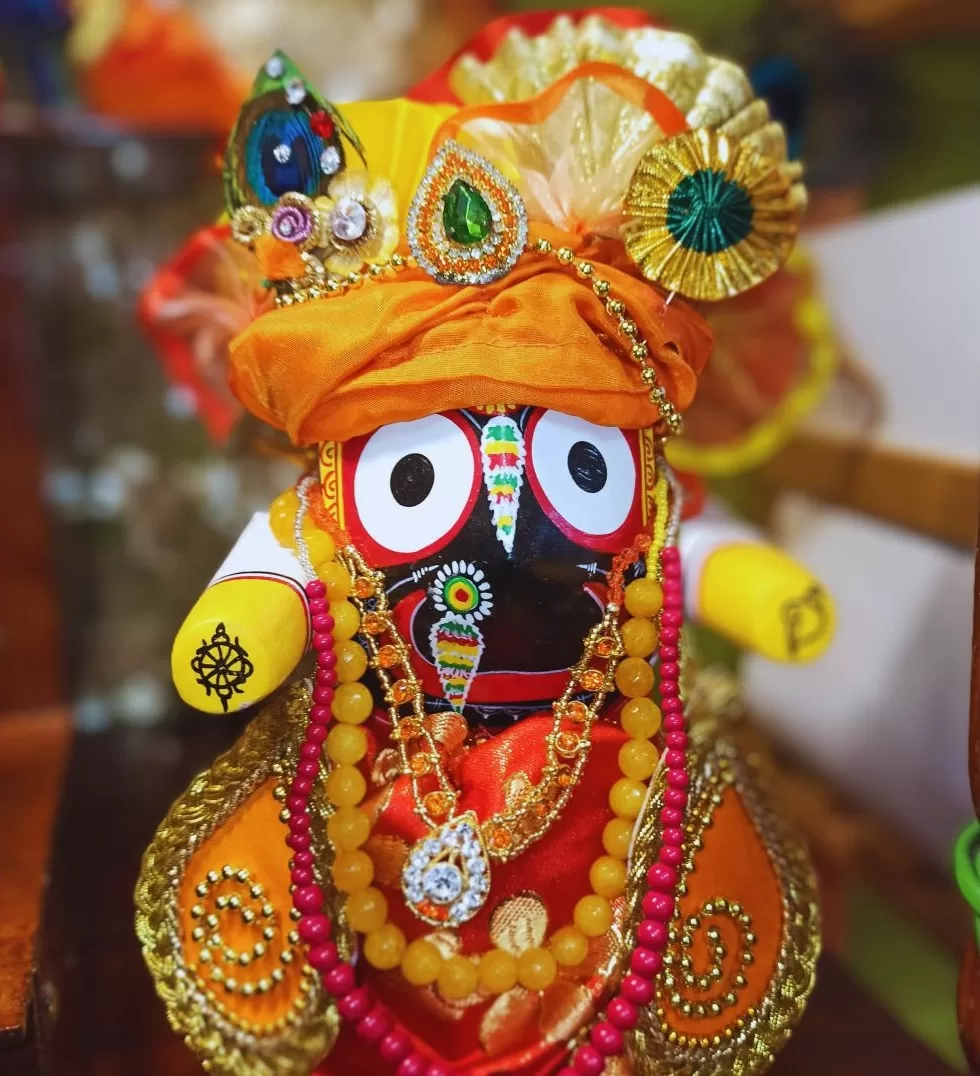
Hare Krishna, When we want do progress in Krishna consiousness, we must chant Hare Krishna Mahamantra and most important is avoid offenses against the Holy Name
by DHARMAVIRA DAS PRABHU
As I said in my previous lesson, we will discuss the ten offenses that one can commit against the holy name as listed in the Padma Purana. The offenses (aparadhas) are the main reason why one doesn’t get the taste for the holy name and why one does not advance in bhakti.
It is extremely important for any serious devotee to understand the most devastating effects of offenses against the holy name.
Although offenses are of many kinds, they are mainly divided into three categories: Vaisnava aparadha, seva aparadha, and nama aparadha. In this lesson we will discuss nama-aparadha and Vaisnava-aparadha.
Sri Caitanya-caritamrta, Adi lila 8.24 states:
‘kṛṣṇa-nāma’ kare aparādhera vicāra kṛṣṇa balile aparādhīra nā haya vikāra
“There are offenses to be considered while chanting the Hare Kṛṣṇa mantra. Therefore simply by chanting Hare Kṛṣṇa one does not become ecstatic.”
Offenses block the appearance of prema:
bahu janma kare yadi śravaṇa, kīrtana tabu ta’ nā pāya kṛṣṇa-pade prema-dhana
“If one is infested with the ten offenses while chanting the Hare Kṛṣṇa mahā- mantra, despite his endeavor to chant the holy name for many births, he will not get love of Godhead which is the ultimate goal of this chanting.” [CC Adi 8.16]
In Navadvipa dhama Mahatmya, ch. 1, Srila Bhaktivinoda Thakura says: bahu janma kṛṣṇa bhaji’ prema nāhi haya
aparādha-puñja tā’ra āchaye niścaya
“If someone does not attain prema even after worshipping Śrī Kṛṣṇa for many lifetimes, it is clear that such a person has committed several offenses.”
Definition of Aparadha (offenses) apagata-radho yasmat iti aparadhah
Any act or emotion which hinders or blocks the flow of love and affection: any activity which causes Krsna to withdraw His affection and protection or any activity performed with an envious mood.
The ten offenses to the holy name mentioned in scriptures (Padma-Purana) and the explanation to each of the offense:
1. To blaspheme the devotees who have dedicated their lives for propagating the holy name of the Lord
Sri Nama Prabhu who is the Lord of the holy name will not excuse anyone who criticises the person who preaches the glories of Sri Nama in this world. One should associate and fully surrender one’s life to such souls because they are the potency of Sri Hari. By taking instructions from them one will quickly get the taste of the holy name.
Therefore, one who accepts the holy name must first reject with his whole heart the tendency to disrespect or disregard any Vaishnava. If a doubt arises about the activity of a Vaishnava, one should try to inquire about the cause of that behaviour and avoid criticizing him. Our primary duty is to have faith (sraddha) in the sadhus.
Speaking about offense against sadhus and Vaisnavas, the scriptures go into some details about it and warn us about a very grave and specific offense called Vaisnava-aparadha. So before we continue with explaining other nama- aparadhas, we need to dedicate some attention to get familiar with and understand the Vaisnava-aparadha.
Skanda Purana lists six kinds of Vaisnava-aparadhas (offenses): hanti nindati vai dvesthi vaisnavan na abhinandati krudhyate yati no harsam darsane patanani sat
Killing or physically harming a devotee
Criticizing or blaspheming a devotee for:
– having a body born in a low family (listed in Upadesamrta)
– having a body with a bad complexion (listed in Upadesamrta)
– having a deformed body (listed in Upadesamrta)
– having a diseased or infirm body (listed in Upadesamrta)
– having traces of sins or imperfectness from previous sinful life(s) (listed in Harinama Cintamani)
– having an accidental or momentary falldown (listed in Harinama Cintamani)
Being envious towards a devotee
Not offering obeisances to a devotee
Become angry towards a devotee
Not becoming happy upon seeing a devotee
It is also said in Hari-bhakti-vilasa (quoted from Skanda Purana in the conversation between Markandeya Rsi and King Bhagiratha) that any person who commits the above 6 offenses will lose his wealth, health, fame, familiy, faith and devotion and everything and will be sent to hellish planets. So devastating is Vaisnava-apradha.
What to do in case you comitted Vaisnava-aparadha?
“The conclusion is that if Kṛṣṇa consciousness is covered by material sins, one can eliminate the sins simply by chanting the Hare Kṛṣṇa mantra, but if one
pollutes his Kṛṣṇa consciousness by offending a brāhmaṇa or a Vaiṣṇava, one cannot revive it until one properly atones for the sin by pleasing the offended Vaiṣṇava or brāhmaṇa. This was the course that Durvāsā Muni had to follow, for he surrendered unto Mahārāja Ambarīṣa. A vaiṣṇava-aparādha cannot be atoned for by any means other than by begging the pardon of the offended Vaiṣṇava.” [Srimad-bhagavatam 4.26.24, purport]
2. To consider the names of demigods like Lord Shiva or Lord Brahma to be equal to, or independent of the holy name of Vishnu
The devas have no separate power of their own and it is an offence to chant the holy names thinking that they do. Sometimes the atheistic class of men take it that any demigod is as good as the Supreme Personality of Godhead, Vishnu.
But one who is a devotee knows that no demigod, however great he may be, is independent from the Supreme Personality of Godhead. Therefore, if someone thinks that he can chant “Kali, Kali! ” or “Durga, Durga!” and it is the same as “Hare Krishna”, that is the greatest offense. The proper understanding is that the demigods are devotees of Bhagavan.
Those who consider Mahadeva (Shiva) an independent and separate demigod, worshiping him alongside Vishnu, do not have a proper understanding of the true glory of Shiva as the greatest among Vaishnavas. Such persons therefore become offensive to both Vishnu and Shiva.
3. To disobey the orders of the Guru or to consider him an ordinary man (ie. to consider his body material)
All scriptures acknowledge that the self-realized spiritual master is non- different from the Lord because he is a perfect representative of the Lord. To disobey Sri Gurudeva is nama-aparadha, an offense to the holy name. He who gives the highest teachings on the truth about the name (nama-tattva) should be accepted as a spiritual master, or acharya, and as someone most dear to Bhagavan. One can attain firm faith in the holy name by cultivating staunch devotion for Sri Gurudeva.
4. To blaspheme the Vedic literature or literature in persuance of the Vedic version
Out of causeless mercy for the conditioned souls entrapped in the web of illusion of material energy (maya) and suffering all kinds of miseries from the time immemorial, the merciful Lord Krishna gave us the holy Vedic literature and its supplements by which we can find out about the Absolute Truth and remember our relationship with Him. Not only that, all the Vedas only chant the holy name and glories of Lord Krishna. Therefore, to blaspheme these scriptures is an offense to the holy name, the glories of which are described throughout the Vedas. In the Mahabharata (Svargarohana-parva 6.93) is said:
“In the Vedic literature, including the Ramayana, Puranas and Mahabharata, from the very beginning to the end, as well as within the middle, only Hari, the Supreme Personality Personality of Godhead, is explained.”
How can a person develop love for the holy name if he blasphemes bona-fide scriptures? Some people consider the scriptures’ descriptions of the importance of the holy name to be simply words of praise. It is an offense to the holy name to chant the name with such an attitude, and those who do so will never achieve any tangible result.
5. To consider the glories of chanting the holy name to be imagination or exaggeration
Unfortunately, this is how the impersonalists use the holy name – they accept the conclusion that Supreme God is formless and nameless and they think that holy names of Visnu, Krishna, Rama etc. were invented by some rishis in order to bring oneself to impersonal liberation, ie. for the goal of becoming one with God. But even among devotees, one may chant the holy names of Krishna thinking it is not as potent or powerful or glorious as is said in the Vedic scriptures by the self-realized spiritual masters in the line of the Guru- parampara.
Therefore to think that the glories are imaginary is an offense. In the beginning, or as long as one does not have their own personal realization of the glories of the holy name, one should at least have theoretical positive faith in the words of Vaishnava, guru and sastra that the holy name is real, spiritual, eternal and all-powerful. The holy name will not be merciful to one who who thinks of it is imaginary.
6. To give a concocted interpretation of the holy name of the Lord
The scriptures explain that the holy name has all the powers of the Supreme Personality of Godhead Himself. The holy name is perfectly spiritual and has the power to deliver one from the cycle of birth and death. For example, one may speculate that the word Krishna simply means “black”. So how can this word give any spiritual bliss? But Krishna is the Absolute Truth and His name, His form, qualities and pastimes are all non-different from Him. Therefore to try to give material meanings to the completely spiritual holy name of the Lord is offensive.
It is said in the Brahma-samhita:
“Any person who, after hearing the descriptions of the various benefits obtained by chanting the holy name thinks these benefits are exaggerated, is thrown into a host of sufferings and torture in many horrible ways.”
7. To commit sinful activities on the strength of the holy name of the Lord
Knowing of the all-purifying power of the holy name one may think he can continue to act sinfully and after that chant Hare Krishna to neutralize his sins. This dangerous mentality is very offensive and should be avoided at all costs.
8. To consider the chanting of Hare Krishna as one of the auspicious ritualistic activities offered in the Vedas as fruitive activities (karma -kanda)
A person who thinks that ordinary material pious activities are equal to chanting the holy name of Lord Hari commits an offense to the holy name.
9. To instruct a faithless person about the glories of the holy name Anyone can take part in chanting the holy name of the Lord, but in the
beginning one should not be instructed about the transcendental potency of
the Lord. Those who are too sinful and averse cannot appreciate the transcendental glories of the Lord, and therefore it is better not to instruct them in this matter.
When one becomes a maha-bhagavata, one will have transcendental potency to give people faith in the holy name. To such persons one may teach the truth about the holy name of Lord Hari.
10. To not have complete faith in the holy names and to maintain material attachments, even after hearing so many instructions on this matter
If after hearing again and again the same instruction that nothing is ours but Krishna’s, one still maintains the bodily concept of ‘I and Mine’, that is an offense. One should surrender and offer to the Lord one’s words, mind, bodily actions and everything he has.
IMPORTANT NOTE: It is also an offense to be inattentive while chanting the holy names. Inattentive chanting is the root cause of all offenses.
Srila Bhaktivinoda Thakur states the following about inattentive chanting:
“If one gives up all the offenses in chanting, but remains inattentive, he can never develop attachment for chanting.” (Sajjana Tosani 11/1)
“O reservoir of all transcendental qualities! If one chants the holy names of the Lord but his attention is elsewhere, how can he benefit? If even such a person chants one hundred thousand holy names of the Lord, still a drop of the mellow of ecstatic love will not be attained. O Lord! This is the definition of inattention while chanting the holy names. This offense is deeply rooted in the hearts of materialists.” (Harinama-cintamani)
Your servant, Dharmavira das
For any questions about lesson send an email to: dharmaviran@gmail.com
All the previous lessons can be found and downloaded here: https://www.facebook.com/groups/chanting64rounds/files
! For more Biography look here!
!For more Articles look here!
