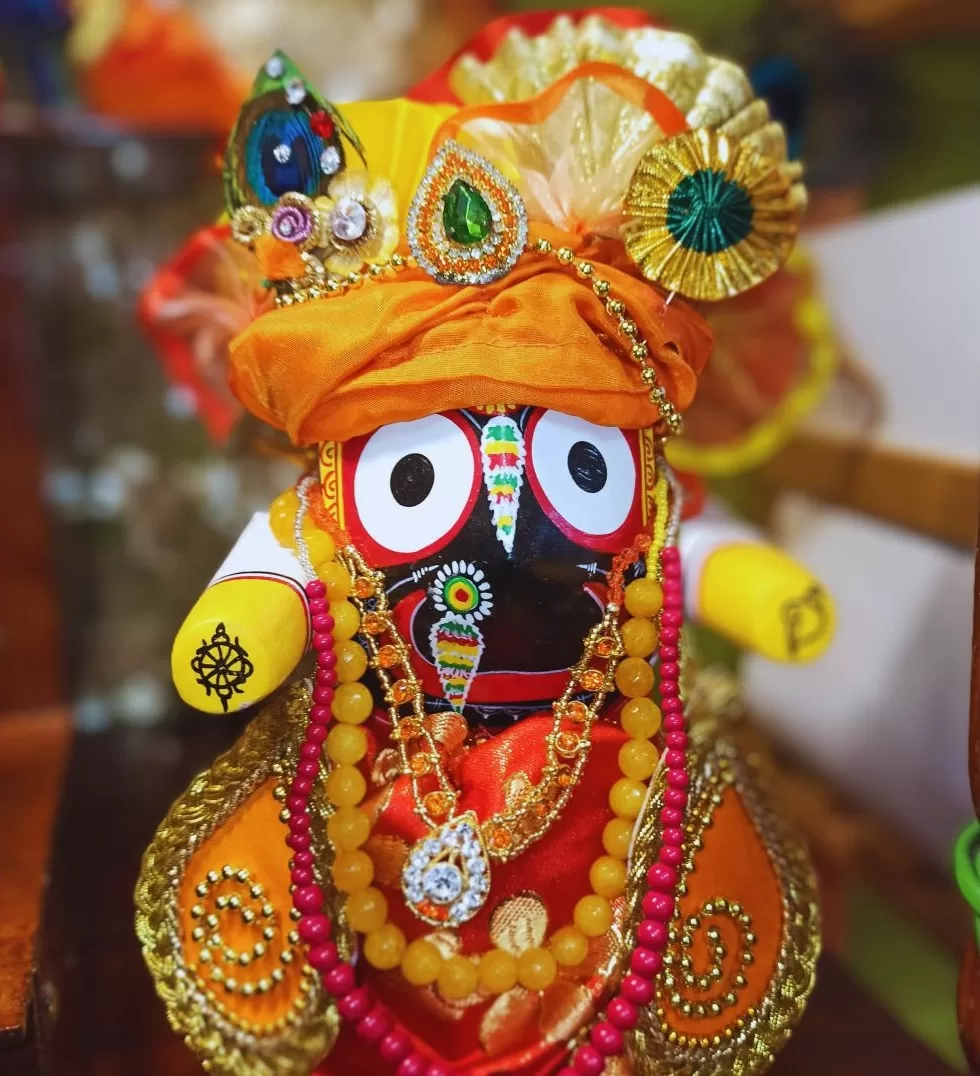
Hare Krishna, Tomorrow we have Jayā ekādaśī (Bhaimi). So here is interesting Story!
Jayā Ekādaśī
The ekādaśī in the month of Māgha is known as Jayā ekādaśī. On the dvādaśī day of śukla paksa, we can see the star called Punarvasu Naksatra; hence, this day is considered to be very auspicious. Śrī Krishna explains the significance of Jayā ekādaśī to Dharmarāja as follows.
“O Yudhisṭhira, I am happy to tell you about the ekādaśī that occurs during the bright-moon half of this month of Māgha. This ekādaśī obliterates all kinds of sinful reactions and demoniac influences that may be affecting the spirit soul. It is known as Jayā Ekādaśī, and the fortunate soul who observes a fast on this sacred day is relieved of the great burden of ghostly existence. There is no better ekādaśī than this, for it truly bestows freedom from birth and death. It is to be honored very carefully and diligently.”
Significance of bathing in a river in the month of Māgha
hareḳ pūjā ca vaiśākhe tapaḳ pūjā ca kārtike tapo homas thatā dānaṁ trayaṁ mĀghe viśiṣyate
“In Vaiśākha, Śrī Hari pūjā is prominent; in Kārttika, all tapas connected with Śrī Hari are prominent; and in Māgha, tapas, homa, and dāna connected with Śrī Hari are prominent. All charity in the name of Śrī Hari and all homa offered to Him bring great benefits.”
“In ancient times, for twelve years Aditi-devī bathed before sunrise and did not eat in Māgha. She became the mother of twelve devas called the dvādaśa ādityas. Rohiṇī-devī practiced māgha snāna-vrata and attained saubhāgya (good fortune). Arundhatī became the best among women by practicing māgha-snāna and dāna. Śacīdevī attained immense beauty by performing austerities including māgha-snāna.
The sunrays have a special effect on our bodies and souls during pre-dawn bathing in the month of Māgha. In Māgha, sesame seed dāna and pre-dawn bathing in a river are essential for bhakti to Śrī Hari.”
– Conversation between Dilīpa and Sage Vasisṭha regarding significance of Māgha snāna.
The glories of Jayā ekādaśī, which occurs during the waxing moon in the period of January-February, are described in Bhavisya- uttara Purāna in a conversation between Lord Krishna and Mahārāja Yudhisṭhira.
Once, Mahārāja Yudhisṭhira said, “O Lord Krishna , O original Personality of Godhead, O Lord of the universe, You are the original cause of the four types of living entities– namely, those born from perspiration, those born from a seed, those born from an egg, and those born from an embryo. You alone are the creator, maintainer, and destroyer of everything.
Please describe the glories of the ekādaśī which occurs during the waxing moon in the period of January-February, and explain the procedure for observing it. Also, please tell me which Deity is to be worshiped on this auspicious day.” Lord Krishna replied, “O best of kings, the ekādaśī which occurs during the waxing moon in the period of January-February is celebrated as Jayā ekādaśī.
Following it takes away all of one’s sinful reactions. The performer of this vow is never forced to accept the body of a ghost. O king, as far as awarding liberation and eliminating one’s sinful reactions, this ekādaśī has no equal. O lion- like king, now please hear a description of this ekādaśī which I previously narrated in Padma Purāna.
“The demigods were living happily in the heavenly kingdom of Indra. The Apsarās freely enjoyed in the nandana-kānana forest, which was filled with the fragrance of fully blossomed Pārijāta flowers. Indra enjoyed various exchanges with the Apsarās. Once, Indra arranged a dance festival with fifty-million Apsarās. There was a Gandharva singer named Puśpadanta in that assembly. Another Gandharva named Citrasena attended along with his wife Mālinī and daughter.
Citrasena had a son named Puśpavāna, whose son was Mālyavān. A Gāndharvī named Puśpavantī was attracted by the beauty of Mālyavān. Pierced by the potent arrows of Cupid, the very beautiful Puśpavantī tried to captivate Mālyavān through various provocative gestures and glances. O king, how can I adequately describe the splendid beauty of Puśpavantīs She had beautiful arms which resemble the ropes of Cupid, and the beauty of her face was like that of the moon.
She had attractive eyes, her ears were decorated with earrings, and her neck defeated the beauty of a conch-shell. Her waist was thin, her breasts were firm, her hips were broad, and her thighs resembled banana trees. Her shining feet defeated the beauty of a red lotus flower. Gorgeous ornaments and garments made her attractive bodily features appear even more enchanting. Mālyavān became totally captivated by the beauty of Puśpavantī.
“To please Indra, Mālyavān and Puśpavantī began to dance and sing with other Apsarās in that dance festival. Being attracted to each other, they were distracted and could not perform well, resulting in a disturbance in the dance assembly. They continuously looked at each other through the corners of their eyes, and they were pierced by the arrows of Cupid.
When Indra noticed the continuous disturbance in the singing and dancing, he understood the situation. He became angry and cursed them as follows: ‘You are sinful fools. I am cursing you because you disobeyed me. You must accept the bodies of a male and female ghost and take birth on Earth to experience the results of your karma.’
“After being cursed in this way, Mālyavān and Puśpavantī became ghosts, and they began to spend their miserable lives in a cave in the Himalaya Mountains. As ghosts they felt great distress and lamentation. Due to the curse, they could not sleep or use their sense of smell or touch. Once, while wandering in the cold, dense forest of the Himalayas, they sat and began to contemplate.
The male ghost said to the female ghost, ‘Alas, what heinous, sinful activities we committed that led to our receiving such miserable ghost bodies!’ They felt extremely sad and repentant. As ghosts, Mālyavān and Puśpavantī spent that day without eating and continuously repenting for their misdeeds. Coincidentally, this was the auspicious day of
Jayā ekādaśī. Although they were extremely hungry and thirsty, they did not kill any living entity because of that. They even abstained from taking roots, fruits, and water. O king, in this way the ghost- couple satin misery beneath a banyan tree. They passed the entire night without sleeping, freezing in the cold air and lost in deep thoughts. There was no propensity for sense gratification in their disturbed minds.
“O lion-hearted king, in this way they unknowingly observed the vow of Jayā ekādaśī, and the next day they were liberated from their ghost bodies due to the piety that they had earned. Thereafter, Puśpavantī and Mālyavān regained their original positions and they returned to heaven through the skyways. Arriving in heaven, they happily approached Indra, the king of the demigods, and offered him their obeisances.
When Indra saw them, he was struck with wonder and said, ‘How astonishing! By what piety have you been freed from your ghostly condition? Which demigod released you from my curse?’Mālyavān replied, ‘By the causeless mercy of the Supreme Lord, and as a result of observing the vow of Jayā ekādaśī, which is very dear to Him, we were freed from the curse.
O master, I am certain that we were freed from our ghostly lives as a result of devotional service. ‘Indra said, ‘You were purified by executing devotional service to Lord Visṇu and observing the vow of ekādaśī. Therefore, you are now worshipable for me. I certainly worship and respect human beings who are engaged in devotional service to Vi?ṇu.’ Thereafter, Puśpavantī and Mālyavān lived happily in the heavenly planets.
Lord Krishna concluded, “O King Yudhisṭhira, this is why one must observe the vow of ekādaśī. Observing Jayā ekādaśī takes away even the sin of killing a brāhmana. The secondary fruit of observing this vow is that one automatically receives the piety of giving charity, performing sacrifices, and visiting holy places. If one properly follows this vow with faith and devotion, he will live in Vaikuṇṭha forever. Just by reading or hearing the glories of this ekādaśī, one attains the result of an Agnisṭoma sacrifice.”
! For more Biography look here!
!For more Articles look here!

The End