Hare Krishna, today is appearance day of Sita-devi, wife of Lord Rama.
Śrī Guru-Praṇāma:
oṁ ajñāna-timirāndhasya
jñānāñjana-śalākayā
caksur unmīlitaṁ yena
tasmai śrī-guruve namaḥ
“I offer my respectful obeisances unto my spiritual master, who with the torchlight of knowledge has opened my eyes, which were blinded by the darkness of ignorance.”
Two important verses:
suna suna nityananda, suna haridasa
sarvatra amara ajna karaha prakasa
prati ghare ghare giya kara ei bhiksa
‘bala krsna, bhaja krsna, kara krsna-siksa’
“Listen, listen, Nityananda! Listen, Haridasa! Make My command known everywhere! Go from house to house and beg from all the residents, ‘Please chant Krishna’s name, worship Krishna, and practise what Krishna teaches.’” (Sri Chaitanya-bhagavat, 2.13.8-9)
harer nāma harer nāma
harer nāmaiva kevalam
kalau nāsty eva nāsty eva
nāsty eva gatir anyathā
“In this age of quarrel and hypocrisy, the only means of deliverence is the chanting of the holy names of the Lord. There is no other way. There is no other way. There is no other way.”
Mahā-mantra Hare Kṛṣṇa:
Hare Kṛṣṇa Hare Kṛṣṇa
Kṛṣṇa Kṛṣṇa Hare Hare
Hare Rāma Hare Rāma
Rāma Rāma Hare Hare
Article: Sita-Devi – biography
In Gaudiya-Vaishnava philosophy, the story of Sita and Rama is primarily a story of love. Love in the spiritual world exists in innumerable forms. Just as an eskimo has a million words for snow, so the spiritual language of Sanskrit has words describing various nuances of divine love. One such term is viraha bhakti or vipralambha rasa. These terms refer to the love that exists when two personalities are separated.
Love in union is exemplified by the relationship of Lakshmi and Narayana. Lakshmi is called Sri and is the embodiment of regulated devotional service. Sita however is known as Bhu. She displays further devotion, for her love extends into the realm of separation. These levels of love extend to degrees which are hardly possible for even a liberated soul. Sri Chaitanya gives a hint about this love in separation:
O Govinda! Feeling Your separation, I am experiencing a moment to be like a millenium of more. Tears are flowing from my eyes like torrents of rain and I am feeling all vacant in the world in Your absence.
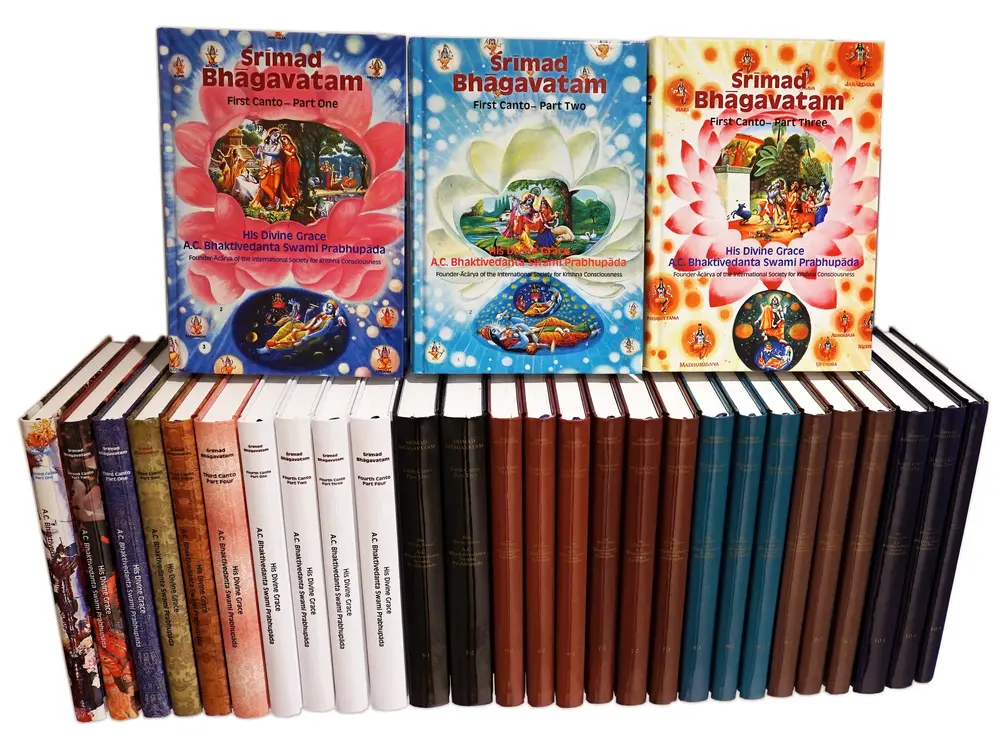
In the spiritual world we hear of these and other unheard of intensities of spiritual love. This is further explained by His Divine Grace Bhaktivedanta Swami Prabhupada in his Bhagavatam commentary:
The separation of Lord Ramacandra and Sita is spiritually understood as vipralambha, which is an activity of the hladini potency of the Supreme Personality of Godhead belonging to the srngara rasa, the mellow of conjugal love in the spiritual world. In the spiritual world the Supreme Personality of Godhead has all the dealings of love, displaying the symptoms called sattvika, sancari, vilapa, murccha and unmada.
Thus when Lord Ramacandra was separated from Sita, all these spiritual symptoms were manifest. The Lord is neither impersonal nor impotent. Rather, He is sac-cid-ananda-vigraha, the eternal form of knowledge and bliss. Thus He has all the items of spiritual bliss. Feeling separation from one’s beloved is also an item of spiritual bliss.
Thus the story of the Ramayana is a glorification of the Lord, the devotee, and above all the love-bhakti-rasa- that binds them together.
The Appearance of Sita
Once King Janaka was ploughing a piece of land to prepare it for conducting a Yajna. He unearthed a golden casket in which he found a beautiful girl and was overjoyed. A land ploughed by the yoke is called ʹSitaʹ, and so he named the baby as Sita. With the arrival of the baby, the kingʹs good luck appeared to soar up. His queen also gave birth to a daughter who was named Urmila. The royal couple brought up the children with great affection. They gave them a good education.
The two beautiful girls, by their noble qualities, good behaviour and intelligence, endeared themselves to one and all and grew to become ideal princesses.
Sita Swaymvar
King Janaka decided to marry off his daughter to one who could lift a bow (blessed by Lord Shiva) and charge its arrow. It so happened that one day, revered sage Parasurama came to visit king Janaka. He carried a bow with him. He left it at the doorstep of the royal hall and went inside.
Sita (very young then) saw the bow, ran to it and began playing with it. When Parasurama came out, the bow was missing. Ordinary persons could not lift it with ease because this was bow given by Lord Shiva. He, curiously looking around, spotted Sita playing with it as if it was a play- horse. The sage and the king were astonished.
The great Sage Parasurama then blessed Sita and said to king Janaka: ʺMy dear king, only a great, and strong person can wed this girl of such capacity. Arrange a ʹSwayamvaraʹ (where the brides choose their spouses for their prowess) for her and let the most suitable person in the three worlds marry her.ʺ
Thus King Dasaratha prepared for a Swayamvara (wedding competition) for her daughter Sita . Many noble princes from several kingdoms came aspiring for the hand of the beautiful damsel Sita. But they were awed by the mighty bow and, saluting it turned away. Lord Ram and Laxman were present there along with his guru Vasistha.
When asked by sage Vasistha, Lord Ram raised the bow with ease and thrust an arrow. As he bent the bow, it broke. Sita came and garlanded him and accepted him as her husband. The news reached king Dasharatha who rushed to Mithila with his entourage. The marriage of Rama and Sita Devi was solemnized in a grand manner.
14 years in Forest
King Dasharatha had three wives, third being Kaikeyi. She too was very affectionate towards Rama. But carried away by the advice of her maid Manthara, she claimed that her son Bharata should succeed as the next king, and that Rama should go to forest for fourteen years. Dasharatha was shocked to hear this. All his pleadings with Kaikeyi to change her mind proved in vain.
Rama eventually had to leave for the forest. Sita also insisted on going with him and serving him there. They wondered from one place to another in jungle and fulfilled several missions. Eventually she was kidnapped by Ravana with the help of Mareecha. Lord Rama and Laxman were greatly distressed with this incidence and they started looking for her everywhere. With the help of Jatayu, they found out that Ravana took Sita to Lanka.
Ravana would torture Sita and keep forcing her to accept his invitation to marry with him. He kept her in the Ashoka garden. Once Hanuman flew to Lanka in search of Mother Sita. He saw her beneath the Ashoka tree. She looked weak and pale. Hanuman came down from the treetop and stood before Sita singing the praise of Rama. Sita, surprised, feared that this too might be a ruse of Ravana.
But Hanuman assured her and revealed his real self. He gave her the ring given by Rama as a sign of recognition and told her about the welfare of the brothers. Sita felt relieved. She reverently touched her eyes with the ring. She explained her experiences to him and said: ʺIf Rama does not come within two months, my life will be finished. Tell Rama to come soon and save me.ʺ
Hanuman said: ʺ0 Mother, why should we wait that long? I can carry you on my shoulders and fly to Rama now itself.ʺ But Sita did not agree and said: ʺHanuman, it is Ramaʹs duty. I will suffer all the hardships here till he comes. Give this ring to him as a sign of recognition. Hanuman returned.
Then, Rama, accompanied by the army the monkeys, immediately proceeded towards Lanka. A bridge was built across the sea.
The armies of Rama and Ravana fought a fierce battle. Ravana was also a man of extraordinary power. It was a long fight, ending in the death of Ravana. Rama installed Vibhishana, a younger brother of Ravana, as the king of Lanka.
Thereafter on Lord Ramʹs request, Vibhishana brought Sita to Rama.
The Fire Ordeal
Out of fear for public scandal, Lord Ram spoke to Sita the following words ʺWhat man of spirit and born in a noble family for his part would take back with an eager mind a woman who has dwelt in anotherʹs house. While boasting of my lineage, how can I accept again you who was squeezed into arms of Ravana. There is no more attachment for you in my heart. You may therefore go wherever you like.ʺ
Can such a kind-hearted soul as Rama speak so cruelly? Sita could not believe her ears. She spoke to Lord Rama ʺOʹ mighty-armed one, be restored to confidence about me. I swear to you by my own character. I was helpless when I came into contact with Ravana. I did not act ion my own free will.ʺ
Speaking in a voice choked with tears, Sita appealed to Lakshmanaʺ please prepare a fire pyre for me, the only antidote against this calamity. I no longer desire to live.ʺ With tears in his eyes, Lakshmana prepared the fire. (Valmiki Ramayana, Yuddhakanda, Cantos 115 – 116).
Sita bowed to her husband and prayed: ʺ0 Fire God, if I am pure, unsullied and faithful to my husband, please protect me on all sides.ʺ So saying, she walked into the flames with a fearless mindʺ. All were shocked and the women present wailed. But the fire subsided and the Fire God stepped out carrying Sita. He told Rama: ʺHere is your Sita. No sin exists in her and she has never been unfaithful to you.
Therefore please accept the sinless princess of Mithila.ʺ
Bugles blew, flowers were showered on them. Rama then said, ʺI know Sita is pure. Still, she undoubtedly needed this purificatory ordeal in the eyes of the people.ʺ He gladly accepted Sita.
Finally Lord Rama, Sita, Laxman and others then flew to Ayodhya in ‘Pushpaka- vimanaʹ. On their arrival at Ayodhya, Bharata and the citizens accorded a grand welcome to Rama. Everybody was filled with happiness. All were talking about Sita. Already, preparations for Ramaʹs coronation were complete. He was ceremonially crowned the king.
Return to Mother Earth
By chance one night Lord Rama heard a man talking to his wife who had gone to another manʹs house. In the course of rebuking his wife, the man spoke detrimentally about the character of Mother Sita, saying that he (the husband) is not like Rama who allows his wife to come back even after staying at anotherʹs house.
Rama immediately returned home, and fearing such rumours, he externally decided to give up the company of his beloved wife, Sita. He sent her away to the ʹasramaʹ of Valmiki Muni, even though she was pregnant at the time. She later gave birth to twin sons named Lava and Kusa.
Lord Rama continued to perform many sacrifices during his ruling Ayodhya. At one such sacrifice, some fifteen years later, two boys came into the arena of the sacrifice while Rama was sitting on his ʹasanaʹ. Valmiki had taught the boys the whole poem of the Ramayana and had put the story to a very beautiful and melodious ʹswaraʹ, tune. Valmiki, accompanying the two boys, asked Ramaʹs permission so the boys could recite his poem. Rama gave permission, and the boys commenced in perfect unison.
Lord Rama was deeply stirred by the depth of the knowledge of him and his pastime. Night after night the recital continued until it came to Sitaʹs abandonment to Valmikiʹs ʹashramaʹ. Rama was then convinced they were his very own sons born to Mother Sita. He sent word to Valmiki that he should come with Sita and vouch for her purity and faithfulness. If Sita was willing to come before the assembly and give proof of her innocence, she could resume her rightful place at her Lordʹs side.
Everyone agreed and the next day Mother Sita came. Everyone was touched at the sight of her, her head and eyes downcast, tears running down her beautiful face, her long hair chastely adorning her back.
Valmiki Muni respectfully approached Sri Rama saying, ʺO son of Dasaratha, here is your wife Sita. She has been staying in my ʹasramaʹ since you abandoned her, performing austerities. She is completely without blame and is pure and innocent. Due to your position as King you played the part that you feared public opinion may be detrimental for you, and so you have also performed severe austerities.
However, it is now proper that your impeccable wife be allowed to prove her own innocence.ʺ (Valmiki Ramayana Uttarakanda)
Sita stood in silence, her eyes transfixed on the ground without blinking. With folded hands she said, ʺIf Rama has always been foremost in my heart, then may my Mother Earth herself deliver me. If I have been only true to him, wholly, mind, body and soul, then may my Mother Earth deliver me. If I have loved none but him, then let my Mother Earth deliver me.ʺ
Then while Sita was taking oath, the earth rumbled, shook and cracked open and a divine throne of wonderful beauty rose from the earth carrying Mother Earth personified, and she invited Sita to take her seat along side her. Seeing Mother Sita thus seated entering the netherworld, a divine shower of flowers in succession covered Sita (Valmiki Ramayana, Uttarakanda, Canto 97).
Let us offer our humble prayers to Mother Sita and Lord Rama.
Raghupathi Raghava Raja Rama, Patita Pavan Sita Rama Sita Rama Jaya Sita Rama, Patita Pavana Sita Rama Janaki Vallabha Sita Rama, Patita Pavana Sita Rama
[shared_counts]