Hare Krishna, tomorrow is Śayana Ekādaśī, here is story!
Śrī Guru-Praṇāma:
oṁ ajñāna-timirāndhasya
jñānāñjana-śalākayā
caksur unmīlitaṁ yena
tasmai śrī-guruve namaḥ
“I offer my respectful obeisances unto my spiritual master, who with the torchlight of knowledge has opened my eyes, which were blinded by the darkness of ignorance.”
Two important verses:
suna suna nityananda, suna haridasa
sarvatra amara ajna karaha prakasa
prati ghare ghare giya kara ei bhiksa
‘bala krsna, bhaja krsna, kara krsna-siksa’
“Listen, listen, Nityananda! Listen, Haridasa! Make My command known everywhere! Go from house to house and beg from all the residents, ‘Please chant Krishna’s name, worship Krishna, and practise what Krishna teaches.’” (Sri Chaitanya-bhagavat, 2.13.8-9)
harer nāma harer nāma
harer nāmaiva kevalam
kalau nāsty eva nāsty eva
nāsty eva gatir anyathā
“In this age of quarrel and hypocrisy, the only means of deliverence is the chanting of the holy names of the Lord. There is no other way. There is no other way. There is no other way.”
Mahā-mantra Hare Kṛṣṇa:
Hare Kṛṣṇa Hare Kṛṣṇa
Kṛṣṇa Kṛṣṇa Hare Hare
Hare Rāma Hare Rāma
Rāma Rāma Hare Hare
Article: Śayana Ekādaśī
Śayana, Devaśayanī, or Padmā ekādaśī is described in Bhaviṣyottara Purāṇa in a conversation between Lord Kṛṣṇa and Mahārāja Yudhiṣṭhira.
Once, Mahārāja Yudhiṣṭhira said, “O Keśava, what is the name of the ekādaśī that occurs during the waxing moon in the period of June-July? Who is the worshipable Deity of this sacred day, and what are the rules and regulations for observing it? Please explain these things to me in detail.”
Lord Kṛṣṇa replied, “O maintainer of this world, Śrī Nārada Muni once asked this question to Lord Brahmā. Now, please hear from Me the wonderful history which Lord Brahmā narrated to Nārada Muni in his reply.
“Once Nārada, the great orator and best of sages, asked Lord Brahmā, ‘O father, what is the name of the ekādaśī that occurs during the waxing moon in the period of June-July? Kindly explain to me how to observe this ekādaśī in order to please the Supreme Lord Viṣṇu.’
“Lord Brahmā replied, ‘There is no vow in this material world that is as sacred as the vow of ekādaśī. One must follow this vow to nullify all of one’s sinful reactions. A person in this world who does not observe ekādaśī certainly goes to hell. The ekādaśī which occurs during the waxing moon in the period of June-July is called Devaśayanī or Padmā ekādaśī. One should follow this ekādaśī to please the Supreme Lord Hṛṣīkeśa.
“‘The Purāṇas state that once there was a saintly emperor named Māndhātā who ruled the entire world. He was born in the dynasty of the sun-god. He was extremely powerful and always stood up for the truth. This king maintained his subjects with piety and affection as if they were his own children. There was no famine, drought, or disease in the kingdom. All of the subjects lived peacefully and prosperously, without any anxiety. All of the wealth in the king’s treasury was earned honestly. In this way, the king and his subjects happily passed their days.
“‘After many years, due to Providence and some sinful activities, there was no rainfall in the kingdom for three consecutive years. As a result, there was a lack of food and the people became hungry and full of anxiety. The performance of various sacrifices and the study of the Vedas ceased due to the scarcity of food.
“‘All of the subjects approached the king and appealed, “O king, please hear our words, which we hope will ultimately benefit us. Water is referred to in the scriptures as nāra. The Supreme Lord resides (ayana) in nāra. That is why another name of the Supreme Lord is Nārāyaṇa. The Supreme Lord Viṣṇu is all-pervading in His form as clouds. He alone causes the rain to fall. Food grains are produced from rain, so the living entities depend on rain. Presently, your subjects are suffering and decreasing in number due to lack of rain and food grains. O best of kings, please put an end to our miserable condition, and restore peace and prosperity to the kingdom.”
“‘The king replied, “Whatever you have said is true. Food grains are considered to be like Brahman; everything is sustained by food grains. All of the living entities subsist on them. The Purāṇas and other scriptures clearly state that if a king commits sinful activities, he and his subjects must suffer. Although I cannot ascertain my fault in this matter, for the benefit of my subjects I will continue to try my best to do so.”
“‘Then King Māndhātā gathered some of his principal soldiers, and after offering obeisances to Brahmā, they entered the forest. Within the forest they visited many āśramas of great sages and ascetics. One day, by Providence the king met with the great sage Aṅgirā, a son of Brahmā. Sage Aṅgirā was as effulgent as Brahmā; his effulgence illuminated all four directions. As soon as the self-controlled king saw him, he immediately got down from his carrier and offered his respectful obeisances at the feet of the sage. Then, the king folded his hands and offered prayers. The sage reciprocated and blessed the king.
“‘Then the sage inquired from the king, “How is your kingdom, and why have you come here?” The king replied, “O lord, although I have ruled my kingdom according to religious principles, for the last three years there has been no rainfall. As a result, my subjects are suffering in various ways. I have not been able to ascertain the cause of this bad fortune so that I may find a solution. Today I have come to your lotus feet with the hope that you will kindly tell me a way by which I can reestablish peace and auspiciousness in my kingdom.”
“‘Aṅgirā said, “O king, this present age of Satya-yuga is the best of all yugas. In this yuga, people worship the Supreme Brahman, and the fourfold religious principles are manifest. No one except the brāhmaṇas is supposed to perform austerities in this yuga. In spite of this standard, a śūdra in your kingdom is undergoing austerities. You are facing the consequences of this unlawful conduct in the form of drought. Therefore, killing this offender will bring peace and prosperity back to your kingdom.”
“‘The king said, “O great sage, I cannot kill an innocent person performing austerities. Therefore, please tell me of another solution.”
“‘The sage replied, “O king, in this case, you should observe the sacred ekādaśī known as Padmā or Devaśayanī, which occurs during the waxing moon in the period of June-July. Following this vow will certainly result in rain falling in your kingdom. This ekādaśī awards one all auspiciousness, and destroys all obstacles on the path to perfection. O king, you and your subjects should observe this ekādaśī.”
“‘After hearing these reassuring words of the great sage, the king offered his obeisances and returned to his palace. Thereafter, in the month of Āṣāḍha (June-July), the king, his family, and his subjects properly observed this auspicious Padma or Śayana ekādaśī. As a result, rain showered all over the kingdom. The scarcity of water was over, and soon the entire kingdom was full of food grains. By the mercy of the Supreme Lord Hṛṣīkeśa, everyone lived happily.
“‘Thus, it is everyone’s duty to observe this sacred ekādaśī, which awards happiness and liberation to all. All of one’s sinful reactions are destroyed by hearing and reading about the glories of this ekādaśī.
“‘This ekādaśī is also known as Viṣṇu-śayanī ekādaśī. Devotees observe it with pure devotion to please Lord Viṣṇu. They do not endeavor for material enjoyment or liberation; rather, they only pray for pure devotional service to the Lord. The vow of Cāturmāsya begins from this ekādaśī. Devotees observe Cāturmāsya by hearing and chanting about topics of the Lord for four months, from the day that Lord Hari goes to sleep until the day that He wakes up.’”
Mahārāja Yudhiṣṭhira said, “O Kṛṣṇa, please tell me how one should observe Śrī Viṣṇu-śayana-vrata or Cāturmāsya-vrata.”
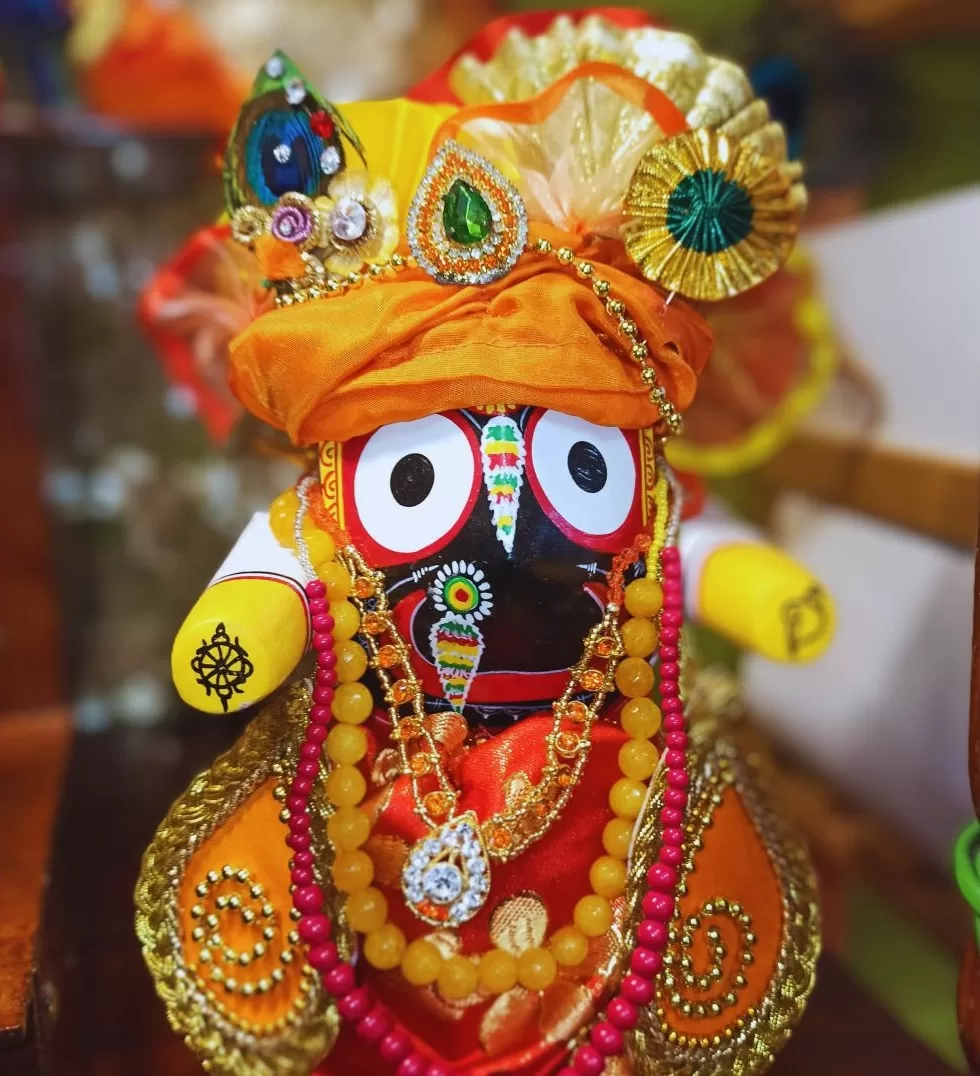
Lord Kṛṣṇa replied, “O king, when the sun is in the constellation of Cancer, Śrī Madhusūdana, the Lord of the universe, goes to sleep, and when the sun enters the constellation of Libra, the Lord wakes up. The vow of Cāturmāsya commences on the day of Śayana ekādaśī. O King Yudhiṣṭhira, after taking bath one should dress the Deity of Lord Viṣṇu in yellow garments.
He should put the Lord to rest on a bed covered with white sheets. First, under the guidance of qualified brāhmaṇas, one should bathe the Deity of the Lord with five ingredients, including yogurt, milk, ghee, honey, and sugar water. Thereafter, one should wipe the Lord’s body with a cloth and apply fragrant sandalwood paste to it. Then, he should worship the Lord by offering incense, ghee lamps, and flowers with devotion.
“One can also begin observing the vow of Cāturmāsya from the day of ekādaśī, dvādaśī, Pūrṇimā, aṣṭamī, or Saṅkrānti (when the sun enters the constellation of Cancer). The vow of Cāturmāsya ends on the day of dvādaśī which falls on the day after Utthāna ekādaśī in the month of Kārtika. A person who observes Cāturmāsya and remembers Lord Hari goes back to the abode of Lord Viṣṇu in a spiritual airplane as effulgent as the sun.
Anyone who cleans the temple or its courtyard, decorates them with flowers and vines, or feeds the brāhmaṇas to the best of his ability at the end of this vow attains great happiness for seven lifetimes. One becomes fortunate and prosperous by offering ghee lamps to the Lord during this vow. One who chants the Gāyatrī mantra one hundred and eight times in the temple of the Lord in the morning, at noon, and in the evening is completely protected from committing sinful activities.
Lord Vyāsadeva is pleased with such a person and sends him to the abode of Viṣṇu. Anyone who donates twenty-eight or one hundred and eight pots of sesame seeds to the intelligent brāhmaṇas at the end of Cāturmāsya is freed from all sinful reactions due to misuse of body, mind, and speech. Such a person will be free of diseases and will have intelligent children.”
“A practitioner of devotional service should not sleep on a comfortable, raised bed for the four months when Lord Janārdana takes rest. Sex is prohibited during Cāturmāsya, except for the days following menstruation. One should observe this vow by eating only supper, by eating only once a day, or by eating only that which comes without asking. One who chants and sings before the Deity of Lord Viṣṇu during Cāturmāsya goes to the planet of the Gandharvas.
A person who gives up eating gur or jaggery during this time is blessed with sons and grandsons. By refraining from taking oil, one becomes beautiful and his enemies are destroyed. By fasting from food preparations which are bitter, pungent, sour, sweet, or salty, ugliness and bad bodily odor are eliminated. Those who give up the enjoyment of flowers go to the heavenly planets and become Vidyādharas.
By not chewing butternuts, one immediately becomes free of diseases. If one eats food directly from the floor, he attains the heavenly abode of Indra. If one gives up milk and yogurt for the pleasure of Kṛṣṇa, he goes back to the supreme abode of Goloka. One who does not cut his fingernails and shaves his head attains the good fortune of touching the lotus feet of Lord Viṣṇu. One who circumambulates the temple of the Lord returns to the abode of the Lord in a spiritual airplane carried by swans.”