Hare Krishna, tomorrow is disappearance day of Raghunandana
Prayers
Śrī Guru-Praṇāma:
oṁ ajñāna-timirāndhasya
jñānāñjana-śalākayā
caksur unmīlitaṁ yena
tasmai śrī-guruve namaḥ
“I offer my respectful obeisances unto my spiritual master, who with the torchlight of knowledge has opened my eyes, which were blinded by the darkness of ignorance.”
Two important verses:
suna suna nityananda, suna haridasa
sarvatra amara ajna karaha prakasa
prati ghare ghare giya kara ei bhiksa
‘bala krsna, bhaja krsna, kara krsna-siksa’
“Listen, listen, Nityananda! Listen, Haridasa! Make My command known everywhere! Go from house to house and beg from all the residents, ‘Please chant Krishna’s name, worship Krishna, and practise what Krishna teaches.’” (Sri Chaitanya-bhagavat, 2.13.8-9)
harer nāma harer nāma
harer nāmaiva kevalam
kalau nāsty eva nāsty eva
nāsty eva gatir anyathā
“In this age of quarrel and hypocrisy, the only means of deliverence is the chanting of the holy names of the Lord. There is no other way. There is no other way. There is no other way.”
Mahā-mantra Hare Kṛṣṇa:
Hare Kṛṣṇa Hare Kṛṣṇa
Kṛṣṇa Kṛṣṇa Hare Hare
Hare Rāma Hare Rāma
Rāma Rāma Hare Hare
Raghunandana
Śrī Mukunda dāsa, Mādhava dāsa and Śrī Narahari Sarakāra Ṭhākura were three brothers who lived in the village of Śrī Khaṇḍa. Raghunandana was the son of Śrī Mukunda dāsa. [Caitanya-caritāmṛta, Madhya-līlā 15]
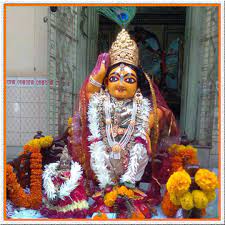
In the house of Śrī Mukunda dāsa, who lives at Śrī Khaṇḍa, Lord Śrī Gopīnātha is served with great devotion. One day Mukunda was called out to do some work, and then he instructed his son Raghunandana to worship the deity and asked him to serve the Lord Gopīnātha that day.
He explained to him that this deity is in our family for many generations and thus He has been worshipped by my father and his father and his father on and on, in this way for many years. Just as your mother feeds you and I everyday, so also He has to be fed everyday. Having explained to Raghunandana that this is a very big responsibility and he should be very careful to give his full attention to this service, Mukunda went out.
Raghunandana meanwhile having been instructed by his father, collected the items for offering to Śrī Gopīnāthajī and entered into the deity room. Raghunandana was at that time barely 5 years old and therefore, when he saw that Gopīnātha hadn’t eaten the offering after he had imitated how his father offered the bhoga, he became very worried.
Ultimately he simply requested Gopīnātha with tears in his eyes: ‘Please eat! Eat!’ Gopīnātha became completely subjected by Raghunandana’s simple request, which was made entirely in love, and thus he stealthily ate up everything without leaving any remnants.
After some time Raghunandana’s father, Mukunda, returned and asked his son if he had done as he was told? When his son replied “Yes”, then Mukunda asked him to bring some of the prasādam.
Raghunandana replied, “Prasādam? I offered everything just like you told me, and Gopīnātha ate everything; so what should I bring you now?” Mukunda was completely taken aback. “This boy is not naughty and is always accustomed to speak the truth. I doubt if he could have eaten everything. I wonder what actually happened?”
Musing on this matter in this way for some time, on another day his curiosity was so stirred that he again requested Raghunandana to offer the bhoga to Gopīnātha on that day. On this day however, having gone out of the house, he again came in by another way and remained hiding in one place. Raghunandana was very happy to be able to serve Śrī Gopīnāthajī again and brought everything into the deity room. As before, he again very insistently persuaded Gopīnātha to take his meal.
As Gopīnātha had eaten half of a laḍḍu, he espied Mukunda peering out from his hiding spot. He didn’t try to cover up the fact that he had eaten what he had, but neither did he eat anymore. Seeing all this, Mukunda was completely immersed in ecstatic love and picked up his son and put him on his lap. He extolled his virtues in a voice trembling with ecstasy, all the while torrents of tears of joy falling from his eyes. Even today, those who are greatly fortunate can still see that half-eaten laḍḍu in Gopīnātha’s lotus hand.
Thus Śrī Uddhava dāsa sings the glories of Raghunandana, who is non-different from Madana (Cupid). Raghunandana was present at the Kheturī-utsava. In Kṛṣṇa-līlā he was Kandarpa-mañjarī & in Dvārakā-līlā he was Śrī Kṛṣṇa’s son Kandarpa.
Raghunandana’s son is Kānāi Ṭhākura. His descendents are still residing at Śrī Khaṇḍa. Śrī Khaṇḍa can be easily reached from Katwa by bus or train. He was born in the year 1432 śakābda.