
Hare Krishna, today article: Bhaktivedanta Swami Prabhupada And Govardhana is from Bhaktivedanta Narayana Gosvami
Prayers
Śrī Guru-Praṇāma:
oṁ ajñāna-timirāndhasya
jñānāñjana-śalākayā
caksur unmīlitaṁ yena
tasmai śrī-guruve namaḥ
“I offer my respectful obeisances unto my spiritual master, who with the torchlight of knowledge has opened my eyes, which were blinded by the darkness of ignorance.”
Two important verses:
suna suna nityananda, suna haridasa
sarvatra amara ajna karaha prakasa
prati ghare ghare giya kara ei bhiksa
‘bala krsna, bhaja krsna, kara krsna-siksa’
“Listen, listen, Nityananda! Listen, Haridasa! Make My command known everywhere! Go from house to house and beg from all the residents, ‘Please chant Krishna’s name, worship Krishna, and practise what Krishna teaches.’” (Sri Chaitanya-bhagavat, 2.13.8-9)
harer nāma harer nāma
harer nāmaiva kevalam
kalau nāsty eva nāsty eva
nāsty eva gatir anyathā
“In this age of quarrel and hypocrisy, the only means of deliverence is the chanting of the holy names of the Lord. There is no other way. There is no other way. There is no other way.”
Mahā-mantra Hare Kṛṣṇa:
Hare Kṛṣṇa Hare Kṛṣṇa
Kṛṣṇa Kṛṣṇa Hare Hare
Hare Rāma Hare Rāma
Rāma Rāma Hare Hare
Bhaktivedanta Swami Prabhupada And Govardhana
BY ŚRĪLA BHAKTIVEDĀNTA NĀRĀYAṆA GOSVĀMĪ MAHĀRĀJA
A devotee asked Śrīla Nārāyaṇa Mahārāja if there was any special significance in Śrīla Bhaktivedānta Svāmī Mahārāja having expressed a desire to go to Govardhana at the very end of his life. The following is Śrīla Nārāyaṇa Mahārāja’s reply:
Before the appearance of Śrī Caitanya Mahāprabhu, various incarnations of Bhagavān such as Matsya, Rāmacandra and even Kṛṣṇa Himself descended to offer a particular gift for the welfare of human society according to the people’s eligibility to receive it. Each gift had its own unique characteristic. Nṛsiṁhadeva came to give more than Matsya and Paraśurāma came to give more than Nṛsiṁha.
What Rāmacandra came to give for the welfare of the living entities was still more advanced, and what all incarnations gave collectively together, as well as that which They did not give, was absorbed into Kṛṣṇacandra for His descent. He gave what no incarnation ever gave before Him. He gave one very special item – prema.
Rāmacandra gave dāsya-bhāva but not pure prema because at that time people were not qualified to receive it. They were not eligible. Therefore Rāmacandra only gave prema which was bound within the limits of maryādā (rules and regulations). This was suitable and useful for the people of that age.
But Kṛṣṇacandra removed this maryādā and gave prema combined with viśrambha-bhāva, the most beautiful variety of prema which is unrestricted in any way and very intimate. And He gave it not only to human beings, but to birds, animals, insects and even to creepers. No other incarnation had ever done this before.
The eternal position of every living entity, in any species of life, is to love Kṛṣṇa – jīvera svarūpa haya nityera-kṛṣṇa-dāsa. Kṛṣṇa gave prema to creepers, peacocks, cuckoos, parrots and He also made them mad with this prema. Other incarnations gave the Vedas and instructions to respect your parents, respect your elders and to live properly with your marital partner. These instructions are included within the category of regulative injunctions, but no incarnation before Kṛṣṇa had shown so clearly that the very svarūpa of the jīva is to love Kṛṣṇa.
Therefore the prema which Kṛṣṇa bestowed is very special. Kṛṣṇa had a special method for giving prema. He had a scale with which He used to weigh someone’s devotion before giving them prema. To one who had devotion worth one paisa, He gave prema worth one paisa. To one who had a bhāva worth two paisa, He gave prema worth two paisa. He did not give more and He did not give less than what was appropriate; He weighed their devotion and gave the precise corresponding amount of prema.
ye yathā māṁ prapadyante
tāṁs tathaiva bhajāmy aham
In the Bhagavad-gītā (4.11), Kṛṣṇa says, “As one worships Me, I reciprocate in precisely the same way. I will not give more, and I will not give less.” And there is one more point here: Kṛṣṇa gave rasa only according to the specific type of vessel one possessed. To those in śānta-bhāva He was seen as Brahman, to those in dāsya-bhāva He was seen as Prabhu and to those in the moods of sakhya and vātsalya He gave rasa accordingly. But a vessel was necessary.
When the same Kṛṣṇa descended five-hundred years ago as the most munificent Śrī Caitanya Mahāprabhu, He broke this routine. It was as if He was saying, “Where will you all get the vessels? There is no need. Just come to Me and I will give you the vessel, the rasa and the prema.” This is the special mercy of Caitanya Mahāprabhu. He broke this rule, ye yathā māṁ prapadyante.
“I will give kṛṣṇa-prema to whoever comes to Me, even if they desire something material. Even if someone approaches Me with a bhāva worth only one paisa, I will give him prema.” The great mercy of Caitanya Mahāprabhu is that He not only gave the container, but He gave the highest category of prema which even Kṛṣṇa could not give.
Why could Kṛṣṇa not give such prema? Kṛṣṇa was the enjoyer, the puruṣa. He gave service to Himself. But Caitanya Mahāprabhu is the dark form of Kṛṣṇa covered by the golden hue of Śrīmatī Rādhikā. Therefore His activities are Rādhā’s, although underneath the surface is Kṛṣṇa’s body. Here Kṛṣṇa is not independent. Who is independent? Rādhikā has the independence here. Kṛṣṇa’s mind is completely covered with Rādhikā’s bhāva and His body is covered by Her body. Therefore whatever Caitanya Mahāprabhu manifests – such as His crying out, “Kṛṣṇa! Kṛṣṇa!” – all comes from Śrīmatī Rādhikā.
Kṛṣṇa is completely covered with Her bhāva. But in kṛṣṇa-līlā, Kṛṣṇa was not covered by the bhāva of Rādhikā. As Rasarāja, Kṛṣṇa can relish rasa, but He wants to relish the bhāva of Rādhikā, mahābhāva. Therefore He begged Her for Her bhāva. So Rādhā and Kṛṣṇa came together in combined form as Mahāprabhu. Thus whatever is given by Mahāprabhu is of such a nature that even Kṛṣṇa cannot give it. What is that which had never been given before? Anarpita-carīṁ cirāt karuṇayāvatīrṇaḥ kalau.
Accepting the bhāva of Rādhikā, accepting Her bodily hue and being full of mercy, Kṛṣṇa has come to this world as Mahāprabhu to give one specific bhāva which had never been given before. What is that bhāva? Unnatojjvala-rasāṁ sva-bhakti-śriyam – this unnatojjvala-bhāva is none other than pārakīya-bhāva. In the Ujjvala-nīlamaṇi, Śrīla Rūpa Gosvāmī has explained all of this in detail. Rādhikā is the best among all the gopīs. Becoming maddened in Her bhāva, Śrī Caitanya Mahāprabhu descended.
The beauty of Her bhāva is like the beauty of a creeper. A creeper always has leaves. If a creeper were to be without leaves and mañjarīs (buds), it would be bare and therefore not beautiful. Creepers have many blossoming leaves, fruits and mañjarīs which tremble in a gentle breeze, and due to this they are beautiful. The beauty of Rādhikā’s bhāva means the dāsī-bhāva of the gopīs, unnatojjvala-rasāṁ sva-bhakti-śriyam. This is the item which Mahāprabhu came to bestow which had never been given before.
There have been many great ācāryas like Madhvācārya, Rāmānuja, Viṣṇusvāmī and Nimbārka, and before them there were great, great ṛṣis like Nārada, Śukadeva Gosvāmī, Parāśara, Ṛṣabhadeva and Kapiladeva. What did they give? Did anyone give this bhāva which Mahāprabhu gave? When not even Kṛṣṇa could give it, how could anyone else?
But Rūpa Gosvāmī has delineated in his writings the precise same bhāva which Mahāprabhu brought to this world. What did Bhaktivedanta Svami Maharaja come to give? What did he want to relish? What was his main objective? That we must discuss, and through discussing it the whole point of why he came into this world will become clear.
As long as Māyāvāda philosophy exists – “Ahaṁ brahmāsmi – I am Brahman, tattvam asi – you are also the same” – pure bhakti cannot be easily propagated. Māyāvāda must be removed, and to remove it, Madhvācārya, Rāmānuja, Viṣṇusvāmī and other ācāryas worked very hard. They also all preached vaidhi-bhakti by which one can easily go to Vaikuṇṭha. But what did Rūpa Gosvāmī come to give? He came especially to give the bhāva of Mahāprabhu. He delineated the process of pure bhakti, but in doing so his main purpose was to give the bhāva of Mahāprabhu. Thus we pray:
śrī-caitanya-mano-‘bhīṣṭaṁ sthāpitaṁ yena bhū-tale
svayaṁ rūpaḥ kadā mahyaṁ dadāti sva-padāntikam
“When will Śrīla Rūpa Gosvāmī, who has established within this material world the mission to fulfil the desire of Caitanya Mahāprabhu, give me shelter at his lotus feet?”
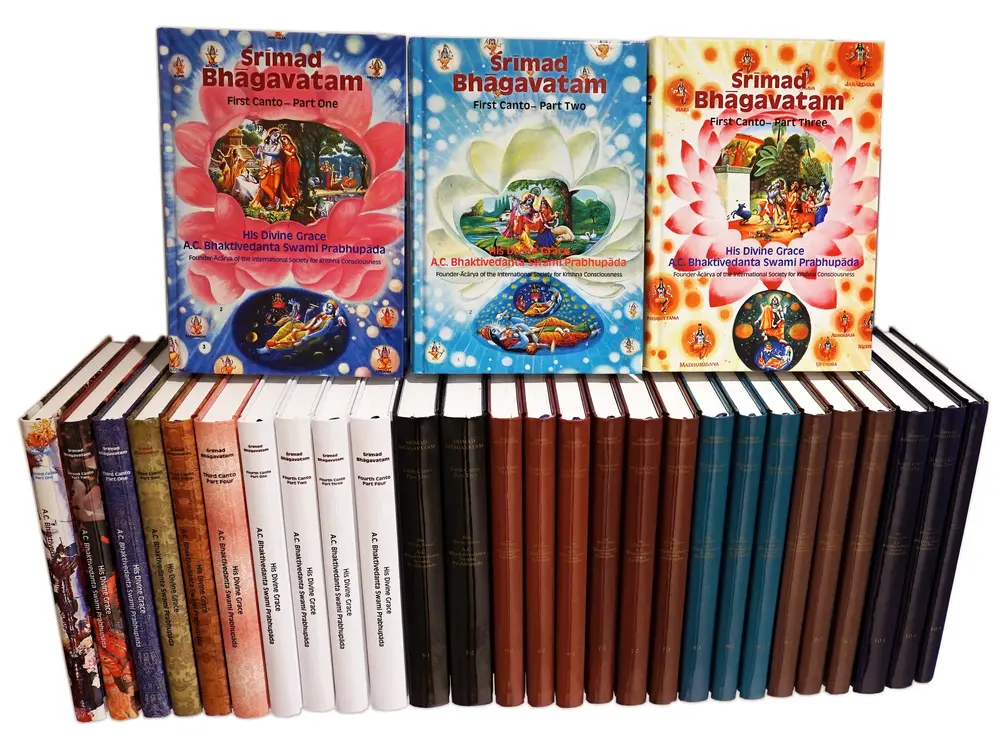
Bhaktivedānta Svāmī understood that bhāva which Caitanya Mahāprabhu came to give, and to give it and establish it he worked his whole life. Svāmījī went to the Western countries and preached, and he also beautifully translated Bhagavad-gītā, Śrīmad-Bhāgavatam and Caitanya-caritāmṛta into English. He preached to the entire world. But what was his main goal? Was the bhakti preached by Rāmānuja his objective, or was it the refutation of the Māyāvāda philosophy of Śaṅkarācārya?
He refuted Māyāvāda philosophy vigorously, but is that really why he came? Was distributing the knowledge given in the Bhagavad-gītā the main goal of his life? Did he come only to give the teaching of the Gītā that “I am not this body”? To give what he really wanted to give he first had to clear the path, and this took some time. In his last days, Svāmījī expressed his real intention: “Govardhana, please give me residence near you.” Śrīla Viśvanātha Cakravartī Ṭhākura prays:
yatraiva kṛṣṇo vṛṣabhānu-putryā
dānaṁ gṛhītuṁ kalahaṁ vitene
śruteḥ spṛhā yatra mahaty ataḥ śrī-
govardhano me diśatām abhīṣṭam
“At Śrī Govardhana there is a place called Dānaghāṭi where Śrī Kṛṣṇa engaged in a lover’s quarrel with Śrī Vṛṣabhānu-nandinī Śrī Rādhikā in order to extract some tax from Her. As soon as the rasika Vaiṣṇavas see that place, an intense longing arises in their hearts to hear the narration of that quarrel. May that Śrī Govardhana fulfil all my desires.” (Śrī Govardhanāṣṭaka 3)
Svāmījī’s desire was especially to go to Govardhana. In all of Vraja-maṇḍala, Gokula is the best because Gokula is where Kṛṣṇa was ‘born’ from the womb of Yaśodā and where He performed His childhood pastimes. In Gokula there is a multitude of cows, gopīs and gopas. And the main gopa is Kṛṣṇa. He resides in Gokula, which includes Nandagrāma, Varṣāṇā, Kāmyavana and Vṛndāvana.
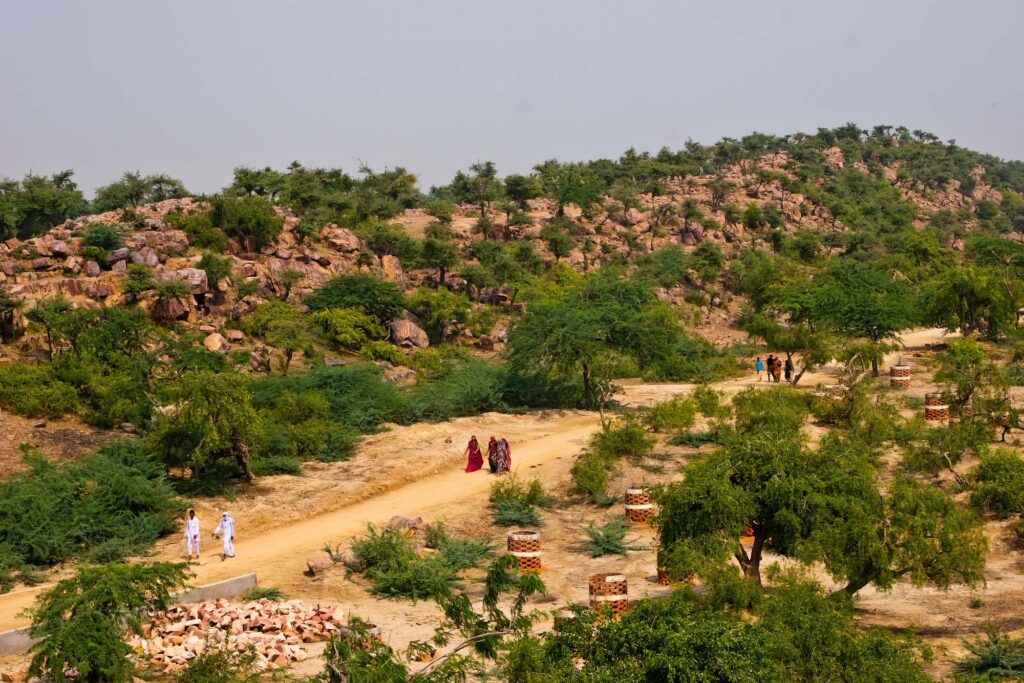
In all of Gokula, Vṛndāvana is the best, and in Vṛndāvana, Govardhana is the best. In all of Govardhana, the two eyes, Rādhā-kuṇḍa and Śyāma-kuṇḍa, are the best. The sweetest, most attractive pastimes of Śrī Śrī Rādhā-Kṛṣṇa take place there. Svāmījī wanted to go to Govardhana because there the best of all of Their pastimes, the rāsa-līlā, takes place in a special way.
In Vṛndāvana, this rāsa is called pañcāyatī (open, public) because it includes sādhana-siddha gopīs as well as nitya-siddha gopīs. Because so many different categories of gopīs participate, Rādhikā’s desires cannot be completely fulfilled. In this situation, Rādhā and Kṛṣṇa’s most intimate pastimes cannot be performed. Only in that solitary place where even Candrāvalī cannot go can Rādhā and Kṛṣṇa perform Their most confidential pastimes with the help of Their most intimate sakhīs.
This was not possible in the rāsa-līlā in Vṛndāvana, so Rādhikā left the rāsa dance in māna and Kṛṣṇa was compelled to follow Her. Thus the rāsa dance ended. Therefore Kṛṣṇa had to go to Govardhana for the performance of vāsantī-rāsa. There He met Rādhikā in seclusion, in the kuñjas. Śrīla Raghunātha dāsa Gosvāmī prays:
pramada-madana-līlāḥ kandare kandare te
racayati nava-yūnor-dvandvam asminn-amandam
iti kila kalanārthaṁ lagna-kastād-dvayor me
nija-nikaṭa-nivāsaṁ dehi govardhana! tvam
“O Govardhana! Please grant me a dwelling near your side where I can easily witness the youthful lovers Śrī Rādhā-Kṛṣṇa performing especially ecstatic amorous pastimes within all of your caves.” (Śrī Govardhana-vāsa-prārthanā-daśakam 2)
In Vṛndāvana all the gopīs participate in the pañcāyatī-rāsa. But at Govardhana svarūpa-śakti is manifested in a special way and only particular sakhīs like Lalitā, Viśākhā, Citrā and Campakalatā, who are very close to Rādhikā’s bhāva, take part. Thus Kṛṣṇa enjoys with Rādhikā in the kuñjas where even Candrāvalī and her sakhīs cannot go. There Rādhikā and Kṛṣṇa can enjoy freely according to Their desires.
There is no such freedom in Vṛndāvana. Govardhana not only provides various types of kuñjas for the service of Śrī Rādhā-Kṛṣṇa, but he also provides various kinds of fruits for Them to relish. He provides Rādhā-kuṇḍa, Śyāma-kuṇḍa, Govinda-kuṇḍa, Mānasī-gaṅgā, Kusuma-sarovara, and Surabhi-kuṇḍa to supply drinking water not only for Them, but also for the cows, sakhās and sakhīs.
With his red stones he provides mineral dyes so Kṛṣṇa can paint His body different colours. There is no pastime which is not enacted there, and Girirāja is the witness to them all. Who says so? Śrīmatī Rādhikā speaks this from Her own mouth. The gopīs saw that only Girirāja could fulfil their desires, therefore they approached Govardhana and said:
hantāyam adrir abalā hari-dāsa-varyo
yad-rāma-kṛṣṇa-caraṇa-sparaśa-pramodaḥ
mānaṁ tanoti saha-go-gaṇayos tayor yat
pānīya-sūyavasa-kandara-kandamūlaiḥ
“This Govardhana Hill is the best of all those who are known as hari-dāsa because he is feeling great jubilation from the touch of the lotus feet of Kṛṣṇa and Balarāma. With great respect Govardhana is worshipping Them by providing all Their necessities such as caves, fruits, flowers and water for Their pleasure, and for the pleasure of Their cowherd friends, cows and calves.” (Śrīmad-Bhāgavatam 10.21.18)
There are three personalities who are known as hari-dāsa: Yudhiṣṭhira Mahārāja, Uddhavajī and Girirāja Govardhana. Did Kṛṣṇa ever go to Nārada’s āśrama, call him a friend or drive the horses for his chariot? Did He lie for him? Did He call him, “Sakhā! Sakhā!” while touching his shoulder? Never.
Kṛṣṇa offers praṇāma unto Yudhiṣṭhira Mahārāja, and Yudhiṣṭhira Mahārāja embraces Kṛṣṇa and calls Him ‘Sakhā’. Sometimes Kṛṣṇa becomes his servant. Once Nārada came to Yudhiṣṭhira Mahārāja’s palace and began to praise him: “Just see! Bhagavān has incarnated and is hiding Himself in your house. So we all take the opportunity to visit you. You are most fortunate!”
On one occasion Yudhiṣṭhira Mahārāja said to Kṛṣṇa, “Prabhu, please give me one boon.” Kṛṣṇa laughed and said, “Why are you asking Me for a boon? Even Prahlāda did not accept any boon from Me, and he is only My ordinary devotee. He said that if he ever desires a boon, he will let Me know.” Thus Kṛṣṇa spoke in great fun.
Yudhiṣṭhira replied, “No, Prabhujī, please do not cheat me. I want one boon from You.” “What?” “I want to marry the most beautiful woman in the world.” “This is confusing. Everybody wants to give up their connection with the material world to come to Me, yet you desire to marry a beautiful woman. So be it. What else do you want?” “I desire that there should be no other kingdom with greater opulence than ours in the entire world.”
Kṛṣṇa was a little astonished and said, “Why are you asking this?” “I am asking this because people are afraid to worship You, because they think, ‘If we worship Kṛṣṇa, He will snatch away all our riches and make us beggars on the street, leaving us without even a kaupīna to wear. He will make us like Śukadeva Gosvāmī.’” Due to this fear people generally don’t worship Kṛṣṇa – only poor people worship Him. Everyone is afraid that, “We may lose everything.” When Kṛṣṇa bestows His mercy on someone and accepts him, He takes away all their wealth.
Therefore everyone worships he who has a long trunk, Gaṇeśa, or Durgā, Śaṅkara or any other demigod. They are afraid to worship Kṛṣṇa. So Yudhiṣṭhira Mahārāja continued, “Therefore if You give me the greatest opulence and the most beautiful wife, people will say, ‘Oh, Yudhiṣṭhira Mahārāja attained such wonderful opulence and such a beautiful wife like Draupadī to help in the household’. Then everyone will no longer be afraid and will start to worship You. Therefore Prabhu, please give me all this.”
Now tell me, can Prahlāda’s imagination stretch so far? Even Hanumān’s imagination cannot stretch so far. Therefore Yudhiṣṭhira Mahārāja is a better devotee than either Prahlāda or Hanumān. He wants everyone to worship Kṛṣṇa and he wants the pleasure of Kṛṣṇa only. This is why he is included within the category of hari-dāsa. Amongst those who are hari-dāsa, Uddhava is higher still. Kṛṣṇa did not send Arjuna or Yudhiṣṭhira to Vraja. Who did He send to associate with His most intimate beloved?
He sent Uddhava because Uddhava’s heart and Kṛṣṇa’s heart are one, and also because Kṛṣṇa – for a very special reason – did not want to go to Vṛndāvana Himself. Kṛṣṇa thought, “If I go there, Rādhikā’s sorrow will merely increase. Even when She is together with Me, She feels separation. But if I stay away, She will become so absorbed in feelings of separation from Me that She will feel that I am together with Her. She will feel great happiness in embracing the tamāla tree, and She will eat, drink and decorate Herself. Therefore it is better that I stay away. Her pleasure is My pleasure.”
Then afterwards Kṛṣṇa thought, “I cannot live without Her. I require a friend who can speak about the gopīs and thus mitigate My sorrow. I do not see any such person in Mathurā. If someone were to study prema in the school where I Myself accepted the gopīs as teachers and studied, and if he were to pass the examination there, then I could speak with him. He could speak on My level and thereby give solace to My heart. Otherwise it is not possible.”
Therefore He sent Uddhava to Vraja. Why Uddhava? Uddhava is very near to the bhāva of the gopīs. Yudhiṣṭhira is far away in the mood of aiśvarya but in Uddhava the moods of aiśvarya and mādhurya are balanced. In that devotee in whom the moods of aiśvarya and mādhurya are both present, vraja-bhāva is very close. Vraja-bhāva is not actually there, but it is close. Kṛṣṇa thought “If Uddhava learns there, I will be able to speak with him about prema. Then he may understand when I speak about the gopīs.”
Uddhava went there and studied in that school where Lalitā and Viśākhā are teachers and the headmistress is Śrīmatī Rādhikā. He went there, offered praṇāma, received the mantra and studied for a long time, about ten months. When the course was completed, the gopīs sent him back: “Now you can return – you have passed the examination.” Then Uddhava returned to Mathurā and met with Kṛṣṇa. Therefore Uddhava is better than Yudhiṣṭhira.
But who is millions of times better than both of them? Girirāja Govardhana. Can Uddhava enter the kuñjas where intimate service is being rendered to Śrī Śrī Rādhā-Kṛṣṇa? No. When Uddhava first arrived in Vṛndāvana, Śrīmatī Rādhikā noticed a black bee and began speaking to it, considered it to be a black messenger from Kṛṣṇa. At this time She did not even see Uddhava.
Uddhava simply offered praṇāma and hid. The gopīs did not even see him, nor did they speak to him. They spoke to the bee, as is described in Bhramara-gītā. What could Uddhava possibly say to the gopīs? He was simply astonished to see their character. But he became deeply absorbed in what he heard and his life became successful. Uddhava thought, “Even if I must become a blade of grass to obtain this bhāva, then it must be done.”
āsām aho caraṇa-reṇu-juṣām ahaṁ syāṁ
vṛndāvane kim api gulma-latauṣadhīnām
yā dustyajaṁ sva-janam ārya-pathaṁ ca hitvā
bhejur mukunda-padavīṁ śrutibhir vimṛgyām
“I pray to take birth as one of the bushes, creepers or herbs of Vṛndāvana on which the dust of the gopīs‘ feet falls. The gopīs have performed the difficult task of abandoning their family members, as well as the Vedic path, to exclusively worship the lotus feet of Śrī Kṛṣṇa, which are sought after by the śrutis and even the Vedas themselves.” (Śrīmad-Bhāgavatam 10.47.61)
“If in Vṛndāvana – no, not in Vṛndāvana – if at Girirāja Govardhana I could become a blade of grass and receive the dust of the gopīs‘ feet on my head, I shall achieve the ultimate perfection and my life will be fully successful.” Therefore at Govardhana, near Kusuma-sarovara, is Uddhava-kuṇḍa. There Uddhava accepted birth as a blade of grass beneath a shrub and began performing penances for millions of years.
Then he received darśana of the gopīs. When the gopīs would walk to Kṛṣṇa, the dust of their feet would fall on his head. He did not desire the footdust of any other devotees. Therefore he came to take shelter of Girirāja Govardhana. So, although he himself is included within the category of hari-dāsa, Uddhava takes shelter of Govardhana. Uddhava is hari-dāsa, but he also seeks the shelter of a greater hari-dāsa.
When Kṛṣṇa goes to Govardhana with His friends, they drink water, eat fruits and take their cows out to graze. They roam in a carefree manner and enjoy their pastimes. Girirāja provides kuñjas, caves, water, fruits and flowers for Kṛṣṇa’s service. He is always ready to perform any service for Kṛṣṇa. The bushes and trees found within Govardhana’s kuñjas are actually his hairs standing erect in ecstasy.
What are the water and waterfalls of Govardhana? They are his tears of love when he cries in the ecstasy of kṛṣṇa-prema. Everything of Govardhana is saturated with kṛṣṇa-prema. And when Rādhā-Kṛṣṇa perform Their pastimes there, even in the most secluded place, Govardhana sees. Therefore Girirāja Govardhana receives the maximum mercy from Rādhā and Kṛṣṇa.
Some devotees worship Govardhana as Kṛṣṇa Himself, but in the Gauḍīya sampradāya we worship him as a great devotee, not as Bhagavān, because as a devotee he can bestow the prema-rasa which is displayed there. If he is Bhagavān, then he cannot give that prema which Rādhikā and Her girl friends and even their devotees can give.
Therefore devotees always aspire to go to Girirāja Govardhana, who has witnessed all of Rādhā-Kṛṣṇa’s pastimes. Devotees know that Girirāja Govardhana can bestow that prema which is relished by Śrī Śrī Rādhā-Kṛṣṇa and which Śrī Caitanya Mahāprabhu descended to distribute and to taste Himself. Therefore Svāmījī, like Rūpa Gosvāmī, Śrīla Bhaktisiddhānta Sarasvatī Gosvāmī Prabhupāda and my own worshipable gurudeva, Śrīla Bhakti Prajñāna Keśava Gosvāmī Mahārāja, also wanted residence near Govardhana.
Govardhana is the best place in Vraja for both sādhakas and siddhas. If a sādhaka who does not have prema does bhajana there, he will get prema, and if a perfected devotee goes there, he will relish Rādhā-Kṛṣṇa’s nitya-līlā. He will also receive darśana of the mahābhāva which is most dear to Rādhā-Kṛṣṇa and which he himself also aspires to attain. It cannot be attained anywhere else.
There are three personalities in Vṛndāvana who can give prema – Lalitā, Girirāja Govardhana, and the Yamunā. Therefore devotees take shelter of these three and thus try to become eternal maidservants of Rādhikā and gain Her favour. I also desire to take shelter of Girirāja Govardhana with these aspirations in mind.
yatraiva gaṅgām anu nāvi rādhām
ārohya madhye tu nimagna-naukāḥ
kṛṣṇo hi rādhānugalo babhau sa
govardhano me diśatām abhīṣṭam
“In Mānasī-gaṅgā, which has arisen from the heart of Śrī Govardhana, Śrī Kṛṣṇa induced Śrī Rādhikā to sit in His boat. In the middle of the lake Kṛṣṇa nearly caused the boat to sink. Out of fear, Śrī Svāminijī threw Her arms around His neck and tightly embraced Him. May that Śrī Govardhana fulfil all my desires.” (Śrī Govardhanāṣṭaka 7)
There is a lake at Govardhana known as Mānasī-gaṅgā. It has now dried up somewhat and shrunk in size, but previously it was very broad and had to be crossed by boat. Once upon a time at Mānasī-gaṅgā, night had fallen and there was only one boatman present there. He was looking very tired, standing there with his boat. Some gopīs came and requested him to take them across. He said, “I have no time. It is evening now and the sky is clouded.
There is the possibility of a storm. My boat is also very old and has holes in it. I am also tired, and I cannot take you across.” But they insisted, so the boatman said, “Alright, I will take you across, but only one at a time, not all together.” One principal gopī was to cross first. She boarded the boat, and the boatman guided the boat to the middle of the lake. Then the boatman said, “Look, get ready. My boat has many holes in it and I see water coming in.
Come to the centre of the boat.” When the boat became filled with even more water, the boatman said, “Get ready to jump. You know how to swim?” “No, I don’t know how to swim!” “Then take off all Your unnecessary clothes and throw them overboard. Otherwise, if Your clothes get tangled as You try to swim, You will drown. So get ready.”
In this pastime, Kṛṣṇa the boatman is playing so wonderfully, and at that point Rādhikā became frightened and caught hold of Him. This is precisely what Kṛṣṇa desired. Such attractive kṛṣṇa-līlā is enacted at Girirāja Govardhana. I pray, “Hey Girirāja, please fulfil my desire to witness these pastimes.” Svāmījī also wanted to go to Govardhana with the same idea in mind. His life’s ideal and principal desire was to give this prema to the world, but first he had to spend a long time in cutting away the jungle and in preaching vaidhi-bhakti.
He desired to translate the Śrīmad-Bhāgavatam in full and especially to elaborately describe the pastimes narrated in the Tenth Canto. But Bhagavān did not agree and He called him back to His nitya-līlā. Perhaps Kṛṣṇa did not want him to remain in separation from Him any longer. Therefore Svāmījī’s desire to go to Girirāja Govardhana was fulfilled by Bhagavān’s calling him back to Giriraja Govardhana in Goloka-Vṛndāvana. Girirāja Govardhana is our primary shelter because prema-bhāva is the highest there. Svāmījī came to relish this pinnacle of kṛṣṇa-prema and to distribute it to the residents of this world.