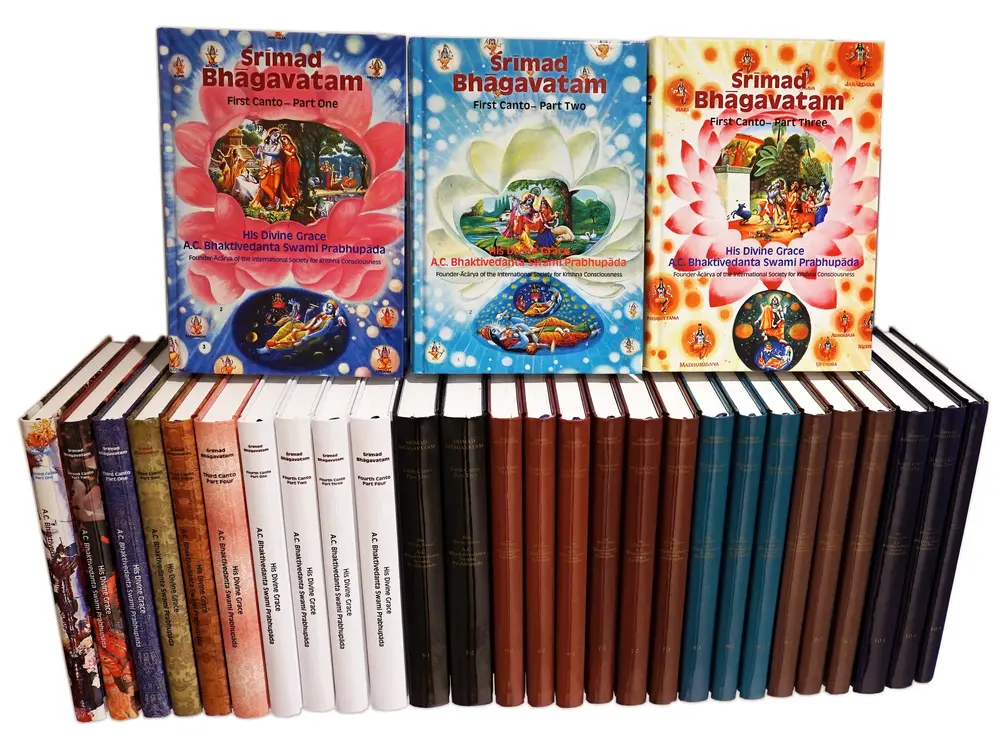
Hare Krishna, today article: Gaudiya vaisnavism vs. Sahajiyaism 2/2 is from Bhaktivedanta Narayana Gosvami
Prayers
Śrī Guru-Praṇāma:
oṁ ajñāna-timirāndhasya
jñānāñjana-śalākayā
caksur unmīlitaṁ yena
tasmai śrī-guruve namaḥ
“I offer my respectful obeisances unto my spiritual master, who with the torchlight of knowledge has opened my eyes, which were blinded by the darkness of ignorance.”
Two important verses:
suna suna nityananda, suna haridasa
sarvatra amara ajna karaha prakasa
prati ghare ghare giya kara ei bhiksa
‘bala krsna, bhaja krsna, kara krsna-siksa’
“Listen, listen, Nityananda! Listen, Haridasa! Make My command known everywhere! Go from house to house and beg from all the residents, ‘Please chant Krishna’s name, worship Krishna, and practise what Krishna teaches.’” (Sri Chaitanya-bhagavat, 2.13.8-9)
harer nāma harer nāma
harer nāmaiva kevalam
kalau nāsty eva nāsty eva
nāsty eva gatir anyathā
“In this age of quarrel and hypocrisy, the only means of deliverence is the chanting of the holy names of the Lord. There is no other way. There is no other way. There is no other way.”
Mahā-mantra Hare Kṛṣṇa:
Hare Kṛṣṇa Hare Kṛṣṇa
Kṛṣṇa Kṛṣṇa Hare Hare
Hare Rāma Hare Rāma
Rāma Rāma Hare Hare
Part 2 – ŚIKṢĀṢṬAKAM – THE BONA FIDE PROCESS OF SIDDHA-PRAṆĀLĪ
(Holland, July 4, 1997)
[The following is a lecture given by Śrīla Bhaktivedānta Nārāyaṇa Mahārāja in Holland, the same year, on the Disappearance Day of Śrīla Bhaktivinoda Ṭhākura and Śrīla Gadādhara Paṇḍita.]
The glories of Śrīla Bhaktivinoda Ṭhākura are so great that even Lord Brahmā, with his four mouths, cannot completely describe them. Śrīla Bhaktivinoda Ṭhākura was a transcendental personality, and we are not transcendental. How then can we even begin to touch his glory? Only a transcendental person can expound the glory of another.
We have heard from our Gurudeva and other Vaiṣṇavas, and we have also read in authentic books, that Śrīla Bhaktivinoda Ṭhākura was given the title ‘Seventh Gosvāmī.’ From the time of the Six Gosvāmīs up to his time no one else was ever designated as such. During his life (1838-1914), however, learned persons and devotees saw his remarkable activities and gave him this upaṇa, title.
It was Śrīla Bhaktivinoda Ṭhākura who once again illuminated the true principles of Gauḍīya Vaiṣṇavism. If he had not appeared when he did, perhaps all the teachings of pure Gauḍīya Vaiṣṇavism would have been forever drowned in an ocean of oblivion. That time was a dark period for Gauḍīya Vaiṣṇavism. The sahajīyās used to give what they called siddha-praṇālī, so-called siddha-deha, to anyone and everyone, without even knowing whether or not their so-called followers were actually devotees.
The followers neither knew any Gauḍīya Vaiṣṇava philosophy, nor did they have any sadācāra, yet they would go to their sahajīyā-bābājī gurus who pretended to give them their siddha-deha and siddha-praṇālī. They misunderstood Śrī Caitanya Mahāprabhu’s teachings, thinking that Gauḍīya Vaiṣṇavism means to travel to Vṛndāvana, live there, and have children with other’s wives. They considered that by doing this they had become gopīs. This was their conception of siddha-deha. “Come on, come on,” their guru would say to them.
“I’m giving you siddha-deha and siddha-praṇālī.” Of course, he could not have actually given them siddha-deha. To whom did he pretend to give it? Thinking, “I am this body,” his disciples did not even know the ABC’s of Śrī Caitanya Mahāprabhu’s teachings. Such persons did not know that they are eternally part and parcel and servants of Kṛṣṇa. They did not even know how to clean themselves after passing stool and urine, yet they thought they were given siddha-deha and siddha-praṇālī “you are a gopī.”
What are ‘gopīs?’ Those who think that they are lovers or beloveds in this world. They think that they should find a lady, live with her and enjoy sex life. They think this is Śrī Caitanya Mahāprabhu’s philosophy. In the name of Gauḍīya Vaiṣṇavism sahajīyās called Vaiṣṇava jāti would perform Hare Kṛṣṇa kīrtana, following the dead body during funeral processions, and then take a large payment from the deceased’s rich relatives. However, in their kīrtanas, the word ‘Kṛṣṇa’ did not manifest. It was difficult for the audience to actually find the word “Kṛṣṇa.”
The chanters sang, “Hare Kr-ṣṇa-a-a-a-a-a-a,” in a very fancy melody, and the audience applauded, “O, very good, very good,” and paid them some rupees. Although those chanters drank wine and ate meat and fish, they still thought that what they were doing was all right, and were still called Vaiṣṇavas by unintelligent people. Because of such disgraceful displays, learned and educated persons became ashamed and did not want to associate themselves with the words ‘Gauḍīya Vaiṣṇavism.’
Śrīla Bhaktivinoda Ṭhākura was, in his time, the first person to preach the factual philosophy of Śrī Caitanya Mahāprabhu to this learned society. By his preaching people came to know about true transcendental love—prema-bhakti, and it is for this reason that he was given the title ‘Seventh Gosvāmī.’ Just as King Bhagīratha brought the Ganges River to the earth—to India, Śrīla Bhaktivinoda Ṭhākura brought the bhakti Gaṅgā (Ganges) to this world. Because of him, so many people became inspired to follow Gauḍīya Vaiṣṇavism.
If he had not appeared, we would not have joined this mission. If Śrīla Bhaktivedānta Svāmī Mahārāja had not come to the West—if he had not gone to Śrīla Bhaktisiddhānta Sarasvatī Ṭhākura, and if Śrīla Bhaktisiddhānta Sarasvatī Ṭhākura had not come from Śrīla Bhaktivinoda Ṭhākura, then what would have been your fate? Your good fortune, therefore, is coming from Śrīla Bhaktivinoda Ṭhākura, who preached the pure doctrines of Śrī Caitanya Mahāprabhu.
Some people say that Śrīla Bhaktivinoda Ṭhākura did not take dīkṣā initiation from Jagannātha dāsa Bābājī Mahārāja, and that he did not take Bābājī veśa (the dress of a Bābājī) from anyone. They say he simply gave Bābājī veśa to himself. They also say that because Śrīla Bhaktisiddhānta Sarasvatī Ṭhākura did not take sannyāsa from anyone (he gave it to himself), therefore he is also not in the bona fide line of Śrī Caitanya Mahāprabhu. It is due to lack of intelligence—due to ignorance, that they speak like this.
They do not know the meaning of Bhāgavata paramparā or guru-paramparā, and this is why Śrīla Bhaktivinoda Ṭhākura clearly explained the entire process for achieving spiritual perfection in his final literary work, Jaiva-dharma. In that book he clearly elucidated the qualifications for receiving siddha-deha, and explained how the bona fide guru reveals siddha-deha to a qualified disciple.
Previously, in his book Bhajana-rahasya, Śrīla Bhaktivinoda Ṭhākura clarified many deep siddhāntas on the same subject. Those who actually want to enter into the realm of bhakti, therefore, should try to follow Bhajana-rahasya, Jaiva-dharma, and all his other books.
In Bhajana-rahasya Śrīla Bhaktivinoda Ṭhākura wrote that we should begin bhakti by trying to serve and realize the first śloka of Śrī Śikṣāṣṭakam: ceto-darpaṇa-mārjanaṁ bhava-mahā-dāvāgni-nirvāpaṇam. Then we should follow and practice the second śloka: nāmnām akāri bahudhā nija-sarva-śaktis. And then the third: tṛṇād api sunīcena taror api sahiṣṇunā.
If we factually practice these qualities we may enter the fourth śloka: na dhanaṁ na janaṁ na sundarīṁ. We should be detached from all worldly desires and worldly tastes. Then, when we become pure, when we are always chanting and remembering Kṛṣṇa without being disturbed by any obstacle, we can enter the fifth śloka: ayi nanda-tanuja kiṅkaram.
Entering this fifth śloka is the beginning of siddha-deha, at which time we will realize ourselves as eternal servants of Kṛṣṇa in a specific relationship. All aspects of our eternal relationship with Kṛṣṇa are already in our ātmā, just as the potency of a fully grown tree is present in the seed of that tree. With water, air and light the seed sprouts, and gradually leaves, branches, flowers, mañjarīs and finally fruits also manifest. The entire tree or creeper is there in its seed, but only when air, water and sunlight touch it, do all its features sprout—otherwise not.
Similarly, the full potency of our pure bhakti is present in our ātmā. In this fifth śloka, the jīva-svarūpa is revealed. The sixth śloka of Śrī Śikṣāṣṭakam states:
nayanaṁ galad-aśru-dhārayā
vadanaṁ gadgada-ruddhayā girā
pulakair nicitaṁ vapuḥ kadā
tava nāma-grahaṇe bhaviṣyati
“O Prabhu! When will my eyes be filled with a stream of tears? When will my voice choke up? And when will the hairs of my body stand erect in ecstasy as I chant Your holy name.” When a devotee realizes his ātmā and he understands that he is an eternal servant of Kṛṣṇa, at that time he has no worldly attachments. It is then that the svarūpa-śakti, as hlādinī and saṁvit, mercifully manifests in his heart.
He then begins to weep, and, while chanting the holy name of Kṛṣṇa, he rolls on the earth and sings, “Agha-damana (Kṛṣṇa, the killer of the Agha demon), Yaśodā-nandana. O, Nanda-sūnoh (O, son of Nanda Mahārāja), where are you?” The devotee may sometimes get a glimpse of Kṛṣṇa and immediately run towards Him. And when Kṛṣṇa disappears from his vision, he rolls on the ground in separation. If a person does not feel this type of separation from Kṛṣṇa, his siddha-deha will not manifest. When one actually has feelings of separation, his siddha-deha will manifest, not before.
Those who artificially exhibit emotions of separation will go to hell—like the lakhs and lakhs of bābājīs in Vṛndāvana and Rādhā-kuṇḍa who are simply giving birth to children and engaging in other malpractices. One of the brothers of Śrīla Bhaktisiddhānta Sarasvatī Ṭhākura used to think that his father, Śrīla Bhaktivinoda Ṭhākura, was his physical body.
In fact, he thought of himself as the son of Kedārnātha Datta (Śrīla Bhaktivinoda Ṭhākura’s civil name), not Śrīla Bhaktivinoda Ṭhākura. On the other hand, Śrīla Bhaktisiddhānta Sarasvatī Ṭhākura never thought in this way. He considered his father an associate of Śrī Kṛṣṇa, Śrīmatī Rādhārāṇī, and Śrī Caitanya Mahāprabhu. He didn’t consider him his material father, a person made of blood and flesh.
Śrīla Bhaktisiddhānta Sarasvatī Ṭhākura actually followed the path of Śrīla Bhaktivinoda Ṭhākura. Whatever his father spoke, he totally accepted and followed. Our goal is siddha-deha, but what is siddha-deha? What is siddha-praṇālī? Who started it, in what year did it begin, and from where did it originate? Śrīla Sanātana Gosvāmī and Śrīla Rūpa Gosvāmī are called Gosvāmīs, not Bābājīs.
No one addresses them as Rūpa Bābājī, Sanātana Bābājī, or Śrīla Raghunātha Bābājī. Who gave siddha-praṇālī to them? What is siddha-praṇālī? Siddha-praṇālī is śikṣāṣṭakam. One should first of all know that he is an eternal servant of Śrī Kṛṣṇa and Śrī Caitanya Mahāprabhu, and he should therefore follow tṛṇād api sunīcena. He should become detached from worldly attractions and chant and remember Kṛṣṇa twenty-four hours a day under the guidance of any very qualified Vaiṣṇava.
tan-nāma-rūpa-caritādi-sukīrtanānu-
smṛtyoḥ krameṇa rasanā-manasī niyojya
tiṣṭhan vraje tad-anurāgi janānugāmī
kālaṁ nayed akhilam ity upadeśa-sāram
“The essence of all advice is that one should utilize one’s full time—twenty-four hours a day—in nicely chanting and remembering the Lord’s divine name, transcendental form, qualities and eternal pastimes, thereby gradually engaging one’s tongue and mind. In this way one should reside in Vraja [Goloka Vṛndāvana dhāma] and serve Kṛṣṇa under the guidance of devotees. One should follow in the footsteps of the Lord’s beloved devotees, who are deeply attached to His devotional service.” This is real siddha-praṇālī.
Śrīla Raghunātha dāsa Gosvāmī has explained this siddha-praṇālī in his prayer called Manaḥ-śikṣā. All the ślokas of his prayer are praṇālī—not artificially imagining that, “Oh, you are a gopī. You are Lalitā-gopī. You are Viśākhā-gopī.” From where and from whom has this artificial siddha-deha come? There is no history. It is not in our culture, nor is it the teaching of Śrī Caitanya Mahāprabhu.
Real siddha-deha and siddha-praṇālī manifest when we follow the correct nine steps—from śraddhā to niṣṭhā etc. It comes by purely adopting the process of śravaṇaṁ, kīrtanaṁ, viṣṇu-smaraṇaṁ, pāda-sevanam, arcanaṁ, vandanaṁ, dāsyaṁ, sākhyam, ātma-nivedanam. It also comes by:
sādhu-saṅga, nāma-kīrtana, bhāgavata-śravaṇa
mathurā-vāsa, śrī-mūrtira śraddhayā sevana
“In the association of devotees one should chant the holy name of the Lord, hear Śrīmad-Bhāgavatam, reside at Mathurā and worship the Deity with faith and veneration.” (Cc. Madhya 22.128 [BBT]) These are the processes, and we shall have to adopt them. Śrī Kṛṣṇa and Śrīmatī Rādhikā will then mercifully give us siddha-deha.
How Śrī Nārada Muni Received Siddha-Deha
In Śrīmad-Bhāgavatam it is stated that Nārada Muni received his mantra from Sanaka, Sanandana, Sanātana and Sanat-kumāra. Later, when his mother died, he left her and went to the dense forest. There he bathed in a river, sat down silently under the shade of a banyan tree, chanted his mantra and meditated upon the Supersoul within his heart.
After practicing this for some time Lord Viṣṇu momentarily manifested in his heart—and then disappeared. Nārada wept bitterly in separation from Lord Viṣṇu, and then a voice from the sky called to him, “Nārada, I will not give you darśana again as long as you are in this material body. You should continue chanting My name, remembering Me, and glorifying My pastimes all over the world. At the appropriate time, when death comes, you’ll put your feet on the head of death.”
Following Lord Viṣṇu’s instruction, Nārada thus always chanted and remembered the Lord, and while playing on his vīṇā he sang songs and poems glorifying the pastimes of Kṛṣṇa. Nārada bājāya vīṇā rādhikā ramaṇa nāmine. After many years death came. At that same moment siddha-deha also manifested, and in that siddha-deha he did not use an airplane or anything—nothing like Dhruva Mahārāja.
Upon receiving his transcendental body he became so strong that he could travel anywhere in the universe or beyond—without the help of an airplane. The process is not that one artificially thinks, “Give me some dakṣiṇā, at least five rupees, and I will be the Gurudeva of so many śiṣyas.” With this temptation such false gurus make many disciples, give so-called siddha-deha, and all go to hell together. We should try to know all of the processes taught by Śrīla Bhaktivinoda Ṭhākura:
- śravaṇa daśā
- varaṇa daśā
- smaraṇa daśā (smaraṇāvasthā)
- bhāvāpana daśā (at the stage of bhāva or svarūpa-siddha)
- anusmṛti
- and finally prema-sampatti daśā
It is in sampatti daśā that siddha-deha (vastu-siddha) will manifest. In śravaṇa daśā, one hears from his bona fide guru about Śrīmad-Bhāgavatam, Śrī Caitanya-caritāmṛta and the entire philosophy of Śrīla Rūpa Gosvāmī. In śravaṇa daśā there are many things to learn, such as who you are and what your name is—not the name of this material body, but of your transcendental body. The guru knows this.
One who claims to be guru but who does not know all this, and by kalpanā, by imagination, gives this type of information, is actually pretentious. The bona fide guru knows everything—your name, your relationship with Śrī Kṛṣṇa and Śrīmatī Rādhikā and the gopīs, your place of residence—whether it is at Rādhā-kuṇḍa or Jāvat or Nandagāon or Varṣāṇā—the name of your father and mother, your service, and the nature of your beautiful form. The guru then reveals his śiṣya’s particular service to Rādhā-Kṛṣṇa conjugal (ājñā), and his pālya-dāsī-bhāva.
There are eleven items in all. In śravaṇa daśā, therefore, you will have to hear and understand about the process for perfection from Jaiva-dharma, Śrīmad-Bhāgavatam, Śrī Caitanya-caritāmṛta and all the books of Śrīla Rūpa Gosvāmī. The process is not that one in the beginning stage goes to his guru and is told, “Oh, you are a very beautiful gopī, and your name is Lalitā.”
Although this is called siddha-praṇālī, we do not know who began this type of siddha-praṇālī. At the time of Śrīla Viśvanātha Cakravartī Ṭhākura no one addressed him as Viśvanātha Cakravartī Bābājī. During his time the process of giving someone this bogus version of gopī-bhāva was not practiced. To teach the actual process was the main objective of Śrīla Bhaktivinoda Ṭhākura. Śrīla Bhaktivinoda Ṭhākura’s teachings can be summarized in two lines. Jīva dayā kṛṣṇa nāma sarva dharma sāra.
This is also the sum and substance of all the teachings of all the Vedas, Vedānta, Upaniṣads, Bhagavad-gītā, the Purāṇas, Śrutis, Smṛtis, Pañcarātra, etc. In essence there are two principles—jīva-dayā and kṛṣṇa-nāma. The meaning of jīva-dayā is ‘mercy to conditioned souls,’ and Śrīla Bhaktivinoda Ṭhākura has elaborately explained this.
Successfully helping conditioned souls to turn their worldly mentality towards Kṛṣṇa’s service is the best dayā, mercy. It is worth more than opening hundreds of thousands of hospitals and universities, or donating hundreds of thousands of dollars in charity. Jīva-dayā is the most special gift, and only a realized soul can give it.
harer nāma harer nāma harer nāmaiva kevalam
kalau nāsty eva nāsty eva nāsty eva gatir anyathā
“In this age of quarrel and hypocrisy, the only means of deliverance is the chanting of the holy name of the Lord. There is no other way. There is no other way. There is no other way.” Jīva-dayā is attained only by chanting Kṛṣṇa’s holy name. Kṛṣṇa’s name is Kṛṣṇa Himself, but we can chant śuddha (pure) nāma only in the association of the bona fide guru and bona fide Vaiṣṇavas. Without this association we can neither chant the pure name nor engage in pure śuddha-bhakti. What is śuddha-bhakti? Rāgānuga-bhakti is śuddha-bhakti.
We may think that vaidhi-bhakti is śuddha-bhakti, but it is not, nor will it ever become so. Spontaneous devotion to Kṛṣṇa is rāgānuga-bhakti, and when the practice of rāgānuga-bhakti fully matures, it is then called rāgātmika-prema. When we have no rāgātmika-prema, cultivation of that pure bhakti with all of our senses is called rāgānuga.
When our hearts accept the same mood Śrīla Rūpa Gosvāmī possesses in his heart—the mood of a pālya-dāsī (unpaid maidservant) of Śrīmatī Rādhikā, it is called rūpānuga-bhakti. We conditioned souls are eligible to become pālya-dāsī. We cannot become like Lalitā or Viśākhā.
Their position is beyond our limit of attainment. We can follow only Śrīla Rūpa Gosvāmī or Rūpa-mañjarī, Rati-mañjarī, Lavaṅga-mañjarī, and all the other mañjarīs. The sahajīyā-bābājīs say, “Oh, you are Lalitā. I am Lalitā,” but this is Māyāvāda philosophy, or monism. We should not be artificial nor should we imitate.
Rather we must follow in the process taught by Śrīla Bhaktivinoda Ṭhākura, as further elaborately explained by Śrīla Bhaktisiddhānta Sarasvatī Ṭhākura and his followers. Śrīla Bhaktivinoda Ṭhākura foretold that in the near future many hundreds and thousands of Western devotees with śikhā and tulasī-mālā will meet with Indian devotees, and they will all chant, “Hari bol, hari bol.
Gaura premānande, hari hari bol, and Hare Kṛṣṇa, Hare Kṛṣṇa, Kṛṣṇa Kṛṣṇa, Hare Hare, Hare Rāma, Hare Rāma, Rāma Rāma, Hare Hare.” Thus, all over the world, this pure mission of Śrī Caitanya Mahāprabhu will spread. This idea was started by Śrīla Bhaktivinoda Ṭhākura. He is the root of all our preaching, and therefore we are truly indebted to him.