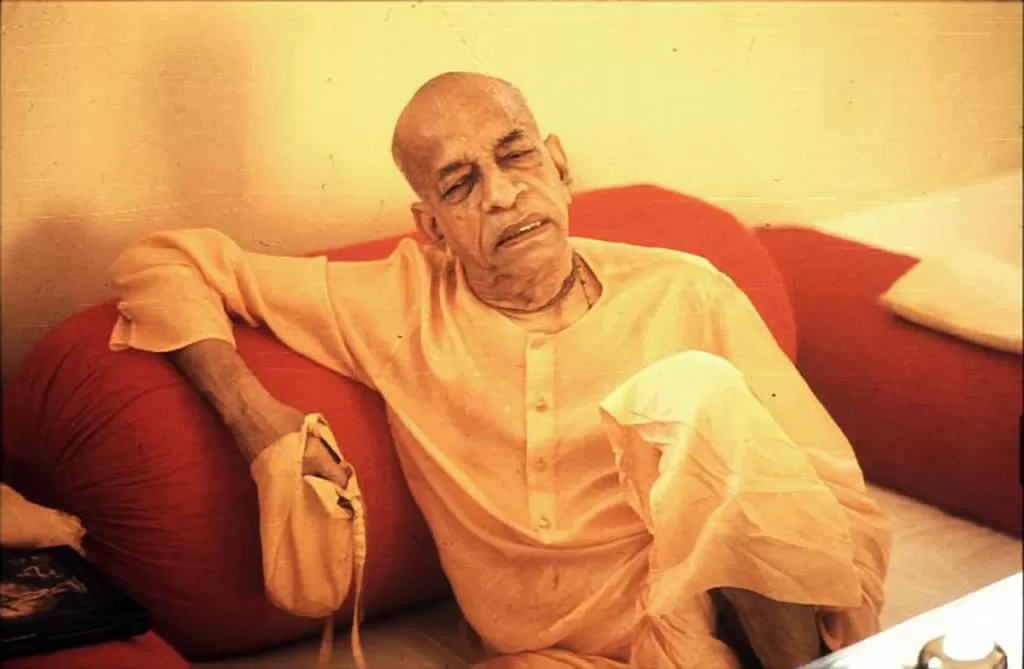
Hare Krishna, Here is Biography about A.C. Bhaktivedanta Prabhupada in Malaysia (4 part)
Prabhupada in Malaysia
7: ‘First Class Kachoris’
8: ‘I Want A Temple Like This’
9: ‘Now, It’s Lord Jagannatha’
Chapter Seven
‘First-Ciass Kachoris’
May 5th, 1971
“Many people met Srila Prabhupada at the old airport. The path where he was to walk was covered with profuse flowers. The airport authorities were wonderstruck. A flower path from arrival terminal right up to the car. All varieties of flowers. The whole terminal was full with well-wishers. Disciples doing kirtana. Jumping with dholak. The people were also chanting. It was a blissful atmosphere, the kirtana was loud. Many fell to the ground when Srila Prabhupada entered. Many, many garlands. The flight came in the early afternoon.” (Mr. Arun Bhatt recalls his memories of Prabhupada’s arrival in Penang.)
Mr Shashikant Gupta drove Prabhupada and his disciples in his Toyota car. They were to stay overnight in Mr Shashikant’s house in Tanjong Bungah, near the seashore. Shashikant was the son of the late Mr Makhanlal who was very inclined towards sadhus, and liked his house to be offered for accommodating them. The host and his wife, Mrs Rupa Gupta, were both strict vegetarians. Rupa was born in Mathura (Krsna’s birthplace). Srila Prabhupada decided to eat food cooked by his hosts for the only time in Malaysia. Mrs Gupta cooked kachoris, and aloo (potato) sabdi. Srila Prabhupada was very pleased and told Bali Mardan that we must all learn from her how to cook kachoris. She gave a lesson to the devotees.
Amogha: “She made them flying saucer shaped with ghee in the white flour dough, like puri dough. She folded in the small amount of stuffing by pushing the centre in, making a hole, and folding the shape back into a saucer shape. The centre filling was dahl soaked over night and ground, then fried with red chillies, ground, so it was very hot. A little was enough.”
Srila Prabhupada always remembered Rupa’s kachoris, and even in 1976 in a conversation in Paris he brought the subject up.
Prabhupada: “Penang also I visited. I stayed with one Indian gentleman. His wife made very nice kachori.”
Hari-sauri: “It doesn’t matter wherever you go around the world…”
Prabhupada: “They asked: ‘What you want to eat?’ If you can, you make first-class kachori. That is from my childhood. My friends also did it. They’d make the first-class kachoris in my youthhood. I am fond of kachori. Kachori is made first class in Mathura.”
A programme had been arranged in the Ramakrishna Hall for that evening.
Like in Ipoh, the hall was packed when Prabhupada arrived around 6.30pm. As soon as he got out of the car everyone started to throw flower petals at his feet. First he walked a few hundred metres across the grass to the shrine to offer his respects. The devotees tried to restrain him, thinking that Prabhupada was too tired, but he proceeded none the less. He then walked back to the hall. Bhakta Neo: “I paid my obeisances and started thr owing flowers in front of him as he walked to the shrine and then all the way to the stage. He was very pleased, he gave me this very broad smile.” Arun Bhatt says: “It was a big event for the Indian community. Before or since, no reception like that for a sadhu.”
The programme was advertised in the Penang Straits Echo, morning edition: Wed, May 5th, 1971.
Krishna Lecture Today”
A public lecture by His Divine Grace A.C. Bhaktivedanta Swami Prabhupada, founder of the International Society for Krishna Consciousness in America, will be given on May 5th at 8.00pm at the Ramakrishna Hall. All are invited to attend. He has come here on the order of his Guru Maharaja, to preach the teachings of the Bhagavad-gita and to distribute the science of Love of God, as passed down by an unbroken succession, which extends back over 5000 years.
On the stage the devotees were dancing and chanting as Prabhupada sat on the vyasasana. Prabhupada said to Amogha, who was leading the kirtana, to sing “Samsara prayers” (as they were known then). Amogha: “I started out but wasn’t confident, but Srila Prabhupada took over and sang the Gurvastakam whilst we all followed. There was a microphone for Srila Prabhupada and other ones for us.
During the kirtana there were children on stage with us, as they used to regularly do when we had kirtanas.” Mr Somasundram Ravindra, who was one of the children on the stage at that time, recalls: “During the kirtana Srila Prabhupada asked us, the youth group who were all inclined towards Hare Krsna, to join in the dancing. Srila Prabhupada was watching, then he played his karatals, bringing incredible life into the air. His playing was amazingly beautiful. Then he started to lead the kirtana.”
Mr Om Prakash: “For 15 minutes during the kirtana I was fanning Prabhupada. I have never had an experience like it. I felt I was flying for one week afterwards.”
Prabhupada then gave a long lecture in English. Mr Raju: “Srila Prabhupada spoke at length about the science of bhakti-yoga and how to realize God through chanting the Holy Names. He spoke how he went to America, New York with only US$9. He was sitting under a tree with karatals chanting. One, two, three men came, then more.” After the lecture Prabhupada nodded his head towards Amogha to start the kirtana. Amogha: “There was a very nice kirtana, with Hanuman drumming on a wooden drum, a dholak. It was a wonderful moment. We were all on stage at Srila Prabhupada’s feet, having kirtana on and on.”
The programme finished relatively early, and Prabhupada was driven to his residence for the night and a much needed rest.
Thursday, May 6th.
Srila Prabhupada went for his only morning walk whilst in Malaysia. It was ekadasi.
Amogha: “I was going to drive Prabhupada for his morning walk, but I looked too nervous and was replaced. Prabhupada said: ‘He can come’, but Bali Mardan insisted that I clean the house.” Mr Shashikant drove Prabhupada to the Botanical Gardens for the walk.
Prabhupada’s schedule had been really hectic and Bali Mardan was restricting people from going in to see him. One man, Mr B.S Kalia was allowed in. He and his family had been extremely friendly to the devotees, giving them all facilities during their visits to Penang. Mrs Kalia was also arranging Hare Krsna youth meetings regularly. It was time for Prabhupada’s massage and Mr Kalia asked if he could help.
Prabhupada agreed. Mr Kalia: “Prabhupada said the massage was very beautiful, very relaxing. I knew the art of massage. Prabhupada said: ‘These devotees, they don’t know how to do it and you have done so nicely. I like it’. I was so fortunate to touch the Guru’s feet. They were so soft. I was in ecstasy.” Mrs Kalia also prepared pickles, and Prabhupada liked them very much. Mr Kalia asked Prabhupada: “What magic have you done with these boys? They were all meat-eaters, drinkers.” Prabhupada replied: “I haven’t done anything. This is all Krsna’s grace, this is not my doing.”
The devotees wanted Prabhupada to rest, but when Mr Joshi invited him to come to his house to speak, Prabhupada taking every opportunity to preach, accepted. It was a late morning gathering but the large satsang hall in Mr Joshi’s house was crowded, mostly with members of the North Indian community. It was almost a tradition that whenever a sadhu would come to Penang he would come to Mr Joshi’s house. Before speaking Prabhupada said there should be an introduction. Bali Mardan asked Amogha to speak.
Amogha: “I was very nervous about speaking before people in those days, but I stood up and introduced Srila Prabhupada. His Divine Grace A.C. Bhaktivedanta Swami Prabhupada, bona-fide representative of the Madhva Gaudiya Sampradaya, came on the order of his spiritual master to spread Krsna consciousness all over the West. I said something like that, as best I could. I remember that Srila Prabhupada was very pleased with what I said. He told Bali Mardan so.” Prabhupada spoke in Hindi and English.
He visited the nearby Radha-Kunjabihari Temple to take darsana, before returning to his residence.
Although so busy, Prabhupada still found time in Penang to answer letters, and keep in touch with his movement around the world.
6th May, 1971
My dear Syamasundara,
Please accept my blessings. I’m very glad to inform you that we have reached Malaysia very shortly, that on my arrival there was nice meeting, and then we have come outside the city. Yesterday l was very busy all day.
6th May, 1971 My dear Tamala,
Please accept my blessings. You’ll be glad to know that I have come to Malaysia. On Monday night there was a good meeting upon my arrival, and then yesterday I was all day busy in attending three or four meetings. All of them were very big meetings, and this place appears to be very prospective for our preaching work. People are inclined to give us land and a house. Two or three such offers are already in view. So, l’ll try to open a branch immediately, either in Kuala Lumpur or Ipoh or Teluk Anson. In Teluk Anson one retired principal of college has offered a house which can be used as temple, already started very big. It is understood that the property is about fifty to sixty thousand dollars. So, things are going on nicely, and I shall be glad to hear from you about how things are going on there.
Another point is that from here I shall be going to Sydney, and then from there I shall be going to Calcutta. So, when you expect me there you can write me immediately. I hope this will meet you in good health. Offer my blessings to all others.
Your ever well-wisher,
A. C. Bhaktivedanta Swami
After less than 24 hours in Penang, it was time to return to Kuala Lumpur. Shashikant drove to the airport, with Srila Prabhupada in the front, and Bali, Amogha and Vegavan in the back.
Amogha: “Along the way, Srila Prabhupada said that he had introduced a new song in India, and it went like this. He began to sing Jaya Radha Madhava Kunjabihari. As he sang he would turn his head back towards us, so we could hear his singing. His eyes were deep with love and decorated with tears as he sang this song. I remember that before he began singing I was feeling very bad, as I sat in the back seat, because I felt that I had been very unworthy of Srila Prabhupada. I had so much difficulty keeping regulated and not eating too much. I didn’t type very well. Like that I was feeling that I am not very good. In this mood I put my hands up and silently said prayers and obeisances to Srila Prabhupada. Just after that Srila Prabhupada, turned and said, ‘Just by offering obeisances all good activity is performed’.”
Amogha: “When we all arrived at the airport, there were seats in rows, with one pillar type shaft from the seat to the ground. The seats were made of moulded plastic. Srila Prabhupada walked to one on the left and sat down. I thought we should sit on the floor at his feet, but he motioned and said: ‘Sit!’ So we sat on the seats in the row opposite to Srila Prabhupada, about 12 feet away. Bali was haggling with the man at the counter about the luggage fees. I just sat there and chanted japa, thinking that I would try not to be so bad. Just then Srila Prabhupada motioned for me to come over. I was surprised because Bali always attended to Prabhupada’s personal needs. l came to him and he asked me if there was a toilet. I said, ‘Yes, there must be’.
So he stood up and gave me his little white vinyl hand bag which he always carried. It had his glasses, pens and other things in it. He said to me, ‘Take this in your hand and don’t let go’. We began to go, and I could not see the toilet. Srila Prabhupada was motioning and calling Bali Mardan, but suddenly I saw the sign and said, ‘There it is’. When we came to the entry, Srila Prabhupada wheeled around suddenly and put both hands forward. I was surprised, but understood that I was to take his beadbag and cane, so I did. I held them very carefully while he went inside, and I sang Jaya Radha Madhava off a piece of paper which Vegavan had just given me. I peered inside the beadbag. Prabhupada’s beads were very shiny and golden coloured. Then Srila Prabhupada came out and I gave him his beadbag and cane. He walked away with his head held high and back. I felt like a little boy tagging along beside His Divine Grace.”
As they were waiting for the flight, Prabhupada talked to Mr Joshi about the visa problem for his disciples. He asked him if he could arrange long term visas for 25 foreign devotees to stay in Malaysia. Mr Joshi thought it would not be possible, so he didn’t try.
Chapter Eight
‘I Want A Temple Like This’
Kuala Lumpur Thursday, May 6th, 1971
Prabhupada returned to Kuala Lumpur by flight with his disciples. It was ekadasi. They returned to the residence of Tan Sri Kishu, where they were to stay until Prabhupada’s departure for Sydney. Prabhupada went to visit Kamaladevi who was offering the land. The devotees had kirtana in her house and Prabhupada asked Amogha to lead the “Samsara prayers”. Even though Prabhupada was obliged to eat, he only accepted milk, as Kamaladevi and her husband, were not vegetarians.
Kamaladevi: “Prabhupada came to my house the day we moved in. We were very excited. Mother, father, grandfather all came to receive Swamiji. Prabhupada blessed our house by walking all around. He sat down and we all sat on the ground at his feet even my father.
Prabhupada said, ‘Krsna’s devotees must live long, then they can spread the message of Krsna’. Prabhupada talked informally about Krsna. My father was asking a lot of questions. He had studied the Upanisads, and was an Advaitist. Because I was a Krsna devotee whole life, my father was displeased and would beat me. Prabhupada said many things, which my father didn’t agree with. There was a very interesting discussion. Many points were cleared up. My father showed great respect for Prabhupada, and found him very interesting even though he philosophically different.”
Kamaladevi drove Prabhupada in her Mercedes car to see the land and temple which she was considering to offer to ISKCON. The foundation had already been built. She still keeps the car, as each time she sees it, it reminds her of Prabhupada, and when she remembers Prabhupada she thinks of Krsna. While walking around the grounds, Srila Prabhupada said: “If you want to spread Krsna’s message you don’t need a cottage like this. (Referring to the shack in which the devotees had been staying). You can stay under a tree.”
Friday, May 7th, 1971
In the morning Prabhupada came out of his room and sat on a dais in an adjoining room. Srila Prabhupada asked Amogha to sing the Samsara prayers (Gurvastakam), but he wanted him to learn the “morning melody”.
Bali Mardan: “Prabhupada spoke to me in his room that he was upset with devotees in India inventing some other melodies to sing. He said morning melody means singing this melody. And he taught me.”
Amogha: “I tried to learn the melody by hearing from Bali Mardan. Prabhupada had been teaching him, but Bali Mardan wasn’t very melodious, and whenever I made a mistake he got really heavy. Prabhupada wanted me to sing. I was a nervous brahmacari. For me it was really complicated on the harmonium to follow that melody, and I didn’t really know how to do it yet. I just froze; like stage fright. I just sat there, and Bali Mardan was piercing me with a penetrating look. Prabhupada was waiting. Finally, Prabhupada motioned, took the harmonium and played. He started to show me how to play, with one note at a time, but running and trilling on the keys.
I remember how softly he touched the keys, with his fingers straight, and how they softly glided, and easily produced a beautiful accompaniment. He often played one octave down at the end of a run, as we can hear on tape recordings of him playing. Still he didn’t sing, he wanted me to sing! He waited, I couldn’t… Bali scowled heavily at me, ‘Go on, SING!’ I couldn’t. I banged my head against the wall, because it could have been so nice, but I was frozen. The way he was playing, I thought it was too high for me to sing, and I was scared and nervous. Finally, Prabhupada just sang it himself. I felt like a wretch. When I remember this I hanker for another chance, and wish I hadn’t been so foolish. I always remember the way Srila Prabhupada played the harmonium and I try to play the way he showed me.”
Bali Mardan: “Prabhupada told me that every morning we should sing the Samsara prayers to the spiritual master with all the love that we can feel.”
Bhakta Neo: “During the morning darsana Swami Sivajyoti came to see Prabhupada, but he left when Kamaladevi arrived. She, like others felt apprehension about the Swami, and the Swami seemed unsettled. When Prabhupada heard that he had left he seemed to show a lot of concern, and kept asking where did he go. He asked the devotees to find him and bring him back. He said we can send him to Australia, or somewhere like that, to train him up. He seemed so compassionate no matter who he was dealing with”.
In his dealings with people in Malaysia, Prabhupada externally appeared to reciprocate differently. But in each and every case, he was always seeing them as Krsna’s eternal servants, and always looking for ways to inspire them to again serve Krsna. Somehow by Krsna’s arrangement, many fortunate souls were coming into the association of the pure devotee and Prabhupada as their well-wishing friend would encourage them no matter what the fault. We all have faults in this world. The only remedy to rectify our c ondition is to associate with true mahatmas. Such mahatmas are described in the Bhagavad-gita as: Sa mahatma su-durlabhah.
Very rare. To get the chance to meet a pure devotee like Prabhupada is so rare. In the Caitanya-caritamrta it is described: brahmanda brahmite kona bhagyavan jiva, guru-krsna-prasade paya bhakti-lata-bija. “According to his karma, the living entity has been wandering throughout the universe in different species of life. One who is very fortunate gets the opportunity to associate with a bona-fide spiritual master, by the grace of Krsna. By the mercy of both Krsna and the spiritual master, one receives the seed of devotional service.” Prabhupada was injecting bhakti in the heart of whomever he would meet.
During their preaching in Kuala Lumpur, the devotees had met one of the most prominent members of the Indian community, Tun Sambanthan, a government minister. Knowing Prabhupada was coming, he asked the devotees if Swamiji would come to his house for lunch on Friday.
In the minister’s chauffeur-driven car, Prabhupada and the devotees entered the driveway through the large gates. A high dais had been arranged for Prabhupada to sit on. Mrs Sambanthan sat at his feet. Mrs Sambanthan had a reputation for singing bhajanas, and an interest in Sanskrit. Prabhupada preached to her very intently, hoping that she would help to spread Krsna consciousness. Being the wife of the minister, Prabhupada saw that she could be very influential and helpful in spreading Krsna consciousness — a srestha — or leader of society.
As Prabhupada explained the process of Krsna consciousness he quoted many Sanskrit verses. Mrs Sambanthan said: “Yes that is so true. You quote Sanskrit so nicely Swamiji.” After some time Srila Prabhupada said: “So you are appreciating our philosophy very nicely. You must help us spread this Krsna consciousness movement.” She answered: “With your mercy, Swamiji.” Srila Prabhupada said: “Mercy is already there. You simply have to take it.” She answered again: “With your mercy Swamiji.” Then Srila Prabhupada gave an analogy. He said: “If someone is drowning in a well and crying out ‘Help’, and another person hears him and throws down a rope so he can catch it. If the person drowning in the well cries, ‘Help me take the rope’, it is not right. It is up to him to take the rope and be pulled out. The mercy is there. You simply have to take it and become freed from all illusion and lamentation.”
As Prabhupada continued talking he seemed very intent but at the same time acting nonchalant. Then a wonderful thing happened. Prabhupada asked for his white vinyl hand-
case, and pulled out a paper and put it in the lady’s hand. He said: “I want a temple like this.” Prabhupada very much wanted this lady to help build a temple here in Malaysia. At the same time by his calm expression he seemed to be restraining his extreme enthusiasm.
On the paper was a sketch of a three-altar temple, and the floor in a design of squares. It looked just like the Krishna-Balarama Temple, later constructed in Vrndavana. Mrs Sambanthan explained that her husband was already building a temple but she would discuss it with him. There was no definite response. Prabhupada was just overflowing with desire to spread the movement and he took every single opportunity to try to engage others in helping.
In the evening back at Kishu’s house Prabhupada was giving darsana. Around a dozen guests were present. The weather was hot, and Prabhupada was talking vigorously with a group of young Indians. Previously they had been arguing with the devotees about the worship of Lord Siva, and they pressed their points to Srila Prabhupada. “Is Siva equal to Krsna?” Prabhupada smiled and explained how Lord Siva is Krsna, but in one sense not Krsna. He gave the example how curd comes from milk, and in that sense is not different from milk, but at the same time is not milk. But they kept pr essing their point. Prabhupada finally said: “No, Lord Siva cannot give you liberation.” (Complete freedom from the material world and reinstatement in our eternal position as servant of Lord Krsna in the spiritual world. Jivera ‘svarupa’ haya krsnera ‘nitya dasa’.)
Prabhupada asked for water. Amogha, who was holding the microphone at the time, got up and went to the kitchen.
Amogha: “In the kitchen a lady handed me a silver tray on which was a pitcher of cold water, with ice in it, and a drinking cup or goblet upside down. The drinking cup had a long slender base that widened at the bottom. As I brought it in I couldn’t understand that it was upside down so I conjectured that it was a funnel which would fill the cup if I poured the water into it. I came close to Srila Prabhupada and nervously, in front of the guests, I poured the water into the bottom of the cup which was stand ing upside down on the tray.
Naturally the water spilled out onto the tray, but I didn’t notice. I thought, ‘They put a funnel there so I wouldn’t spill it’. Srila Prabhupada looked at me and the tray and said, ‘What is that?’ I said, ‘Water, Srila Prabhupada’, and he said, ‘NO, what is THAT?’, referring to what I was doing. People began to jump up to assist, but suddenly it dawned upon me what I had done. ‘Oh, No!’ I exclaimed and I poured the water out of the base and filled the cup properly.
It was a big embarrassment. Everyone was on edge about it. Red- faced, I sat down where I had been before. At the time I walked in with the cup, Prabhupada was preaching about how people have misused their intelligence. Then I interrupted with the water blunder. After I sat down again Srila Prabhupada said, ‘Misused intelligence’, and everyone laughed heartily and felt relieved. Prabhupada could always say something at the right time that would put everybody at ease.”
Chapter Nine
‘Now,It’s Lord Jagannatha’
May 7th, 1971 – Evening
This was Srila Prabhupada’s last night in Malaysia, and final public programme. The venue was the Town Hall in Kuala Lumpur. People had come from as far-afield as Teluk Anson, to get this last chance to be with Prabhupada. Minister Tun Sambanthan stepped forward to
garland Srila Prabhupada, and introduced him to the audience. Kirtana followed and then Srila Prabhupada spoke:
Dear Minister, Ladies and Gentlemen,
I beg to thank you very much for your taking part in this Krsna Consciousness movement, which is going on progressively all over the world. This Krsna Consciousness movement was practically started millions of years ago and Krsna says in Bhagavad-gita: imam vivasvate yogam proktavan aham avyayam. So this bhakti-yoga system as it is described in the Bhagavad-gita, it was spoken first to the sun-god millions of years ago. Vivasvan manave praha manur iksvakave ‘bravit. Evam parampara-praptam imam rajarsayo viduh. So it is coming down from sun-god to his son Manu, and from Manu to Maharaja Iksvaku, the first king in the dynasty wherein Lord Ramacandra appeared. It is very old movement but the parampara system, disciplic succession was broken.
That is stated by Lord Krsna Himself: sa kaleneha mahata yogo nastah parantapa. Therefore the Bhagavad-gita yoga or bhakti-yoga was originally spoken to Arjuna. So at least from the historical point of view this movement is not less than 5000 years old. So not that we have concocted a religious process and distributing it. No! We cannot manufacture religion. That is not possible because dharmam tu saksad bhagavat-pranitam. Dharma means the codes given by the Supreme Personality of Godhead. Just like law means the codes given by the government.
You cannot manufacture laws in your home. That is not acceptable. Similarly this dharma or bhagavata-dharma. Dharma means bhagavata-dharma, because the rules and regulations given by Lord Krsna, or the Supreme Personality of Godhead—that is dharma. It is clearly stated in the Bhagavad-gita: sarva-dharman parityajya. First of all Krsna said: dharma- samsthapanarthaya sambhavami yuge yuge. He came to re-establish the principles of religion.
Then at the last moment He said: sarva-dharman parityajya mam ekam saranam vraja. This means the concocted religion made by man. Man-made religion is not religion. Krsna has distinctly forbidden. Don’t accept such religion, because they are all concocted. Real religion is mam ekam saranam vraja. This is real religion. In Srimad-Bhagavatam also this statement of Bhagavan Krsna is confirmed: dharmah projjhita-kaitavo ‘tra. In Srimad- Bhagavatam, kaitavah means cheating. Religious principles which are cheating the public, that is completely eradicated. Dharma projjhita.
Paramo nirmatsaranam satam vedyam vastavam atra. It is to be understood by the paramo nirmatsaranam. (Those who are completely non-envious). Nirmatsaranam satam… This is the comment by Sridhara Swami. Sridhara Swami comments on this point that people are after religion—dharma, artha, kama, moksa. Generally people go to the churches, to the temple for religious purposes, but actually it is meant for solving economic problems. Just like the Christians they pray: “O God give us our daily bread.” Similarly, you also go to the temple, you also worship many demigods. To the temple of goddess Kali or Durga or Lord Siva: dhanam dehi rupam dehi rupa-pati-bhajam dehi devi dehi. (O worshipable mother Durgadevi (Amman), please give me wealth, strength, fame, a good wife, a handsome husband and so on.) To ask from them. Therefore, the modern politicians, they have become very much disgusted with this kind of dharma. They say that if you want dhanam
( wealth), that’s alright. Why don’t you produce it, as others are producing it, by economic development? Why waste so much time at the temple. Of course those who go to the temple they are recognized even if they are asking something, because they have approached dharma.
The Bhagavad-gita, it is stated: catur-vidha bhajante mam janah sukrtino ‘rjuna. They are su-krtinah (pious). Anyone who, goes to the temple or church for asking God for economic solution; bread, bread solution, they are better than the atheist class, because they are at
least going to God. The atheist class of men, they are described in the Bhagavad-gita— duskrtinah. Duskrtinah means miscreant, sinful. Krti means meritorious, but their merit is being misused in wasting time of the very valuable human life. Na mam duskrtino mudhah prapadyante naradhamah. And they have been described as mudha. Mudha means the ass. The ass works very hard day and night, but it has no means to understand what is the goal of life. So this human life is meant for getting release from the cycle of birth and death and for enquiries about Brahman. That is the instruction we get from Vedanta philosophy.
Athato brahma-jijnasa. This is the actual utilisation of human life.
Now you have come through evolutionary process through various types of species of life from lower to higher. Like that. Now this is the point of human form of life. When we can completely get release from the repetition of birth and death. That is the real problem. Not the economic problem.
Economic problem it will always be settled up. Prahlada Maharaja said:
sukham aindriyakam daitya deha-yogena dehinam. He addressed his demonic friends that: “My dear friends, this sense gratification programme is already settled by the type of body you have got—deha-yogena dehinam— everyone is getting a certain type of body according to his karma.” As it is stated in the Bhagavad-gita that you carry a certain type of body with you and you try not to lose it. If you, just like this air carries the flavour of a rose flower or a filthy place, similarly in our present life if we make our life like a rose flower then I carry the flavour of rose by my subtle body—mind, intelligence and ego to form another body. Karmana daiva-netrena jantur deho. So that facility is given to us by the Supreme—daiva-netrena—as a superior manager. Just like a clerk working in the office.
There is a record, service record and according to the service record he is given promotion or degradation as the authorities like. Similarly, there is a big service record in the superior hand, or in the superior government and that is counted and according to our karma we get a type of body in our next life. This is going on. This is a fact. So this life, this human form of life is to get out from the control of karma. As it is stated in the Bhagavad-gita: yajnarthat karmano ‘nyatra (loko ‘yam) karma-bandhanah. Yajna means Visnu, or Krsna, or Supreme Personality of Godhead. We have to work only for the satisfaction of the Supreme Personality of Godhead. As it is stated in the Visnu Purana, that:
varnasramacaravata purusena parah puman, aradhyate visnu (pantha) nanyat tat-tosa- karanam. By acting according to the varnasrama system; Vedic system. That established system is made by the Supreme Personality of Godhead. Krsna says: catur-varnyam maya srstam guna-karma-vibhagasah. So according to varnasrama-dharma everyone has got a particular type of duty. But that duty is made in order to satisfy the Supreme Personality of Godhead. Not to satisfy your senses. The Bhagavatam states the same way:
atahpumbhirdvija-srestha varnasrama-vibhagasah svanusthitasya dharmasya samsiddhir hari-tosanam
You can act according to your position. It doesn’t matter, either you are a brahmana or a ksatriya, vaisya, sudra or sannyasi, brahmacarya, vanaprastha or grhastha. These are eight different orders of social system according to daivika. So everyone has got a particular type of duty. Now by discharging that duty we have to satisfy the Supreme Personality of Godhead. Just like in a factory there are so many departments of work, where everyone is working, but the real purpose is to satisfy the proprietor of the factory. Because the supreme
enjoyer or beneficiary is the proprietor, similarly whatever we do it is meant for satisfying the supreme proprietor. And who is the supreme proprietor? Krsna.
Krsna says in Bhagavad-gita:
bhoktaramyajna-tapasam sarva-loka-mahesvaram suhrdam sarva-bhutanam jnatvamamsantimrcchati
If anyone wants peace and prosperity then he should know these three things. That Krsna is the supreme enjoyer, beneficiary (of) everything. Whatever yajna or tapasya we are discharging, the real ultimate goal is for the enjoyment of Krsna. Bhoktaram yajna-tapasam sarva-loka. And He is the proprietor—sarva loka. Not only on this planet but there are innumerable planets all over the universe, and there are innumerable universes also.
The supreme proprietor is Krsna. Sarva-loka-mahesvaram and suhrdam-sarva-bhutanam and He is actually the well-wishing friend of everyone. Krsna is so nice friend that as it is stated in the Upanisads that He is seated with the jivatma as a friend. Two birds are sitting as friends in one tree. One is jivatma who is enjoying the fruits of the tree and the other is simply watching. Witness—upadrastanumanta. That is stated in the Bhagavad-gita. So Krsna is always trying to give you good advice, suhrt, so that you may come again back home, back to Godhead. That is Krsna’s wish.
So Krsna came—dharma-samsthapanarthaya as you all know. But what is that dharma? That dharma is surrendering unto Krsna. Sarva-dharman parityajya. Clearly you haven’t got to practice any other kind of religion. If you are actually interested in dharma, then this is the process. “My Lord Krsna I forgot You for so many millions of years and was wandering in different species of life. Now I’ve come to Krsna consciousness I’m just surrendering unto You.” This is Krsna consciousness movement. We are taking this simple tool. There is no complication. But this surrendering method is very difficult also. Difficult for who?
Those who are against Krsna. For them it is very difficult. Na mam duskrtino mudhah prapadyante. That is also stated: Na mam prapadyante. Those who are miscreants, those who are sinful. Those who are rascals. This language is used by Krsna. Not that I am manufacturing. Na mam duskrtino mudhah. Mudhah means rascal, and duskrtinah means merits taken away. Na mam duskrtino mudhah prapadyante naradhamah. Naradhamah.
Naradhamah means lowest of the mankind. Because this life is meant for sacrificing for the pleasure of God, and we are misusing. Therefore Naradhamah. Oh, but there are many reputed persons who are gurus, who are not surrendering to Krsna. Mayayapahrta jnana.
Their imitation has no value. No value. The essential knowledge has been taken away by the illusory energy of God. Because the real essence of knowledge is to surrender unto Krsna. That is stated also by Krsna: bahunam janmanam ante jnanavan mam prapadyate. Actually those who are searching after the Absolute Truth. Athato brahma-jijnasa. By such speculative process after many, many, births they have to come to this point of surrender unto Krsna. Because that is the ultimate goal.
So those who are taking to the process, other than which is recommended by Krsna, they will have to undergo many, many births to come to this conclusion. Vasudevah sarvam iti sa mahatma su-durlabhah. He has to come to this conclusion. But such kind of mahatma, great soul is very rare. Therefore, Krsna consciousness is very difficult also. But it is easy also. The most sublime and very easy. Simultaneous. Most sublime because many, many philosophers, theologists, they come to this conclusion of surrendering to Krsna. Therefore it is very sublime because it is natural. Krsna and we are related very intimately as part and
parcel. Just like my finger is a part and parcel of my body, so there cannot be any separation. If I have got this body, I have got this finger, I have got this nail, I have got this hair. They are all my part and parcel of my body. Similarly either the demigods or the great sages the human society, anyone, they are all parts and parcels of Krsna, but how it is separated? It is separated when we, the part and parcel, do not give service to Krsna. Just like this finger is meant for giving service. I want finger to stand like this, immediately it stands. But if it cannot, it means it is in a diseased condition. This finger, if just upon my command cannot stand up, that means there is some pain and there is some disease.
So because we are part and parcel of Krsna anyone of us who is not in service to Krsna, is in a diseased condition. That is called illusion, maya.
So the Krsna consciousness movement is meant for giving relief to the diseased condition living entity. Those who have forgotten Krsna. Diseased condition means one who has suffered many, many years in diseased condition, one forgets what is a healthy condition. But we should know this is the criterion to understand that whether I’m mudha or naradhama. Whether I am liberated or conditioned. Liberated means to be engaged in Krsna’s service and conditioned means otherwise. That is also confirmed in the Srimad- Bhagavatam: mukti hitva anyatha-rupam svarupena vyavasthitih.
Mukti means when one gives up his situation otherwise, and becomes situated in his own position, constitutional position. That is mukti. Mukti doesn’t mean something very wonderful. Simply this position as Krsna says: sarva-dharman parityajya mam ekam saranam vraja. We should do it immediately. You can get yourself free even within a second, provided you agree. But the difficulty is you do not agree. That is the disease, that is maya. But if we agree, immediately liberation.
My svarupa — my real constitutional position is to surrender unto Krsna and abide by His orders. That is my position. Just like Arjuna. Arjuna was thinking independently. When he was talking with Krsna as friend: “My dear Krsna there is no necessity of fighting, because I have to kill my brother, my grandfather and so on, so on. It is better not to fight. So he was thinking in his own way. That is the disease, and therefore Krsna taught him the Bhagavad- gita, the science of bhakti-yoga, and he enquired from Arjuna. “Now what you have decided. Are you going to fight or not fight?” He said: “Karisye vacanam tava. Yes.
Nasto mohah smrtir labdha. Now I am in my real position, I have got my memory back, and I shall act according to You.” And he fought. So this is Krsna consciousness. This is Krsna consciousness, that we have to give up our own concocted ways of salvation or mukti, for so many things, or becoming prosperous. At least we have to simply abide by the order of Krsna as a human being, then that is right, because that is my constitutional position. So this position is attained after many, many births, by those who are actually wise. Bahunam janmanam ante jnanavan mam prapadyate, vasudevah sarvam iti. How one surrenders?
Because he understands by scrutinizingly studying all the Vedas, that Krsna means Vedas, means knowledge, means…
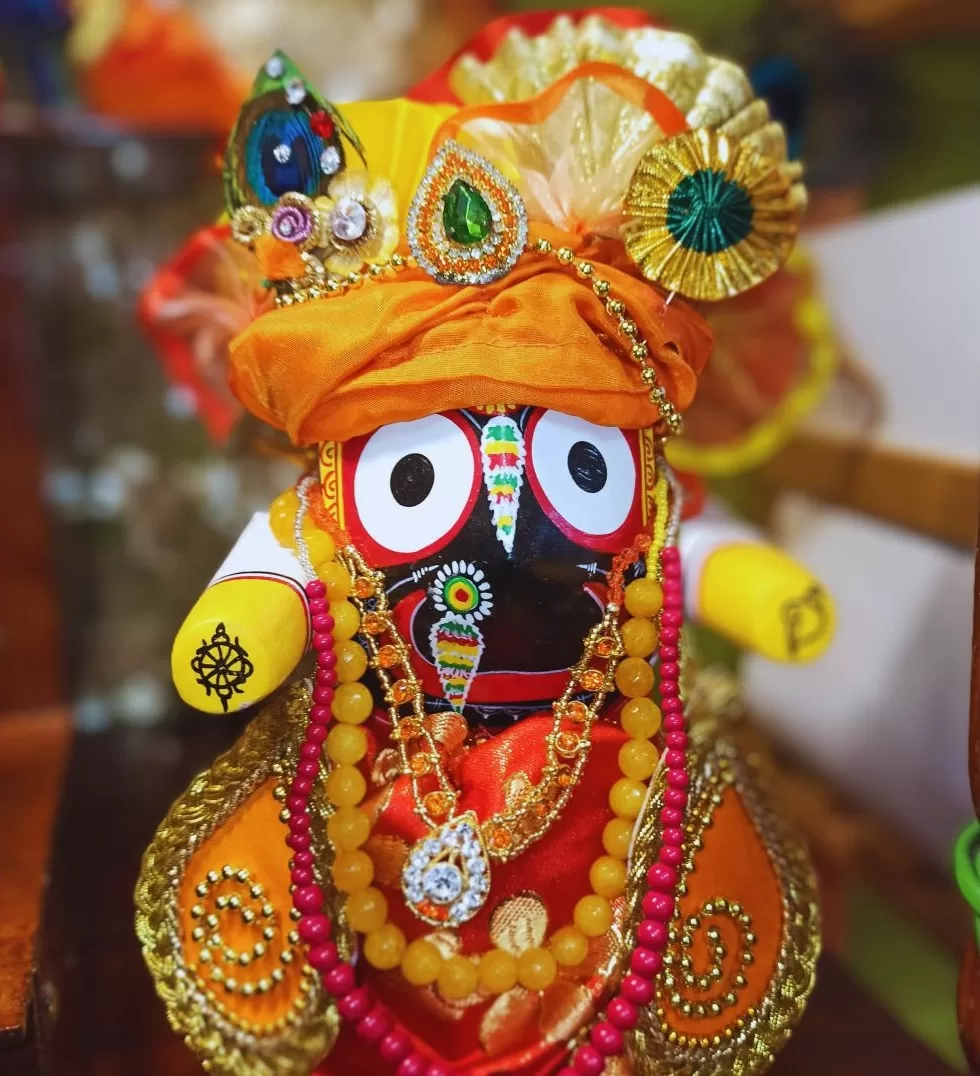
After the lecture the devotees showed a slide show of general ISKCON activities, depicting Ratha-yatras, ISKCON temples, prasadam distribution etc. Hanuman was giving the commentary, but sometimes Srila Prabhupada would instruct Bali Mardan to tell Hanuman what to say about a particular slide. A picture of Ratha-yatra, showing thousands of people gathered in Trafalgar Square, London, came on the screen. Prabhupada requested Hanuman to say: “No more Lord Nelson, now it’s Lord Jagannatha.”