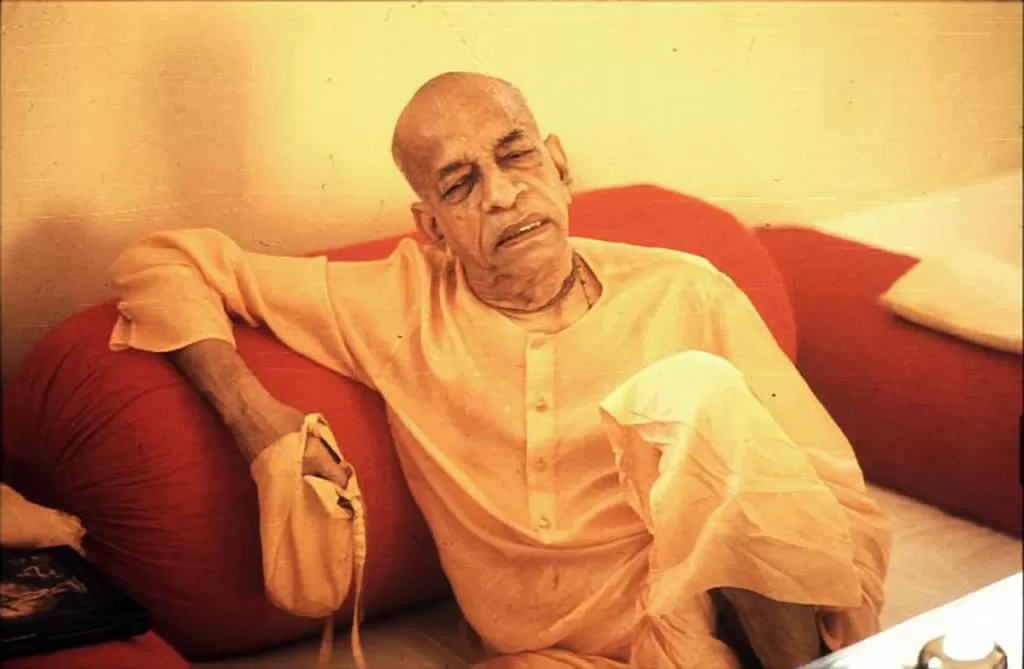
Hare Krishna, Here is Biography about A.C. Bhaktivedanta Prabhupada in Malaysia (2 part)
Prabhupada in Malaysia
1: Yes, Srila Prabhupada
2: Great Potential
Chapter One
Yes,Srila Prabhupada
“Kumbha-mela” the greatest congregation of human beings on earth. Every twelve years inAllahabad, sadhus and pilgrims from all over India gather at the Triveni, the confluence of the three holy rivers Ganges, Yamuna and Sarasvati. At an auspicious time that assures the worshipper liberation from the cycle of birth and death, as many as fifteen million people enter the sacred waters. A smaller version, the Magha-mela, takes place annually during the month of Magha (December-January). January of 1971, however, happened to fall midway through the twelve-year cycle from one Kumbha-mela to the next, and the mela was known as Ardha-kumbha-mela. Millions would attend, and Srila Prabhupada decided to take advantage of the opportunity to attend the mela with his disciples to preach.
For the twenty or so western disciples accompanying Srila Prabhupada, the conditions were austere. Almost freezing nights and mornings, only icy cold water to bathe in and very simple prasadam. Staying in tents amidst millions of others, the devotee’s strength and shelter was the presence of Srila Prabhupada, who made any inconveniences more than worthwhile. The Mela committee had given ISKCON a good location near one of the entrance gates. A large colourful pandal was erected, and at night thousands would stream into the tent to join in kirtana, take prasadam and hear Srila Prabhupada speak in Hindi.
Srila Prabhupada and his disciples had been travelling and preaching extensively throughout India over the past couple of months, and that’s why he was at the Mela—to glorify Krsna. Each morning Srila Prabhupada would lecture mainly to his disciples in English, from the Srimad-Bhagavatam on the deliverance of Ajamila.
“Just try to understand that simply by chanting one name only, Narayana, samagrahit, without any offense, Ajamila became immediately purified from all sinful activities. These are not exaggeration. This is the fact. Otherwise why Caitanya Mahaprabhu should encourage? Harer nama harer nama harer namaiva kevalam, kalau nasty eva nasty eva nasty eva gatir anyatha. You’ll never find any disagreement with the sastra, sadhu, and guru.
Therefore, Narottama dasa Thakura says, sadhu sastra guru vakya. That is our guidance. Sadhu. If you say Caitanya Mahaprabhu was a sadhu or a devotee, so His words and the words of the scriptures are the same. The sadhu will speak only on the authority of sastra. And sastra means the description given by the sadhu. They are correlative. And guru means who follows the sadhu and the sastra. So these are very instructive. Sadhu who is always engaged in the service of the Lord, he is sadhu, bhakta. And sastra. Sastra means description of the activities of the sadhu and bhagavan.
Just like Srimad-Bhagavatam. We are reading the story of Ajamila. He became a sadhu; therefore, his description of his life is imparted here. Prahlada Maharaja is sadhu, Dhruva Maharaja, a sadhu, Ambarisa Maharaja, a sadhu. Formerly the kings were all sadhus, rajarsi. Just like in the Bhagavad-gita , you have heard, imam rajarsayo viduh. Formerly the kings were so exalted and they were so nice that they were, although they were sitting on the throne, they were dealing in politics, still, they were sadhu, just like rsi. There are many instances. So if there is one sadhu, he can make many other sadhus. Sadhu. Sadhu does not mean that he is alone enjoying the fruits of his spiritual life. Sadhu means who is trying to make others sadhu. He is sadhu. Krsna likes such sadhu, as He has described in the last portion of Bhagavad-gita: na ca tasman manusyesu kascin me priya-krttamah. The sadhu… And sadhu means he should preach according to the scriptures, not outside the scriptures.”
As a true sadhu, Srila Prabhupada felt unlimited compassion for the fallen condition of the world, and had sent his disciples to far distant places to preach on his behalf. He himself would also travel to visit his disciples and enliven them. Unlike most of the pilgrims at the mela, Srila Prabhupada had not come to seek liberation or purification, but as a humble representative of Lord Caitanya, had come to teach the message of Bhagavad-gita. Actually pure devotees like Srila Prabhupada are themselves places of pilgrimage as stated in the Srimad-Bhagavatam 1.13.10.
bhavad-vidha bhagavatas tirtha-bhutasrayamvibho tirthi-kurvanti tirthani svantah-sthenagadabhrta
“My Lord, devotees like your good self are verily holy places personified, because you carry the Personality of Godhead within your heart, you turn all places into places of pilgrimage.” A Vaisnava travels to holy places of pilgrimage to purify them, and reclaim fallen conditioned souls, as many impure people visit just to deposit their sins, and some even stay there whilst performing sinful acts.
One chilly morning when the devotees were huddled around Srila Prabhupada hearing him speak in his tent, a letter arrived from Bali Mardan. Bali Mardan had been appointed by Srila Prabhupada as his GBC secretary, to oversee the preaching development in Australasia, as well as East and South-east Asia. When Bali was in Japan, Srila Prabhupada had written to him:
4th, November, 1970 My Dear Bali Mardan,
Please accept my blessings. I am in due receipt of your air letter from Japan dated 18 October, 197O, and I have noted the contents with great encouragement.
It is for your daring and active nature that I have chosen you to represent me as GBC man for the southeast Asia zone, and I can see from your latest words that my choice has not been wrong. I think that Singapore and Hong Kong are English-speaking places so that you will not find much difficulty there. So just open two nice centers immediately and that will link-up our chain of centers around the world.
The basic principle of our actions should be that they are all meant for pleasing Krishna. If we act always in this consciousness automatically everyone will be attracted to devotional service, and this is the secret of our preaching work. If you simply practice the regulative principles which I have introduced you will remain pure. Factually this is our only strength. Simply because we rise early, take bath, chant sixteen rounds and strive with every activity to please Krishna—this is what impresses others.
Please report to me fortnightly, and correspond with your other GBC men as well. I request that you always display and distribute my books wherever possible.
Hope this finds you in good health.
Your ever well-wisher,
A. C. Bhaktivedanta Swami
Bali Mardan planned to go next to Hong Kong to help Bhurijan set up a centre there and then to Singapore where he intended to stay for a while to see the prospects. Whilst in Japan he had requested another devotee, Amogha das, to join him in Singapore after some time, if called for. Srila Prabhupada encouraged him in his preaching plans writing him again:
Bombay
24th, November, 1970 My Dear Bali Mardan,
Please accept my blessings. I beg to acknowledge receipt of your two letters dated November 9th and 11th, 1970.
You had mentioned going next to Singapore from Hong Kong. Singapore is also a nice place for organizing a center. There are many Indians and they will support the movement there. Yes. The several cities you mention are all important cities in the Far East portion. Originally they all had Indian culture. But I do not think you should spend your time at this stage of life in trying to learn so many different local languages. That is not practical for us. Our most successful program is to begin preaching with the help of an interpreter from the local people and later train up some intelligent men who speak English. When they are conversant with our philosophy, they can preach to the general public. The Hare Krishna Mantra is international mantra. Simply try to induce people to chant and they will understand everything. Externally, English language is understood everywhere.
Your enthusiasm for starting centers for educating the people of the world in this sublime Krsna Consciousness process is very good. You are actually authorized agent of my Guru Maharaja and through Him, Lord Caitanya. He predicted that in every town and village of the world His Name will be well known and you are trying for fulfilling His mission, certainly He will give you all strength and blessings. We simply have to work sincerely and
automatically all other things will come. Recently one very responsib le Indian gentleman was in our Temple in Sydney and he has given very good certificate for our activities there.
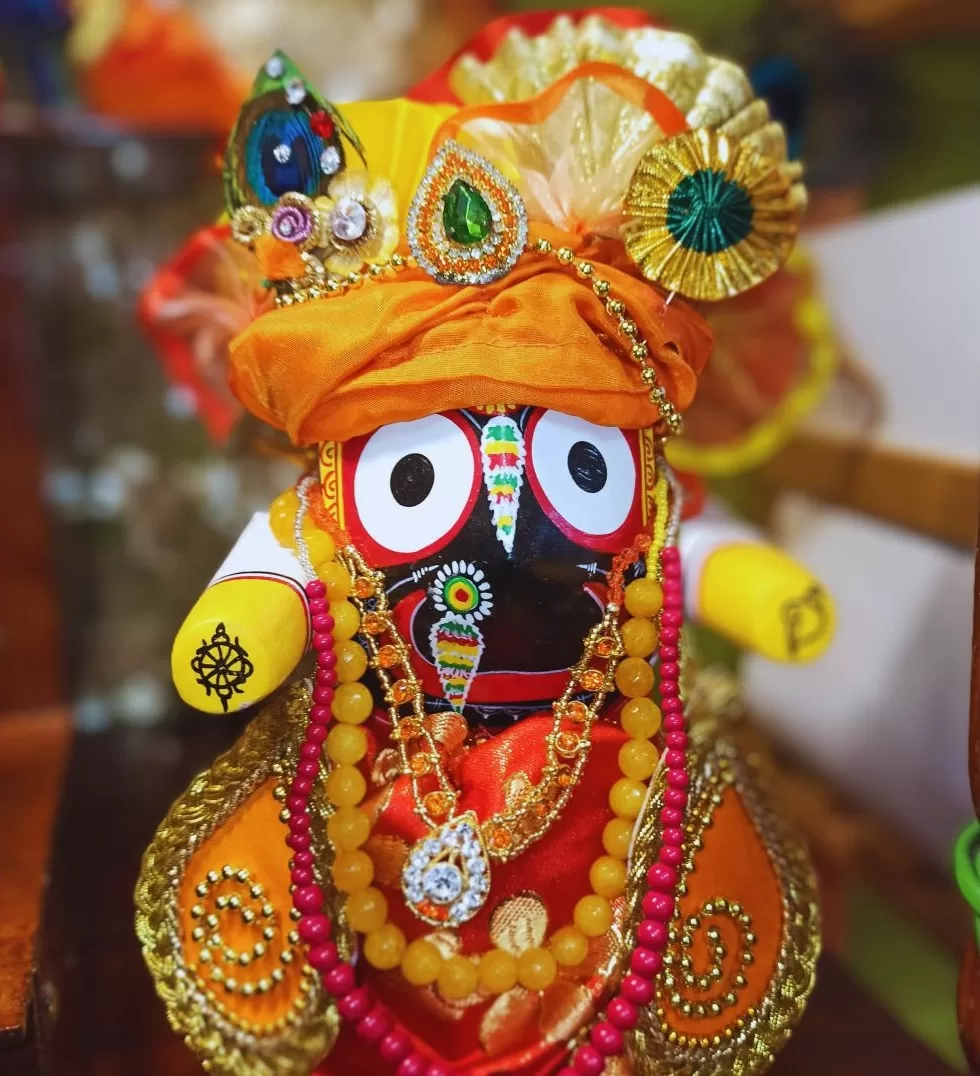
Regarding staying in the various Temples of demigods that is quite all right, but you should not take prasadam from the demigods if you are offered. Our method is to follow the system as it is done in Jagannatha Puri. There, the bhoga is first offered to Lord Jagannatha and then His Prasadam is distributed and offered to various demigods who reside in some nearby Temples. Then the remnants of such Prasadam may be taken by us. So far a Temple place is concerned, even there is no place, we can sit down underneath a tree and chant as I did in New York. Krishna will give a nice place. You have been anxious to stick to fulfilling the desires of Krishna and Spiritual Master without deviation. Our technique is that we work sincerely and the dictation will come from within; Krishna is seated there.
Hope this will meet you in good health.
Your ever well-wisher,
A. C. Bhaktivedanta Swami
Bali Mardan’s letter to Prabhupada described how he had set off on his way to Australia via Hong Kong and Singapore. In Singapore he had been joined by Amogha and they had stayed at the Pillai Kallyana Mandapa in Serangoon Road. One day a friendly Chinese lady gave them free use of her house in Stevens Road. There they stayed for a few weeks and the future looked bright. He described how they were holding programmes in houses and temples and selling books, especially amongst the Indians.
Hearing Bali Mardan’s enthusiastic report about Singapore, Srila Prabhupada immediately acted. In a preaching mood as ever, he said: “So, who will go?” The devotees were silent. Finally one hand went up, a young devotee from America, Gopal das, volunteered. Within seconds another, Hanuman das, a French Canadian. Gopal remembering the incident recounts: “Srila Prabhupada said, ‘Who will go?’ Nobody spoke or moved. The thought of leaving Srila Prabhupada was out of the question. The silence went on for what seemed like forever. Finally I raised my hand and Hanuman soon followed. I thought after volunteering, I would have to leave in a week or so, but Srila Prabhupada said, ‘So you will leave today?’ All we could say was, ‘Yes, Srila Prabhupada’.”
Chapter Two Great Potential
“We arrived in Singapore a few days later. It was quite a change from India, and we didn’t have Srila Prabhupada with us to guide us,” said Gopal upon his arrival. He and Hanuman soon met up with Bali Mardan and Amogha. Amogha had travelled from Japan to Taiwan by ship, sitting on the floor of the boat with hundreds of Oriental passengers. He had carried big cardboard boxes of prasadam to sustain him on the voyage. In Taiwan, a friendly Indian man flew him to Hong Kong, where again a well-wisher paid his air fare to Singapore. In the early days of ISKCON, devotees would often travel by hitch-hiking or boat. Whatever was the cheapest, as they hardly had any money.
For several weeks Bali and Amogha had been preaching around Singapore, especially amongst the Sindhis. They would go door to door selling large hardbound Krsna books during the day, and in the evenings hold programmes in temples and homes. Although they
had the use of a free house, the problem remained that they could not go out to perform Hari-nama sankirtana in the streets, and their visas were very short termed.
In Singapore the first local devotee joined, a young Chinese man, Neo Chee Wee. Neo had first met Bali Mardan on a bus and had been coming to their Sunday “love feasts”.
Although he continued working, he was serious.
One day they met Mr Ganapathi, the editor for the Tamil Malar. He was very friendly to the devotees and published the following article:
The article describes how the European “Hindu” Swamis dressed in the traditional way, have attracted much attention in Singapore with their orange robes, neck beads and shaven heads. “Although from Amenca, they are not Hippies. The Swamis belong to the Hare Krsna movement, ISKCON started in America. In their temporary residence at 80, Stevens Road, they conduct bhajans and classes on Bhagavad-gita at 7 am. daily. Also on Sundays at 4 pm, and Mondays and Wednesdays at 7 pm. Bhaktivedanta Swami Prabhupada, who originally started the Hare Krsna movement, is from India. ISKCON, started in 1966, now has 52 centres worldwide. The Hare Krsnas are expecting to establish their own place in Singapore in the near future,” the report said.
After preaching at the University of Singapore the following article appeared in the New Nation:
Bells, beads for Hare Krishna
Americans seek followers for ‘happiness’ cult
Wearing orange robes and beads, and with pigtails trailing from the back of shaven heads, two strangers raised some eyebrows at the University of Singapore campus yesterday.
They were members of the Hare Krishna movement who came to the university to recruit followers to their religious order.
Ringing bells, they sat down In the Student Union’s canteen and in a short time a crowd of undergraduates gathered round them.
After a talk, the two, strangers were seen to walk back alone to their recently established headquarters in Stevens Road.
It was In their rambling two-storey home that New Nation found 23-year-old Bali Mardan, a university graduate in English literature from New York. He and two other Americans, two Singaporeans and a Frenchman moved into the house several weeks ago from where they hope to spread their ideas throughout the Republic.
The movement established 52 centres called “spiritual communities” throughout the world in the past four years, Mr. Mardan said. The movement’s aim was the pertectlon of life according to the authoritative scriptures by loving God “with all our hearts, with all our souls and with all our minds.” he said.
Mr. Mardan said: “Even though there is so much technological advancement in the world today there is no spiritual realisation which leads to nothing but frustration as seen in hippies.”
The International Society for Krishna consciousness was formed in 1966 by Prabhupada A.
C. Bhaktivedanta Swami who went from India to New York “to preach love of God to the people of the West.”
“This is an international society centered around God and it is therefore completely pure,” Mr. Mardan said. “We are servants of the spiritual master.”
Followers of the movement do not smoke, drink alcohol, gamble, indulge in illicit sex or eat such foods as meat, fish, eggs or onions.
“We only eat food that God likes according to the scriptures.” Mr Mardan said.
Feb 11th: The time came for the annual Thaipusam festival and the devotees joined in doing kirtan with karatals and dholak. They drew a lot of attention.
Shortly after this Bali Mardan decided to take the party into Malaysia. Leaving Gopal and Bhakta Neo behind to look after the house, Bali, Amogha, and Hanuman rented a small car and drove across the causeway to Johor, and on to Kuala Lumpur. Initially staying at the old Laxmi Narayana Temple in Gombak, (since then demolished) they would visit local businessmen such as Makhanlal and Kishu T. Samani. Gradually they made contacts amongst the Tamils, Punjabis and Malayalis, as well as the Sindhis, doing programmes in many temples. Although few of the people could speak English, the “white” devotees were very popular. In India, Srila Prabhupada affectionately described his disciples as his “dancing white elephants”. Seeing Westerners adopt the principles of Krsna consciousness would naturally increase the faith of the Indians in their own culture. The same principle was working here in Malaysia.
Krishna Society to set up centre in Penang Bukit Mertajam, Sat [March 7, 1971]
The International Society of Krishna Consciousness plans to set up a centre in Penang and Kuala Lumpur soon, according to three of its leaders now here on a South-east Asian tour.
They comprise two American graduates — Bali Mardan Dasa Bhrmachari and Amogha Dasa Bhramachari—and a Canadian, Hanuman Dasa Bhrmachari. Since their arrival last week, they have held several prayer meetings in Penang.
The society was inaugurated by Indian swami A. C. Bhaktivedanta Prabhupada to preach divine love.
Bali Mardan Dasa Bhrmachari explained that Krishna Consciousness was a “process of self-purification.”
They travelled north to Penang, visiting Teluk Anson, Ipoh and Taiping on the way. Wherever they went they were well received. Local Indians would willingly come forward to provide accommodation, arrange programmes, give donations and feed the devotees.
Amogha recalls the difficulty he encountered being treated in such a way:
“During our travels through Malaysia we were plagued with a continuous problem. On one hand a devotee should never eat food cooked by non-devotees or materialistic people. But
the Indian people we were preaching amongst, constantly wanted to invite us for lunch, or feed us after a preaching programme. We constantly had to decide who we would eat with, and who we would not. In the months prior to Srila Prabhupada’s arrival, we had been eating even in the houses of meat-eaters if we thought they were sincere, and we would ask them to cook in pots never used for meat. We were always stuffed, and it was uncomfortable as well as detrimental to rising early in the morning, and spiritual development in general. If we would not eat in someone’s house they would become very sad, and plead with us. It became very difficult to refuse. If we ate in one person’s house in a community, they all wanted us to eat at their houses. Sometimes, when we put our hands out over our plates to indicate ‘no more’, they would slip a chapati past our hands onto the plate.”
After the devotees returned to Kuala Lumpur, Bali Mardan went to Australia. Back in Singapore, Gopal was preparing to come up to Kuala Lumpur but before leaving he said to Bhakta Neo: “We’re in Malaysia, are you coming to join us or not?” Neo had to make the decision of his life, whether to give up everything and join the Hare Krsnas full time, or not. He made his decision: “I left my job, shaved up and went to Malaysia.”
Staying again at the Laxmi Narayana Temple, they resumed preaching in temples around Kuala Lumpur. After one of the temple programmes, Kamaladevi Nadchitram, a lawyer, approachred the devotees and offered them a house on her estate at 6th mile Cheras Road. When the devotees visited Kamaladevi and her husband Dr. Thevarajah, who was a gynaecologist, they quickly developed a good relationship. When Hanuman saw the foundation of a temple she was planning to build on top the nearby hill, he enthusiastically pushed her to give ISKCON the temple, instead of the house. Construction had halted for some time. Discussing with her husband, Kamaladevi initially agreed. Hanuman was in ecstasy with the idea of a temple donation for Srila Prabhupada. He immediately wrote to Srila Prabhupada explaining the whole situation.
Kamaladevi invited the devotees to stay in the small shack in front of the temple grounds. Previously the workers had stayed there, but had returned to India. As they could not stay long at the Laxmi Narayan Temple they willingly accepted the offer. Shortly after this, whilst walking in Mountbatten Road, (later renamed Jalan Tun Perak) Hanuman and Amogha were approached by a young newspaper reporter. He eagerly interviewed them and snapped pictures. To their surprise an article appeared in the Straits Times and the Malay Mail the next day, March 19th, 1971.
Monks with Mohican hairdo to start ‘temple of full bliss’
Ambling serenely down Jalan Mountbatten this morning, clad simply, yet ostentatiously in the pale yellow robes of Buddhist monks with heads shaven in Mohican fashion, were two members of the Hare Krishna movement. They were Hanuman Das, a Frenchman from the University of Montreal, and Amogha Das, an American student from the University of California. Quite unmindful of the tremendous interest they had roused, the two spoke of the purpose of their visit—to start a Hare Krishna temple here on behalf of the guru, His Divine Grace A. C. Bhaktivedanta Swami Prabhupada. They were, however, quick to explain that Hare Krishna was a “universal non-sectarian” movement and not a religion itself.
It was a spiritual movement which should “suit every religion” and its formula for “full knowledge, full bliss, and full eternity” to this unhappy world was meditation amidst the ceaseless chanting of “Hare Krishna!”
The Krishna brothers are staying with a third colleague at the Lakshmi Narayan temple in Gombak Lane for a week before going to Singapore for a similar purpose.
How are they being financed?
“Oh, Krishna pays for everything, Hare Krishna!” Heads turn as Krishna men come downtown
Two members of the Hare Krishna movement today made heads turn in Jalan Mountbatten, clad simply yet ostentatiously in the pale yellow robes of Buddhist monks with heads shaven.
They were Hanuman Das (left), a Frenchman from the University of Montreal, and Amogha Das (right), an American student from the University of California.
Quite unmindful of the tremendous interest they had aroused, the two spoke of the purpose of their visit—to start a Hare Krishna temple here on behalf of the guru, His Divine Grace
A. C. Bhaktivedanta Swami Prabhupada. They were, however, quick to explain that Hare Krishna was a “universal non-sectarian” movement and not a religion itself.
It is a spiritual movement which should “suit every religion” and its formula for “full knowledge, full bliss, and full eternity” to this unhappy world is meditation amidst the ceaseless chanting of “Hare Krishna!”
Their next stop is Singapore.
Who pays for their travels? “Oh, Krishna pays for everything, Hare Krishna!” they said.
That day Hanuman and Amogha journeyed to Singapore, only to be stopped at the Singaporean border by immigration officers waving a copy of the article at them. “Are you Amogha?” they asked. “Are you Hanuman?” The names in the newspaper picture were the wrong way round so the devotees said: “No!” They were refused. entry and had to return to Kuala Lumpur.
Soon after their return to Kuala Lumpur, a reply to their letter came from Srila Prabhupada:
Bombay
28th, March, 1971
My Dear Hanuman, Amogha, Gopala,
Please accept my blessings. I beg to acknowledge receipt of your letters dated l9th and 23rd, March, 1971 end have noted the contents carefully. I have also received your telegram and I have already informed you that if need be I am prepared to go there but when things are completely matured. I hope you will consult Bali Mardan in this connection. Upon receipt of your last letter, I have sent one telegram to Kamala Devi, in care of Hanuman, reading as follows: HANUMAN DAS INFORMS ABOUT YOUR DONATION OF LAND AND TEMPLE. I THANK YOU VERY MUCH WITH BLESSINGS OF LORD KRISHNA. SHALL BE GLAD TO HEAR FROM YOU FURTHER IN THIS CONNECTION — BHAKTIVEDANTA SWAMI, FOUNDER—ISKCON.
Your reports of Sankirtana activities are all very much encouraging. It seems that there is great potential there for spreading our Krishna Consciousness Movement in Malaysia. So work with deternnnation and sincerity and Krishna will give you all facility.
Hoping this will meet you all in good health. Your ever well-wisher,
A. C. Bhaktivedanta Swami
Again Srila Prabhupada wrote to Hanuman:
8th April, 1971
My Dear Hanuman Das,
Please accept my blessings. I am in due receipt of your encouraging letter sent along with the prints of some lands and buildings and temple. As soon as I learn that Temple construction and donation of land is a fact, I shall be glad to go.
We have just finished a series of lectures delivered publicly during our Hare Krishna Festival at Cross Maidan of Bombay. There was a very large pandel constructed and the Deities Who were installed in our Magh Mela camp were installed there. The daily attendance was very good, about fifty thousand persons. The whole program was highly successful. So we shall have to organize such thing in Malaysia.
I am waiting to hear further from you and from Bali Mardan as soon as he reports on the matter. Hope this will meet you in good health.
Your ever well-wisher,
A. C. Bhaktivedanta Swami ACBS:ds
Sriman Hanuman Das Brahmacary c/o Lakshmi Narayan Temple
6 Gombak Lane
Kuala Lumpur, Malaysia
In early Apri1 the devotees met “Swami Sivajyoti” in Teluk Anson. The ‘mysterious’ swami was very cordial and helpful in arranging programmes for the devotees around the area.
They remained in Teluk Anson for several weeks anticipating Srila Prabhupada’s visit.
Leader Of Hare Krishna Touring Team Raps Hippies Teluk Anson, Tues.
A Hare Krishna movement leader thinks hippies are the natural result of a society with only material advancement … not spiritual.
Bali Mardan Das, 24, is currently leading a four-man Hare Krishna movement team on a Malaysian tour.
The other members are Amuga Das, 21, a Bachelor of Arts in literature and education from the University of California, Gopal Das, 21, who majored in religious science in the University of Montreal.
The four are in the country to spread the teachings of the love of god according to the scripture of Bhagavad-Gita.
Accompanying them are Swami Sivajothy from Kuala Lumpur and a Singapore recruit, Neo Chee Wee.
Bali Mardan Das said: “We are naturally happy to serve god. When we forget him we try to find so many artifucial means to Happiness, but this can only end in frustration.
“The hippies are the prime example of that,” said Bali Mardan Das, a graduate in English literature and philosophy from the University of New York.
He joined the Hare Krishna movement in 1968 after meeting some disciples of Swami A. C. Bhaktivedanta in New York.
He has since been doing missionary work and opened centres in Tokyo, Sydney, Hong Kong and Fiji. He is hopeful of setting up one in Kuala Lumpur.
Amuga Das became a follower in 1969 when he was doing social work with Negroes in a district near Watts.
Gopal Das, who conducts deity worship (ceremonial “Puja”) and plays the cymbals, finds chanting of “mantras” very sublime.
Talks on Hindu philosophy TELUK ANSON. Fri.—
Four Hare Krishna followers from the United States will sing hymns and speak on Hindu philosophy at the Kwangtung Association tonight at 7.30. Their visit is sponsored by the Teluk Anson Hindu Youth Organisation.