Hare Krishna, Here is Biography about A.C. Bhaktivedanta Prabhupada in Malaysia (1 part)
Prabhupada in Malaysia
Preface
Introduction
Preface
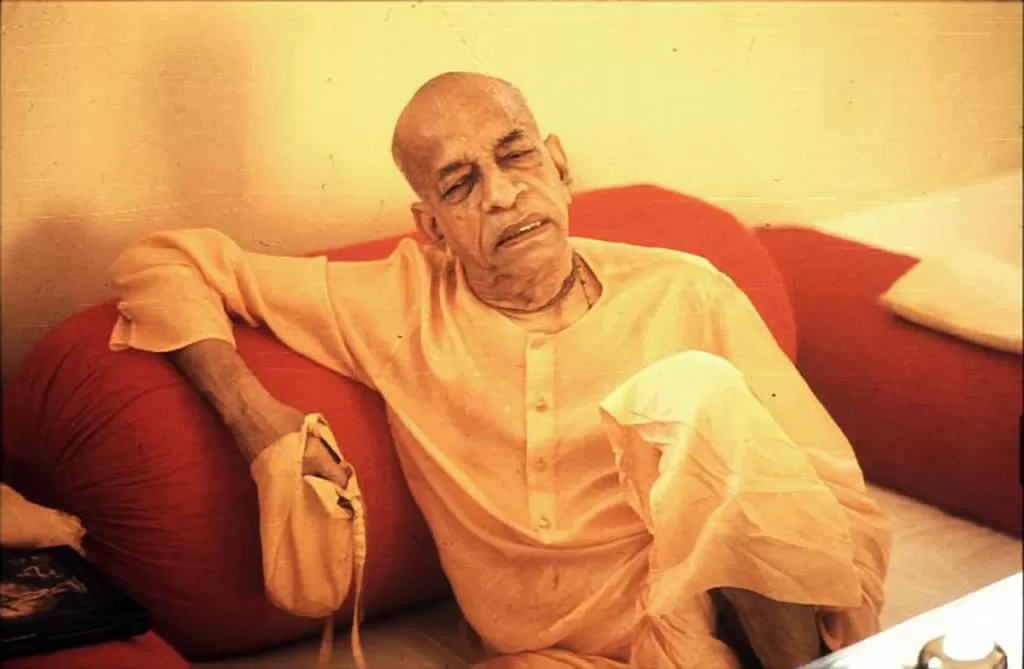
Today, Hare Krsna has become a household word everywhere, whereas thirty years ago it was practically unknown outside of India. One may wonder how this phenomenon has taken place. Some may say it’s because so many Western boys and girls go on the streets chanting Hare Krsna and distributing vast quantities of books about Krsna. Others say because of George Harrison and the Beatles who widely publicised the chanting. But the real reason remains hidden to most. Behind the Hare Krsna movement and the spreading of Krsna consciousness is the greatest exponent of love of God in this age His Divine Grace Srila A. C. Bhaktivedanta Swami Prabhupada, who at the age of 70, single-handedly took the message of Krsna to the Western world. Because of Srila Prabhupada the Hare Krsna mantra is now chanted all over the world. Because of him millions of people around the world have changed their lifestyle and adopted vegetarianism.
Although he was constantly preaching, Srila Prabhupada always kept himself in the background. He always put Lord Krsna first and accredited any success he had as the mercy of his guru. The mark of a truly great one is not to advertise himself but to always remain a humble servant of the Supreme Personality of Godhead, Lord Sri Krsna. Great souls like Srila Prabhupada do not wish to be praised or honoured, but it is for our own benefit that we must make it known to the world their true position. In the Padma Purana we find the following statement by Lord Siva to Parvati:
aradhananam sarvesam visnoraradhanamparam tasmat parataram devi tadiyanam samarcanam
“Of all types of worship, worship of Lord Visnu is best, and better than the worship of Lord Visnu is the worship of His devotee, the Vaisnava.”
By glorifying and hearing about the pure devotee of Krsna one pleases Krsna more than by directly trying to serve Him. We should understand that topics such as the contents of this book are also considered as Krsna-katha, because the subject matter is to glorify Srila Prabhupada, who is never separated from Krsna and is most dear to Him. It is stated in the Srimad-Bhagavatam 1.7.12. Purport: Krsna and His pure devotees like the Pandavas are not without Krsna. The devotees and the Lord are interlinked, and they cannot be separated.
Therefore talks about them are all Krsna-katha, or topics of the Lord.
It is for this reason that we consider such books as this of unlimited value for by hearing about the true mahatmas, those whose lives are dedicated to the service of the Lord, our own materialistic hearts will be cleansed. By associating in this way we will experience true happiness. The purifying effect of associating with pure devotees is explained in the
Srimad-Bhagavatam 1.1.15 as follows:
“O Suta, those great sages who have completely taken shelter of the lotus feet of the Lord can at once sanctify those who come in touch with them, whereas the waters of the Ganges can sanctify only after prolonged use.” Purport: Pure devotees of the Lord are more powerful than the waters of the sacred river Ganges. One can derive spiritual benefit out of prolonged use of the Ganges waters. But one can be sanctified at once by the mercy of a pure devotee of the Lord. In Bhagavad-gita it is said that any person, regardless of birth as sudra, woman, or merchant, can take shelter of the lotus feet of the Lord and by so doing can return to Godhead. To take shelter of the lotus feet of the Lord means to take shelter of the pure devotees. the pure devotees whose only business is serving are honored by the names Prabhupada and Visnupada, which indicate such devotees to be representatives of the lotus feet of the Lord. Anyone, therefore, who takes shelter of the lotus feet of a pure devotee by accepting him as spiritual master can be at once purified. Such devotees of the Lord are honoured equally with the Lord because they are engaged in the most confidential service of the Lord, for they deliver out of the material world the fallen souls whom the Lord wants to return home, back to Godhead. Such pure devotees are better known as vicelords according to revealed scriptures. The sincere disciple of the pure devotee considers the spiritual master equal to the Lord, but always considers himself to be a humble servant of the servant of the Lord. This is the pure devotional path.
We pray that in compiling this book we may not stray from the above guidelines. Although lacking sincerity we pray that Srila Prabhupada will bless and empower us in this effort.
Lecturing in January 1971 at the Kumbha Mela in Allahabad, Srila Prabhupada himself encouraged his disciples to write, not for self aggrandisement or fame but for purification:
“If you sit down and write some article on Krsna, that means you have to concentrate on Krsna’s activities or Krsna’s devotees’ activities, and that very process will purify your heart. Therefore we always recommend to our students that you write articles, read our magazine, read our book.”
Initially the project to write a book about Srila Prabhupada’s visit to Malaysia was started by Bhakti Vikas Swami. When he left Malaysia in 1987 the notes which he compiled fell silent for many years. An occasional effort was made by various players to bring them to life. In 1994 with Srila Prabhupada’s Centennial year (1996) fast approaching I committed myself to try to put together the book. In 1995 we started to search for more information. We reinterviewed people and found some new ones. Amogha sent more pictures and a tape.
A few more newpaper articles and pictures appeared from elsewhere. Dates and events were clarified. At last in October of 1995 we stared to compose the notes and put them into the symphony. Even if a little disharmonious, we hope that the sound will be pleasing and will inspire all those who hear it now and in the future. We only wish that 20 years ago we had realised how valuable every little event related to Srila Prabhupada was. Here we only have a few drops of nectar which Srila Prabhupada showered on Malaysia. Almost all the recorded tapes have been lost. Memories faded. Photos untraceable. Still, a few drops of nectar go a long way.
By writing this book I felt as if I was there with Srila Prabhupada in 1971 (although I was not). This is the nature of the transcendent. We hope that the readers will also get the same experience, because to be in the association of a pure devotee such as Srila Prabhupada is the rarest of all achievements in this world.
Certainly to have the opportunity to compile this book about Srila Prabhupada’s visit to Malaysia is a great fortune. By remembering Srila Prabhupada and hearing his glorification again and again from those who were here during his visit cannot help but purify the contaminated heart. I am confident that for the many offences I have committed and the errors in this book, as well as my selfish motivations in compiling it, I will receive just correction, and pray that somehow this effort may bring pleasure to our beloved spiritual preceptor, His Divine Grace Srila A. C. Bhaktivedanta Swami Prabhupada.
Janananda das Adhikary February 9, 1996
(Appearance day of His Divine Grace Bhaktisiddhanta Sarasvati Gosvami Maharaja, spiritual master of Srila Prabhupada)
Kuala Lumpur
Introduction
He Built A House For The Whole World To Live In
Srila Prabhupada appeared in this world in 1896, in Calcutta, India. His father, Gour Mohan De and his mother Rajani were great devotees of Lord Krsna and from birth they trained their son in devotional service. They narned him Abhay Charan: one who is fearless having taken shelter at the lotus feet of Lord Krsna. Gour Mohan desired his son to become a pure Vaisnava, and always prayed to Radharani that She bless Abhay. As a baby, an astrologer read his chart. “When this child reaches the age of 70, he will cross the ocean, become a great exponent of religion and open 108 temples.” Who would have envisioned that that and much more would actually happen.
When only five he wanted to hold a Ratha-yatra festival in the neighbourhood. (Ratha-yatra is a festival in which the Deity form of the Lord is seated in a chariot and pulled through the streets). His father arranged for a cart and Abhay’s desire was fulfilled. At six years of age Abhay’s father gave him a set of Radha Krsna Deities to worship. He learned mrdanga and other Vaisnava arts, even cooking. During his studies at Scottish Churches College in Calcutta, his father arranged for his marriage. After graduating he refused to accept his degree as he had become a sympathiser of Gandhi’s policy of non co-operation with the British. Still his father secured for him a good job in pharmaceuticals.
In 1922 a most significant event occurred. He met his eternal spiritual master, His Divine Grace Srila Bhaktisiddhanta Sarasvati Maharaja. Even before any formal introduction, as Abhay and his friend were offering their obeisances, Srila Bhaktisiddhanta addressed them,
“You are educated young men. Why don’t you preach Lord Caitanya’s message throughout the whole world?” Abhay was shocked by his boldness. He sat and listened to the lecture. Afterwards Abhay challenged Srila Bhaktisiddhanta that with India still under British rule, who would listen to Caitanya’s message? Srila Bhaktisiddhanta soundly defeated him. “Krsna consciousness didn’t have to wait for a change in politics, nor was it dependent on who ruled. Krsna consciousness was so important—so exclusively important—that it could not wait.” Abhay was convinced that he had at last met his guru. “I accepted him as my spiritual master immediately. Not officially, but in my heart I was thinking that I have met a very nice saintly person.”
The next year, 1923, Abhay moved to Allahabad with his family to start his own pharmacy. He kept in touch with the disciples of Srila Bhaktisiddhanta Maharaja and helped them as much as possible. Whenever he got the chance to associate with Srila Bhaktisiddhanta, he would hear every word very attentively. In 1932 Srila Bhaktisiddhanta came to Allahabad, and his disciples recommended Abhay for initiation. He was immediately accepted. Srila Bhaktisiddhanta noted: “Yes, he likes to hear. I have marked him. I will accept him as my disciple.” At initiation he received both Hari-nama and Gayatri, and his name became Abhay Caranaravinda. Abhay thought: “If I hear nicely, then I will be able to speak nicely.”
In 1934 he started a business in Bombay, where he became very active in helping the local Gaudiya Matha (the movement of Srila Bhaktisiddhanta). The other devotees there suggested that he join full-time, and become the Temple president, but Srila Bhaktisiddhanta remarked, “It is better that he is living outside of your company. He will do when the time comes, he will do everything himself. You don’t have to recommend him.”
In 1935 Abhay was in Vrndavana to meet his guru. While they walked on the banks of the Radha-kunda, Srila Bhaktisiddhanta said confidentially to Abhay: “I have a desire to print some books. If ever you get money, print books.”
Later Abhay commented that he had learned everything from his father about Vaisnavism except this one aspect: “Writing and printing books.” Abhay’s writing was very much appreciated by his Guru. Srila Bhaktisiddhanta ordered his disciples: “Whatever he writes publish it in our magazine ‘The Harmonist’.”
Abhay felt his service very insignificant and in late 1936 he wrote to his Guru. “I am a householder, I cannot do like your brahmacari, and sannyasi disciples. Is there any particular service I can do?” Srila Bhaktisiddhanta replied: “I am fully confident that you can explain in English our thoughts and arguments to the people who are not conversant with the language of the other members. This will do much good to yourself as well as the audience. I have every hope that you can turn yourself into a very good English preacher if you serve the mission to inculcate the novel impression of Lord Caitanya’s teachings to the people in general as well as philosophers and religionists.”
A few weeks later on January 1st, 1937 Srila Bhaktisiddhanta Maharaja passed away from the world. Abhay was grief stricken. His father and guru, now both departed.
For the years that followed, Abhay moved back to Calcutta. There he took every opportunity to preach, but his family and business commitments occupied much of his time. Never forgetting his spiritual master’s instructions, Abhay began his ‘Back to Godhead’ magazine in 1944. He personally wrote, compiled, and arranged for the printing. From his
earnings he would pay the cost and in his spare time would go out to distribute. Over the next 16 years he would publish the magazine whenever possible.
Moving to Lucknow he opened a pharmaceutical factory, but business went poorly. He had read a verse in the Srimad Bhagavatam: “When I feel especially merciful towards someone, I gradually take away all his material possessions. His friends and relatives then reject this poverty-stricken and most wretched fellow.” Abhay could see that Krsna was doing this to him. Merciful? Yes, because the ultimate purpose of human life is to get free of material entanglements and surrender to Krsna. It had been predicted by one astrologer that Abhay would become one of the richest men in India, but Krsna seemed to have another idea how that was t o be.
Abhay’s desire to preach was becoming stronger and stronger. In 1953 in the town of Jhansi he set up a “League of Devotees”, with the aim of training young men to become preachers, to go all over the world.
With his children grown up, and his wife showing no interest in helping him to preach, Abhay decided to leave home for good. For years he had spent much of his time away from home on business, but this time he would not come back. He would dedicate his whole time to preaching. In 1954 he left the business to his family and moved to Jhansi. After his efforts in Jhansi failed to materialize he eventually moved to Vrndavana, the holy birth place of Lord Krsna. There he spent his time writing books and performing bhajana.
Several times his spiritual master had appeared to him in dreams telling him to take sannyasa. Now again he had the same dream. This time, with no family commitments he could take it seriously. Still he was not sure, but upon approaching his godbrother Kesava Maharaja, his decision was made.
Kesava Maharaja: “Bhaktivedanta (as he was now known) prabhu, you must do it. Without accepting sannyasa nobody can become a preacher.” Abhay reflected: “So he insisted; practically my spiritual master insisted. He wanted me to become a preacher, so he forced me through this godbrother.” “You accept.” So, unwillingly I accepted. On September 17th, 1959 Abhay Caranaravinda Bhaktivedanta accepted sannyasa initiation from Kesava Maharaja.
Soon after, he moved to the Radha-Damodara Temple, and on the advice of a librarian he began his translation and commentary of Srimad-Bhagavatam. Bhaktivedanta Swami took it that his spiritual master was instructing him through this librarian.
With the first canto completed in three volumes, he felt confident it was the time to go to the West to preach. With much difficulty, he eventually secured a free passage by cargo ship to New York, from Mrs. Morarji, owner of Scindia Steamship Company. After obtaining his passport and visa, he boarded the Jaladuta steamship in Calcutta, on August 13th, 1965. Several trunks of Srimad-Bhagavatams were loaded aboard en route.
On the journey Bhaktivedanta Swami suffered two heart attacks. He thought he would die, should another one occur, but Krsna appeared to him in a dream, rowing a boat and telling him not to fear, but to come along. The rest of the journey was smooth. On the voyage he wrote his famous poem “Prayer to the lotus feet of Krsna”, in which he revealed his complete dependence on the Lord and his feeling of total humility. Upon arrival in Boston on September 17th, 1965 he wrote another poem—”Markine Bhagavat Dharma”—Preaching Krsna consciousness in America. In this poem Srila Prabhupada petitions the Lord for His
mercy to guide him. Feeling completely incapable alone, he knew only Krsna could fulfil his mission.
Forty-three years after receiving the order from his spiritual master to preach in the west he was now there, in New York. He was sixty-nine years of age, alone and penniless with nowhere to stay. He didn’t know which way to turn. Who would have thought that such a great thing was about to unfold? To material vision it is inconceivable. The events that we now recount speak for themselves, as to the greatness of Bhaktivedanta Swami Srila Prabhupada and the power of full faith in Guru and Krsna.
For almost a year Srila Prabhupada, as he became known, moved around New York with no fixed place to preach. Staying in free accommodation in the lowest class area of New York, the Bowery, he gradually attracted a few youths to the chanting of the Hare Krsna maha- mantra. In June of 1966 he moved to a small storefront at 26, Second Avenue, accompanied by his small band of sympathizers. In July of 1966, Srila Prabhupada officially registered “ISKCON”—The International Society for Krishna Consciousness. Prabhupada simply preached the Bhagavad-gita, as it is, distributed prasadam (food offered to Krsna) and chanted the maha-mantra
HareKrsna,HareKrsna,KrsnaKrsna,HareHare;HareRama,HareRama,RamaRama Hare Hare. Quickly young people took interest and soon he had some serious followers.
For the first time in history, the holy names of Krsna were being distributed in public in the most materialistic sinful place on earth—America. In the streets and parks, wherever possible Srila Prabhupada would chant with his small band of followers. Lord Caitanya had ordered that His Holy Name should be heard in every town and village of the world.
Nobody had remotely attempted it. Other so-called gurus had come with compromising, concocted philosophies. Prabhupada was not interested in changing the message to suit the West. His aim was to change the West to suit Krsna. His weapon—faith in the Holy Name.
ISKCON slowly spread. The time came to open new centres—San Francisco, Montreal, Boston, Los Angeles, Buffalo—Prabhupada would send his initiated disciples to wherever there was a chance to preach, and open a centre. In 1968 the first farming community was started in the hills of West Virginia. Prabhupada called it New Vrndavana. No one could have imagined Prabhupada’s vision for the future. Through the farms he saw a world revolution, to a simpler God-based way of life, with people living in harmony with nature and not exploiting her.
With the movement established in America, Prabhupada wanted to start in Europe. It was always the wish of Srila Bhaktisiddhanta, (Srila Prabhupada’s guru) to preach in London, and he had sent some of his leading disciples there in the 1930’s. They made little impact and returned to India. Now Prabhupada wanted to fulfil another of his guru’s desires. He sent three married couples to London where they quickly became a sensation simply by chanting Hare Krsna on the streets of London. Soon the famous musicians, the Beatles, became interested. When the devotees found a suitable building for rent in Bury Place, Prabhupada wanted to come. He arrived in September of 1969, and stayed on John Lennon’s estate for 2 months until the temple was ready. Through the chanting, George Harrison was becoming very attracted. He himself would chant and publicize the mantra. Between George and the devotees a record was produced—The Radha Krsna Temple Album. All over Europe it became a massive hit, reaching No 1 in the hit parade in several countries. Everywhere, unknowingly people were hearing and chanting the holy names.
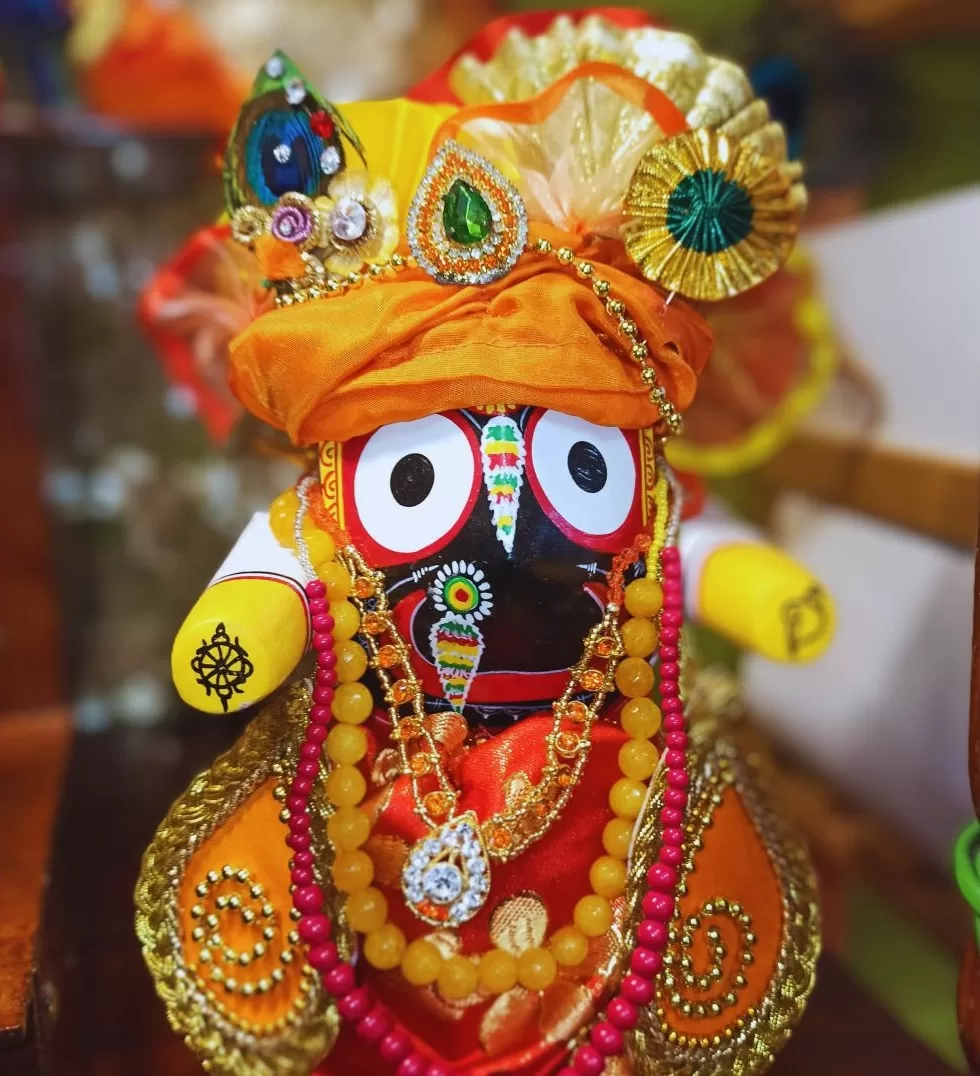
Prabhupada installed the fist large. Radha Krsna Deities in London. He started another revolution. First-class Deity worship amongst the Westerners. He gave them brahmana initiation. Some caste-conscious Hindus criticized, but what were they doing to save the world? Prabhupada didn’t care for the criticisms of others because everything he was doing was directly inspired by Krsna, and confirmed by scriptures, and by his own guru. Lord Caitanya, Krsna Him self had stated: “Whether one is a brahmana, a sannyasi or a sudra— regardless of what he is—he can become a spiritual master if he knows the science of Krsna.” Innumerable quotes from scripture prove that by following an authorised spiritual master and chanting the Holy Names, anyone can be elevated to the topmost position.
Prabhupada was proving it. As noted by the eminent Professor of Theology, Dr. Stillson Judah: “I am simply surprised that you are turning drug-addicted hippies into devotees of Krsna, and servants of mankind.”
Centres sprang up in Amsterdam, Hamburg and Paris. In 1967 Prabhupada had initiated the Ratha-yatra festival in San Francisco. He now wanted Ratha-yatras to be held in all the cities of the world. No one in India would have conceived that this would be possible.
Prabhupada had the grace of Krsna, and therefore, nothing was impossible.
In August 1970 he moved on to India where he had already sent several disciples. Prabhupada was fulfilling his guru’s desire to see Krsna consciousness spread in the West, and now he revealed to his disciples that his own special desire was to see Krsna consciousness spread throughout India. He travelled and preached widely, making well- known his movement—ISKCON. Many prominent people came forward to support ISKCON. Srila Prabhupada started the Life Membership programme to establish solid financial support and credibility for his movement in India. He knew that for many wealthy people to take to the serious practice of Krsna consciousness would not be possible immediately. In the Bhagavad-gita, Lord Krsna recommends that such persons should work, and give the fruits of their labour to support the preaching of Krsna consciousness.
Prabhupada posted his disciples to start centres in Calcutta, Bombay and then Delhi.
In May 1971 Prabhupada flew to Australia via Malaysia. The events in Malaysia form the essence of this book. In Australia he installed Deities of Radha Krsna in Sydney. He prayed to Krsna: “Now I am leaving You in the hands of the mlecchas (meat-eaters). I cannot take responsibility. You please guide these boys and girls and give them the intelligence to worship You very nicely.” He left to return to India where one of the greatest gifts that Srila Prabhupada gave to the world was about to unfold.
Prabhupada had wanted land in Mayapura, India, the holy birth-site of the Supreme Personality of Godhead, in His form of Lord Caitanya. In May 1971 land was purchased. Here he envisioned a magnificent city being built, dedicated to the glory of Lord Caitanya.
On to Russia where he planted the seeds of Krsna consciousness in the heart of one young Russian man. From there a great tree has grown. Today there are thousands of devotees and hundreds of temples in the CIS. Back in America, in Dallas, he started the first Gurukula, (spiritual school) in the West. He stressed the importance that children, from a very young age, must be given the chance to perfect their lives, and be protected f rom the onslaught of modern day materialism, which is killing the great oppor tunity for self-realization in this human form of life.
In India Srila Prabhupada showed untiring determination in establishing major centres, especially in Bombay, Vrndavana and Mayapura. He personally fought against all odds to secure land in Bombay, and oversee the building of a magnificent temple. That battle is a volume in itself. In Vrndavana, lancl was donated and the beautiful Krsna Balarama Mandir
built. In 1976 Prabhupada inaugurated the Bhaktivedanta gurukula in Vrndavana. In Mayapura more land was obtained, and buildings came up, under Srila Prabhupada’s guidance. The greatest project on earth had begun. The beginning of the spiritual city with the largest temple in the world. In Mayapura Prabhupada also started the programme of mass prasadam distribution to the needy: “Food for Life”. He said: “No one within ten miles of Mayapura should go hungry.”
Prabhupada’s disciples were willing to go anywhere to preach. They loved Srila Prabhupada because he loved them. He had nothing to get from anybody. He already had everything— pure love of God, which he was distributing freely. The movement was spreading rapidly.
In 1973 George Harrison purchased the Bhaktivedanta Manor, near London, and gave it to ISKCON to use for a temple. Farms were soon obtained in France and the US. Prabhupada introduced another revolutionary idea in the West—cow protection. The scriptures emphasize how important the cow is for human society, and for spiritual progress.
Prabhupada wanted ISKCON to show the world how to live simply on the land depending on the cows and the bulls and of course, Krsna. Ultimately he envisioned introducing the varnasrama system in the West, starting with the ISKCON farms. He emphasised that the principle of life should be “simple living and high thinking”, where people are engaged according to their natural propensities, with Krsna in the centre.
Prabhupada increased his travelling, inspiring more centres to open in North and South America. He visited Africa, and installed Deities there. All over Europe centres were opening. Book distribution was increasing. Ratha-yatras were being held in many major cities like London, Melbourne and Paris.
Now with temples and devotees on every continent, even Africa, Prabhupada pushed the greatest weapon to counter the atheism and impersonalism of modern day education, science and religion. His guru had told him: “If ever you get money, print books.” In 1970 he had established the “Bhaktivedanta Book Trust” for the purpose of publishing his books in all languages of the world. Despite his almost constant travelling and preaching, Prabhupada was daily spending hours in his continued translations of the Srimad Bhagavatam. He had already published a full edition of the Bhagavad-gita As It Is, Teachings of Lord Caitanya, Nectar of Devotion and the Krsna books. But his main literary contribution to the world was still to come. He had handed the regular publication of the Back to Godhead magazine to his disciples to manage, and it was going on nicely. Now he wanted them to take up the mission to spread the message of Srimad Bhagavatam.
Book printing began on a grand scale. Each year the printing and distribution of the books increased astronomically, but Prabhupada wanted the pace to increase further. In his old age he was practically not sleeping, but staying up almost all night writing and translating. He constantly encouraged his disciples to read his books and distribute them. He saw them as the panacea to change the hearts of suffering humanity. “Each and every word is transcendental,” he said. “If someone should just read one page, one line, even one word, his life would be saved.” Out of great love and compassion, Srila Prabhupada sacrificed his life for others. He wanted no credit for himself. All credit was due to his spiritual master and Krsna. He felt his only credit was that he was not changing anything. Others write books on philosophy, religion and science full of “in my opinion”, “maybe”, “I think”, “probably”, or “perhaps”. Self-centred theories of no lasting value. Mental speculations, causing more disturbance in the world. Prabhupada had no such intentions. “I am merely an instrument. Krsna has written these books,” he would say. His books are surcharged with spiritual potency. What potency does an ordinary living entity have in this world?
Prabhupada translated the epic seventeen-volume Caitanya-caritamrta, the great work of Krsnadasa Kaviraja, on the Teachings of Lord Caitanya. At one stage Prabhupada’s translations were so far ahead of the book publishing that he threatened his disciples he would stop translating any more unless they caught up within two months. Seventeen volumes! The disciples thought it impossible to publish seventeen large, hardbound books within two months, mostly only at the manuscript stage. And each book with Bengali, or Sanskrit text, as well as many full colour pictures. Prabhupada insisted. “Impossible?
Impossible is a word in a fool’s dictionary,” he said. For two months, dozens of devotees worked day and night, practically without eating or sleeping. Empowered by Srila Prabhupada, they “achieved the impossible”.
Book distribution exploded doubling yearly. Back to Godhead — 1,000,000 per month. In 1976 more than 10,000,000 books sold. Travelling parties were going from town to town, village to village, chanting the holy names and distributing books. The West was being deluged with Krsna consciousness.
Each time a new aspect of preaching was introduced it was not at the expense of the others. Everything was important. Book distribution, chanting, public preaching, Life Membership, Deity worship, prasadam distribution, gurukula, farm projects and the devotees own spintual standards. Prabhupada was always vigilant to see that the standards of the individual devotees as well as the temples were kept up. He took great care, knowing that the strength of the movement, and his disciples spintual advancement, depended on their spiritual practices. He had created another revolution by establishing strict principles among his followers—no meat eating, no illicit sex, no intoxication (even tea or coffee) and no gambling. Most gurus and religionists nowadays, give little stress to these principles, because they themselves cannot follow. Out of love, Prabhupada was constantly persistent.
Knowing that at any time he may leave the world, he was putting a lot of energy into training his disciples, to continue the mission in his absence. In 1971 he had formed a Governing Body Commission to manage the affairs of his worldwide society, and set up each temple to run autonomously. He wanted his disciples to become expert in all aspects. In the beginning he had taught everything—cooking, cleaning, kirtana, music, management, accounts, preaching, Deity worship, etc. Now he was depending on his disciples to take this up.
With modern day society being so badly misled by the so-called scientists, Prabhupada so much wanted to set up an institute to defeat such rascal philosophies such as Darwinism. He wanted to prove scientifically that life comes from spirit, not from matter. In 1976 he started the Bhaktivedanta Institute for this purpose. Headed up by disciples with scientific qualifications, the institute plays a major roll in ISKCON’s preaching thrust.
In 1977 at age of eighty-one, Srila Prabhupada’s physical health deteriorated. By September, he returned to Vrndavana, where he stayed until his departure from the world on November 14th, 1977. Up to his last breath, although he could not walk or eat, he continued to preach as well as translate and comment on the Srimad Bhagavatam. His departure from the world went almost unnoticed by the teeming billions, absorbed in their pointless pursuits of sense gratification. It did not go unnoticed, however, by the Lord and those ever liberated souls. His departure was glorious. He contributed to the world more than everyone put together in those few years. His greatness will be truly recognised as people wake up
from their material slumber. A sleeping man cannot appreciate the greatness of the sun until he awakens.
In twelve years, from 1965 till 1977, Srila Prabhupada produced 60 large hardbound books with translations and extensive commentaries, as well as many small editions. His books have been translated into more than 70 languages. He inspired the opening of more than 108 temples, as well as Krsna conscious vegetarian restaurants, schools and farms. He started the Bhaktivedanta Institute. He gave the framework for the varnasrama dharma. He established an annual gathering in Mayapura, India of thousands of devotees from all continents of the world, on the holy occasion of the appearance day anniversary of Lord Caitanya. He gave classes and darshans daily, many of which are available on 1000 cassettes. He wrote more than 8,000 letters, some of them many pages long. He revealed the holy dhamas of Vrndavana and Mayapura to the world. He travelled the world 14 times preaching wherever he went. He initiated more than 5,000 disciples, preached to hundreds of dignitaries and celebrities, personally trained his disciples, and chanted the holy name constantly. He fulfilled his spiritual master’s order and brought Krsna to this world in the age of Kali, spreading the chanting of the Holy Names of God, in an unprecedented way.
He did not compromise the divine message of Lord Krsna, the Vedas and the parampara, (disciplic succession). He empowered his disciples to carry the mission on in his absence. “HE BUILT A HOUSE FOR THE WHOLE WORLD TO LIVE IN”. He gave Krsna’s
house to the world. He opened the door and called us all in. To date more than 400 million of Srila Prabhupada’s books have been sold worldwide, and over 300 temples opened. One day the people of this world will appreciate his unlimited contribution.