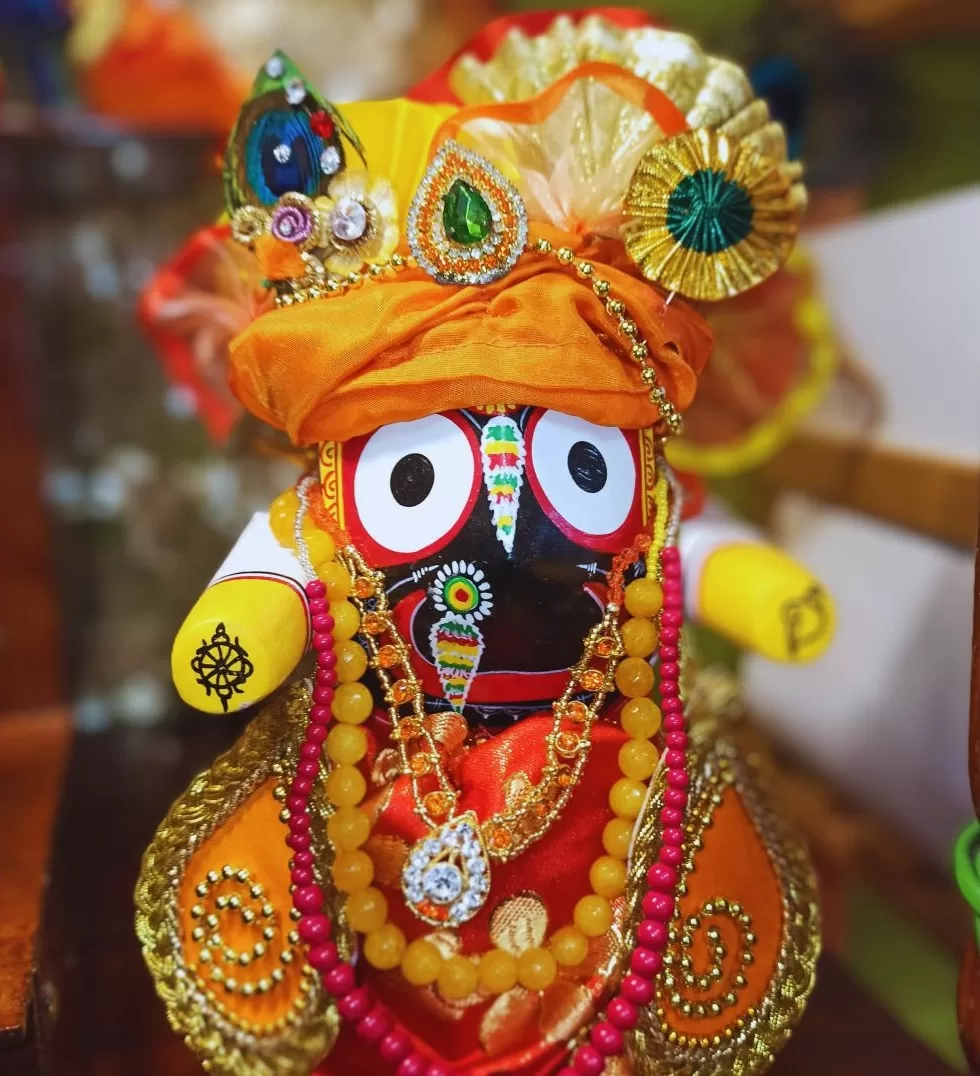
Hare Krishna, tomorrow is Aparā Ekādaśī, here is story!
Aparā Ekādaśī
Aparā ekādaśī, which occurs during the waning moon in the month of Jyesṭha(May-June), is described in Brahmānḍa Purāna in a conversation between Lord Kṛsṇa and Mahārāja Yudhisṭhira.
Once, Mahārāja Yudhisṭhira asked Lord Kṛsṇa, “O Janārdana, what is the name of the ekādaśī that occurs during the waning moon in the month of Jyesṭha, and what are its glories? Please explain these things to me.”
Lord Kṛsṇa replied, “O Mahārāja Yudhisṭhira, you have asked an intelligent question that is beneficial for everyone. The name of this ekādaśī is Aparā. O king, it awards great piety to those who observe it, and eliminates their reactions to sins including killing a brāhmana, killing a cow, killing an embryo by abortion, criticizing others, engaging in illicit sex-life, speaking lies, bearing false witness, bragging, reciting or teaching the Vedas for the sake of money, and concocting one’s own scripture.
A cheater, a pseudo- astrologer, and a dishonest physician are as sinful as one who bears false witness. All of these sinful activities are totally nullified by observing Aparā ekādaśī. A k?atriya who abandons his duty and leaves the battlefield certainly loses his position in society and goes to hell. If such a person observes this ekādaśī with faith, he is saved and he will attain the heavenly planets.
Lord Kṛsṇa continued, “O king, a disciple who receives knowledge from his spiritual master and then blasphemes him certainly commits a great sin. Such a condemned person can be saved by following Aparā ekādaśī, and he will attain the supreme destination.
O king of kings, by observing this vow one easily gets the results or piety obtained by taking bath three times at Puskara in the month of Kārtika; by taking bath at Prayāga in the month of January when the sun enters Capricorn; by observing the vow of Śivarātrī at Kāśī; by offering oblations at the lotus feet of Visṇu at Gayā; by taking bath in the Gautamī River when Jupiter enters Leo; by visiting Kedāranātha during Kumbha-melā; by visiting and worshiping Badarīnātha; by taking bath at Kuruksetra during a solar eclipse; or by giving elephants, horses, cows, gold, or land in charity.
This vow is like a sharp ax for cutting down the tree of sinful activities, and like a blazing fire for burning the forest of sins to ashes. It is like a brilliant sun for eradicating the darkness born of sinful activities, and like a lion for devouring the deer of sins. O king, by observing Aparā ekādaśī and worshiping Lord Visṇu in His form as Trivikrama, a person attains the all-auspicious abode of Lord Visṇu. Anyone who hears or reads about the glories of this ekādaśī, which I have described to you for the benefit of everyone, is relieved from all of his sinful reactions.”
The great devotee and lord of the city of demigods, Mahārāja Rukmāṅgada, had a wonderful, charming flower garden in his kingdom that everyone wanted to see. Eventually, people visiting that garden picked so many flowers that there was not even one left for the king. Thus, it became like a deserted wasteland. The king was very sad to see the pitiful condition of the garden.
Although he increased the number of guards there, the theft of the flowers continued. He also took many other measures, but none were effective because the entities taking the flowers were not human beings, and they could not be caught. Those entities were the demigods, demigoddesses and Apsarās of heaven.
Finally, the king requested his family priest to solve this problem. That priest explained that if foot-bath water of Bhagavān Visṇu, or flowers or flower garlands offered to the Deity of Bhagavān, were placed in the garden, it would be possible to catch the thieves. The king ordered that this be done.
One night, the demigods, demigoddesses, and Apsarās descended to that garden, just as they had done previously. As soon as the foot of one of the Apsarās touched a flower that had been offered to the Lord, all of her pious merit was exhausted, and she lost her ability to return to heaven. The other demigods and demigoddesses tried to find a way to bring her back, but they failed and became dejected.
They had to leave her behind when they returned to heaven. That unfortunate Apsarā, now unable to fly back to heaven, remained there alone. Separated from her friends and facing the unavoidable distressful features of this mortal world such as old age and disease, she began to weep, thinking, “Alas, I will have to live in this mortal world.”
In the morning, the guards and gardeners saw her in the garden and were astonished by her heavenly effulgence and incomparable beauty. They went to the king’s palace and told him the news. The king went to the garden and saw the Apsarā’s extraordinary beauty. Thinking that she must be Durgā, Laksmī, or Sarasvatī, the king offered his obeisances to her.
The king saw her crying and felt great compassion for her. He asked, “O goddess, why are you weeping? Why are you in distress?
The Apsarā told him her story, and that she wanted to go back to heaven. She explained that on the planet of human beings, old age comes early, many diseases attack the body, and one cannot enjoy sufficient sense gratification to satisfy one’s desires. She said, “Mahārāja, I can return to heaven if one of your subjects donates the result of one ekādaśī to me. By receiving the benefit of one ekādaśī, I will be able to enjoy the divine happiness of heaven for one kalpa.”
King Rukmāṅgada did not know anything about ekādaśī. When he inquired from his rājaguru (royal spiritual preceptor) about this, his rājaguru said, “This is the first time that I have heard about the vow of ekādaśī.”The king announced in his city that a reward would be given to any citizen who was willing to donate the result of one ekādaśī.
When no citizen came forward for three or four days, he kept increasing the amount of the reward until finally he offered half of his kingdom. Still, no one came forward. Citragupta, the accountant of Yamarāja, told the Apsarā that there was a wealthy merchant in Rukmāṅgada’s kingdom whose wife had observed the vow of ekādaśī due to feelings of helplessness.
The Apsarā told the king about the rich merchant and where he lived. She said, “One day, the wife of that rich merchant went to a warehouse in an isolated place near her home to look for some goods. The rich merchant’s servants did not know that she was inside the warehouse. When the rich merchant called his servants, they locked up the warehouse and went away.
“The wife of the rich merchant was locked inside the warehouse. She banged on the door for a long time, but due to the isolated location, no one heard. Anxious and unable to do anything, she slept there overnight, thinking that someone would open the door the next day. However, due to fate, the next day was a holiday and nobody came to the warehouse. The rich merchant’s wife began to suffer from extreme hunger and thirst.
“In the meantime, the merchant and his family became very disturbed. They searched everywhere for her, but she could not be found. No one thought of looking in the warehouse because the merchant’s wife never used to go there. She had simply gone there out of curiosity the day she got locked in.
“When the merchant’s servants opened the door of the warehouse the day after the holiday, they found her unconscious. They quickly informed the merchant, and a nearby doctor was summoned. He sprinkled water on her face and massaged her hands and feet, and brought her back to consciousness. Lunch was arranged for her, and slowly she began to recuperate and gain strength.
“By coincidence, the day that the merchant’s wife went to the warehouse was daśamī, and the next day, when she was locked inside and forced to fully fast, was ekādaśī. In this way, she unknowingly observed the holy vow of ekādaśī.”
After hearing the Apsarā’s narration, the king ordered his ministers and soldiers to bring the merchant and his wife, and to treat them with proper respect. When they arrived at the palace, they offered their obeisances to the king and to the Apsarā, and they said, “Your ministers have explained everything to us. Now, please tell us what to do.”
The Apsarā said to the merchant’s wife, “If you would mercifully give me the charity of the result of your vow of ekādaśī by making a pledge, I will be able to return to heaven.” Then, the king arranged for his royal spiritual preceptor to administer the pledge to the merchant’s wife, thus bestowing the benefit of ekādaśī upon the Apsarā. That goddess expressed her gratitude to the king, the merchant, the merchant’s wife, and everyone else, and returned to heaven. The king fulfilled his promise by giving half of his kingdom to the merchant’s wife.
Through his involvement in this incident, Mahārāja Rukmāṅgada became fully convinced of the great glory and potency of ekādaśī. One day, he decided that every citizen of his kingdom must regularly observe the vow of ekādaśī, which bestows so much pious merit and benefit. Therefore, he issued the following proclamation:
aṣṭavarụādhiko marttyodhaśīti naiva pūyaryate yo bhuukte māmake rāṣṭre viṣụorahani pāpakụta sa me vadhyś ca nirvvāsyo deśataḳ kālataḳś ca me etasmāta kāraụād viprā ekādaśyā amu poṣaụam kūryannaro vā nārī vā pakṣayor ubhayor ubhayor api
(Nāradīya-purāna) “If anyone between the ages of eight and eighty eats grains on ekādaśī, they will be executed or banished from my kingdom. Every woman and man must follow the ekādaśī vows during both the bright and dark fortnights. This rule applies to everyone including my son, mother, father, wife, friends, and relatives. I will punish anyone who does not follow it.”
The king prominently announced this to the entire kingdom. All of his subjects followed his order and observed ekādaśī, and as a result they eventually went to Vaikuṇṭha.
The Brahma-purāna states that Aparā ekādaśī bestows great pious merit, nullifies even the most serious sins, and gives unlimited benefits.
! For more Biography look here!
!For more Articles look here!
